

It happens to almost everyone: you lose 10, 20, even 30 pounds. You’re feeling great. Then, out of nowhere, the scale stops moving. You eat less. You exercise more. You count every calorie. And still-nothing. This isn’t laziness. It’s not failure. It’s metabolic adaptation.
What’s Really Going On When the Scale Won’t Budge
When you lose weight, your body doesn’t just adjust its size-it rewires its energy use. This isn’t a glitch. It’s a survival mechanism. Your body evolved to defend its weight, especially after fat loss. Researchers call this adaptive thermogenesis. Simply put: your metabolism slows down more than it should, based on how much weight you’ve lost.
Here’s the math: if you lose 20 pounds, your body should burn fewer calories because you’re lighter. But studies show it burns even fewer than that. In the famous Minnesota Starvation Experiment from the 1940s, participants’ metabolisms dropped by 40% beyond what their new weight predicted. That’s not normal. That’s your body fighting back.
Modern research confirms this. A 2022 study from the University of Alabama at Birmingham found that after weight loss, people burned 92 extra calories per day less than expected-enough to stall progress for months. Even after a year of maintaining the new weight, metabolism stays lower than it was before the loss. This isn’t temporary. It’s biological.
Why Your Hunger Skyrockets and Energy Plummet
Metabolic adaptation doesn’t just lower your calorie burn-it turns up your hunger. Your body releases fewer leptin, the hormone that tells you you’re full. Levels can drop by up to 70% after significant weight loss. Meanwhile, ghrelin-the hunger hormone-rises. You’re not weak. You’re not failing. Your brain is screaming for food.
Thyroid hormone production dips. Cortisol, the stress hormone, climbs. Brown fat, which burns calories to make heat, becomes less active. These aren’t side effects-they’re the core drivers of the plateau. And yes, women tend to experience this more intensely than men, partly because they have more brown fat to begin with, and it shuts down faster under restriction.
On Reddit’s r/loseit, 78% of people reporting plateaus said they dropped to 1,200-1,500 calories a day and still saw no change. Many said they felt hungrier than ever. That’s not a coincidence. That’s your body’s defense system kicking in.
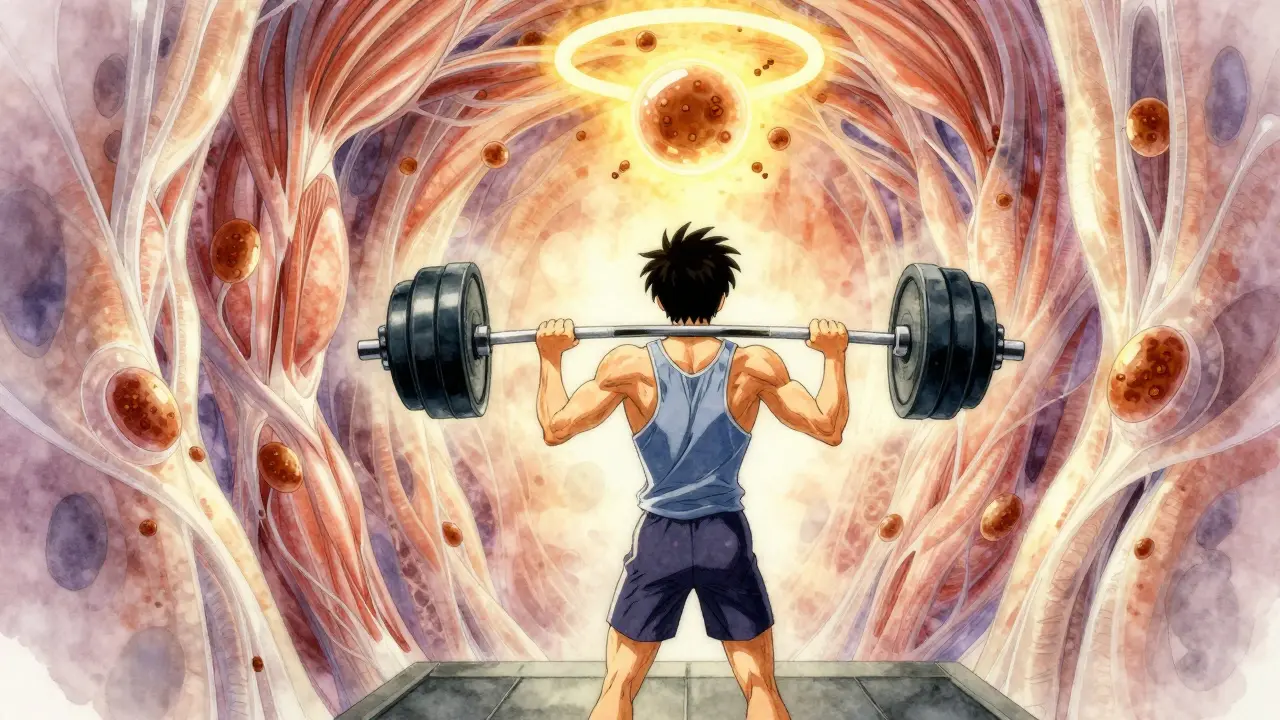
Why Cutting Calories Further Doesn’t Work
When the scale stalls, the instinct is to eat even less. But here’s the trap: the lower you go, the harder your body fights. A 2006 study found that metabolic adaptation accounts for 38% of why people don’t lose as much as expected on low-calorie diets. Cutting calories further just deepens the adaptation.
Think of it like a thermostat. You lower the temperature. The furnace turns down. If you keep lowering the setting, the furnace doesn’t just turn off-it shuts down completely. Your metabolism does the same.
And here’s another myth busted: the initial 5-10 pound drop on a new diet? That’s mostly water. Glycogen stores release water as they empty. That’s why weight loss looks fast at first. But after that, it’s fat-and fat loss is slow, hard, and metabolically resisted.
How to Actually Break Through (Science-Backed Strategies)
You don’t need to suffer more. You need to work smarter. Here’s what actually works:
- Take diet breaks: Every 8-12 weeks of cutting, spend 1-2 weeks eating at maintenance calories. Research shows this cuts metabolic adaptation by up to 50%. It’s not cheating-it’s resetting your body’s defense system. One study found people who took breaks lost 23% more fat over time than those who kept cutting.
- Strength train 3-4 times a week: Muscle burns more calories at rest than fat. Losing muscle makes your metabolism drop faster. Lifting weights preserves it. Studies show people who lift during weight loss lose 8-10% less of their resting metabolism than those who only do cardio.
- Eat more protein: Aim for 1.6-2.2 grams per kilogram of body weight. Higher protein intake helps preserve muscle and keeps hunger in check. One trial showed people eating more protein lost 3.2kg more fat and 1.3kg less muscle during calorie restriction.
- Avoid very low-calorie diets: Diets under 1,000 calories trigger extreme adaptation. They’re not sustainable. They’re not safe. And they make plateaus worse.
One user on MyFitnessPal forums said: “I hit a 14-week plateau at 1,300 calories. I took a 10-day break at 2,000, then went back. Lost 8 pounds in 3 weeks.” That’s not luck. That’s science.

What About Weight Loss Pills and Surgery?
Pharmaceutical options like semaglutide (Wegovy) work partly by counteracting the hunger surge caused by metabolic adaptation. They help, but they’re not magic. They’re tools-used best alongside lifestyle changes.
Bariatric surgery reduces metabolic adaptation by about 60% compared to dieting alone. Why? Because it physically changes gut hormones and how the brain responds to food. But it’s invasive, risky, and not for everyone.
Meanwhile, companies like WW and Noom now build metabolic adaptation into their programs. WW’s Points system adjusts for your metabolism. Noom’s “metabolic reset” feature is based on NIH research. The industry is catching up.
What’s Next? The Future of Weight Loss
Researchers are now testing cold exposure to activate brown fat and boost calorie burn. Early studies show 5-7% more energy expenditure after weeks of mild cold exposure. It’s not a cure, but it’s a promising tool.
Pharmaceutical companies are pouring $1.2 billion into drugs targeting uncoupling proteins in fat cells-trying to turn your body back into a furnace. But the real breakthrough isn’t a pill. It’s understanding that weight loss isn’t linear. It’s not about willpower. It’s about biology.
By 2025, experts predict 85% of evidence-based programs will include strategies to handle metabolic adaptation. The old model-eat less, move more, suffer through it-is over. The new model: work with your body, not against it.
Why does my metabolism slow down after weight loss?
Your body defends its previous weight by lowering energy expenditure beyond what’s expected from your new size. This is called metabolic adaptation or adaptive thermogenesis. It’s driven by drops in leptin, thyroid hormones, and brown fat activity, along with increases in hunger signals. It’s not laziness-it’s biology.
How long does a weight loss plateau last?
Most plateaus last 4-12 weeks. But if you keep cutting calories without adjusting your strategy, they can stretch for months. The key isn’t waiting it out-it’s changing your approach. Taking a diet break or adding strength training often breaks the stall within 2-3 weeks.
Should I eat more to break a plateau?
Yes-but only temporarily. Eating at maintenance calories for 1-2 weeks (a diet break) resets your metabolism and reduces the body’s stress response. Afterward, you can resume cutting with better results. This is called reverse dieting. It’s not gaining weight-it’s recalibrating your system.
Does cardio make plateaus worse?
Cardio alone can make metabolic adaptation worse because it doesn’t preserve muscle. When you lose muscle, your resting metabolism drops more. Combine cardio with strength training. Lift weights 3-4 times a week to protect your metabolism while burning fat.
Is it possible to lose weight without hitting a plateau?
Unlikely. Almost everyone hits one. The goal isn’t to avoid it-it’s to manage it. People who plan for plateaus with diet breaks, protein intake, and strength training lose weight faster and keep it off longer than those who treat plateaus as failures.
Natali Shevchenko
March 23, 2026 AT 00:28It’s wild how deeply our biology is wired to resist change, isn’t it? We think weight loss is about discipline, but really it’s a war between modern habits and ancient survival instincts. Your body doesn’t care about your Instagram progress pics-it cares about keeping you alive. That 40% drop in metabolism from the Minnesota study? That’s not a bug, it’s a feature. Evolution didn’t give a damn about aesthetics. It cared about fat stores. So when you lose weight, your brain literally reprograms your hunger, energy use, even your sleep patterns to get you back to where you were. It’s not you failing. It’s your lizard brain winning. And the weirdest part? This isn’t just happening to you. It’s happening to everyone who’s ever lost weight. We just don’t talk about it because it makes us feel powerless. But once you accept that it’s biological, not moral, the whole game changes.
That’s why diet breaks work. You’re not ‘cheating.’ You’re negotiating with your biology. You’re saying, ‘Hey, I’m not starving. We’re safe now.’ And your body? It sighs, resets, and lets you keep going. It’s like rebooting a frozen computer. You don’t crank the fan harder-you just turn it off and on again.
Johny Prayogi
March 23, 2026 AT 05:52YES. Finally someone gets it. 😤 I was doing 1,200 calories for 5 months, felt like a zombie, and still didn’t budge. Took a 10-day break at maintenance, ate pizza and ice cream like it was my job, and lost 6 lbs in 2 weeks after going back. My metabolism didn’t ‘break’-it was just pissed. Now I do 8 weeks on, 2 weeks off. Game changer. Also, protein. Eat more protein. Your muscles are not happy with you.
Also, stop doing cardio like it’s a punishment. Lift heavy. Your metabolism will thank you. 💪
Nicole James
March 25, 2026 AT 04:39Wait-so you’re telling me… the government… the pharmaceutical companies… the diet industry… they’ve known about this for decades? And they’re still selling us ‘eat less, move more’ as if it’s a moral failing? 🤔 That’s not science. That’s control. They need you to feel guilty. They need you to keep buying supplements, meal plans, apps, and self-help books. Because if you knew your body was just doing its evolutionary job… you’d stop paying them. And that’s dangerous. So they lie. They make you think you’re weak. They make you think you’re broken. But you’re not. You’re perfectly adapted. And the fact that they’re now building ‘metabolic reset’ features into Noom? Proof. They’re scared. They’re finally admitting it. But they won’t tell you the truth: the real solution isn’t a pill. It’s not a hack. It’s patience. And that’s the one thing they can’t monetize.
Nishan Basnet
March 26, 2026 AT 11:53What struck me most is how elegantly biology handles survival. We’ve been conditioned to see weight loss as a linear journey-up and to the right-but nature doesn’t work like that. It’s cyclical, adaptive, deeply intuitive. The drop in leptin, the rise in ghrelin-it’s not a flaw. It’s a symphony of signals, all trying to preserve homeostasis. And yes, women are more vulnerable, not because they’re ‘weaker,’ but because evolution prioritized fat storage for reproductive readiness. So when we restrict, the body doesn’t just slow metabolism-it shuts down non-essential functions. Brown fat? It’s not ‘lazy.’ It’s conserving energy for survival. The real rebellion isn’t in eating less. It’s in eating enough-smartly, consistently, with protein and resistance training-to tell your body, ‘We’re not in famine. We’re safe.’ That’s the quiet revolution.
And yes, diet breaks aren’t cheating. They’re communion.
Jackie Tucker
March 28, 2026 AT 08:47Wow. So after all this… we’re just supposed to… eat more? And lift weights? And… take breaks? I’m shocked. Shocked, I tell you. Who knew the answer wasn’t another 100-page ebook with a 17-step system and a QR code to a $297 coaching call? How quaint. How… primitive. I suppose next you’ll tell me water is hydrating and sleep is restorative. Next thing you know, someone’ll suggest we stop believing in gravity.
Thomas Jensen
March 29, 2026 AT 16:21They’re lying. All of them. The ‘metabolic adaptation’ thing? That’s a cover-up. The real reason you plateau is because Big Pharma wants you on semaglutide. And Big Food wants you to keep buying their ‘low-calorie’ snacks that are 90% sugar alcohols and plastic. And the fitness industry? They make money off your frustration. They don’t want you to fix your metabolism. They want you to buy their 30-day ‘reset.’
And don’t even get me started on the ‘brown fat’ nonsense. Cold showers? Please. That’s just a distraction. The truth? Your thyroid is being poisoned by fluoride in the water. I’ve been tracking it. I’ve got data. You’re not fighting your biology. You’re fighting the system.
Solomon Kindie
March 31, 2026 AT 15:20So you lose weight your body slows down makes sense right like duh
But like why do people think eating more is cheating like if your body is in starvation mode why not feed it like a normal human
Also cardio bad? Bro I run 5k every day
And protein? 2g per kg? That’s like 140g for me? I’m not eating chicken breast like a bodybuilder
Just sayin
Casey Tenney
March 31, 2026 AT 20:44Stop being weak. If you can’t lose weight on 1,200 calories, you’re not trying hard enough. You’re not suffering enough. You want to break a plateau? Eat less. Train harder. Sleep less. Suffer. That’s the only way. The rest is excuses. You think your body is ‘fighting’ you? It’s not. You’re fighting yourself. Get tough. Or stay fat.
Timothy Olcott
April 1, 2026 AT 12:01AMERICA NEEDS TO STOP BELIEVING IN THIS SCIENCE CRAP
MY GRANDPA LOST 60 LBS IN 6 MONTHS ON A BURGER AND FRIES DIET
HE DIDNT TAKE BREAKS
HE DIDNT LIFT
HE JUST ATE LESS AND WALKED TO THE STORE
WE USED TO BE STRONGER
WE USED TO JUST DO IT
WTF HAPPENED TO US
WE’RE A NATION OF CRYBABIES NOW 🇺🇸
Desiree LaPointe
April 2, 2026 AT 17:30Oh honey. You’ve been reading r/loseit. How adorable. Let me guess-you’re also using MyFitnessPal and believe in ‘macros’ like they’re sacred texts. Let me tell you something: the only thing that matters is insulin. Not leptin. Not ghrelin. Not brown fat. Insulin. If you’re not in ketosis, you’re just feeding your fat cells a buffet. You want to break a plateau? Go keto. Go carnivore. Go zero-carb. Anything but this ‘balanced’ nonsense. You’re not ‘resetting’ your metabolism. You’re feeding it sugar. And sugar? Sugar is the real enemy. Not your genes. Not your thyroid. Not Big Pharma. Sugar. And you’re too afraid to quit it. That’s your real plateau.
matthew runcie
April 3, 2026 AT 23:16Thanks for writing this. I’ve been stuck for 8 months. This is the first time I’ve felt understood-not judged. I thought I was broken. Turns out I’m just human. I’m taking a break next week. Going to eat like I used to. No guilt. Just… peace.
shannon kozee
April 5, 2026 AT 09:03Protein + strength training + diet breaks = the holy trinity. I’ve coached 200+ people through plateaus. This works. Every time. No magic pills. No hacks. Just science. And patience. You don’t need to be perfect. Just consistent.