

Blood Pressure Medication Adjuster
GLP-1 medications like Wegovy and Saxenda can lower blood pressure by 4-15 mmHg based on weight loss percentage. Use this tool to understand potential changes and monitor for dangerous drops.
Why Your Weight Loss Medication Might Be Lowering Your Blood Pressure Too Much
If you're taking a weight loss drug like Wegovy or Saxenda and also have high blood pressure, you might be surprised to find your blood pressure dropping too low. It’s not a coincidence. These medications don’t just help you lose weight-they directly affect how your body handles blood pressure. The same mechanism that slows your stomach and reduces hunger also changes how your body absorbs and responds to your blood pressure pills. In clinical trials, Wegovy lowered systolic blood pressure by an average of 6.2 mmHg, and Saxenda by 4.1 mmHg. For someone already on lisinopril, losartan, or another antihypertensive, that’s enough to cause dizziness, fainting, or even falls.
According to the FDA’s 2023 safety report, about 14.3% of patients on GLP-1 medications with existing blood pressure drugs needed medical intervention because their pressure dropped too far. That’s nearly one in seven. And it’s not just about the numbers. Real people are reporting it: one Reddit user on r/ObesityMedicine said their lisinopril dose had to be cut in half after starting Wegovy, because their standing blood pressure fell to 85/55. That’s not just low-it’s dangerous.
How GLP-1 Medications Like Wegovy and Saxenda Interact With Blood Pressure Drugs
GLP-1 receptor agonists-Saxenda, Wegovy, and Mounjaro-work by mimicking a natural hormone that tells your brain you’re full. But they also slow down how fast your stomach empties. This delay doesn’t just affect food. It changes how your body absorbs oral medications, including blood pressure pills. If your body takes longer to absorb a drug like enalapril or valsartan, the timing of its effect gets thrown off. You might end up with too much of the drug in your system at once, or not enough when you need it.
More importantly, losing weight naturally lowers blood pressure. For every 5% of body weight lost, systolic pressure drops by about 4-5 mmHg. Lose 10%? That’s 8-10 mmHg. Lose 15%? You could see a drop of 12-15 mmHg. That’s the same as adding another blood pressure pill. But you’re not adding a pill-you’re adding a drug that’s already lowering pressure on its own. Combine that with your existing meds, and you’re stacking effects.
Studies show that people taking ACE inhibitors or ARBs (like lisinopril or losartan) along with GLP-1 drugs have a 2.3-fold higher risk of symptomatic low blood sugar, especially if they also take sulfonylureas for diabetes. This isn’t just about blood pressure-it’s a chain reaction. Low blood pressure can reduce kidney blood flow, which raises potassium levels. That’s why hyperkalemia (dangerously high potassium) risk goes up by 15-22% when GLP-1 drugs are paired with ACE inhibitors or ARBs.
Phentermine: The Opposite Problem
Not all weight loss drugs work the same way. Phentermine, a stimulant approved in 1959, does the exact opposite. It increases norepinephrine, which raises heart rate and blood pressure. On average, it bumps systolic pressure up by 5-15 mmHg and diastolic by 3-10 mmHg. For someone with uncontrolled hypertension, that’s a red flag. The CDC says over 107 million U.S. adults have high blood pressure. Adding phentermine without monitoring could push someone into a hypertensive crisis.
The worst-case scenario? Mixing phentermine with MAOIs, a type of antidepressant used for treatment-resistant depression. This combo can trigger a hypertensive emergency-blood pressure spikes above 180/120 mmHg. The FDA has issued multiple warnings about this. In documented cases, patients ended up in the ER with pressures over 220/120. That’s not just risky-it’s life-threatening. If you’re on an MAOI like phenelzine or tranylcypromine, you must stop it at least 14 days before starting phentermine. No exceptions.
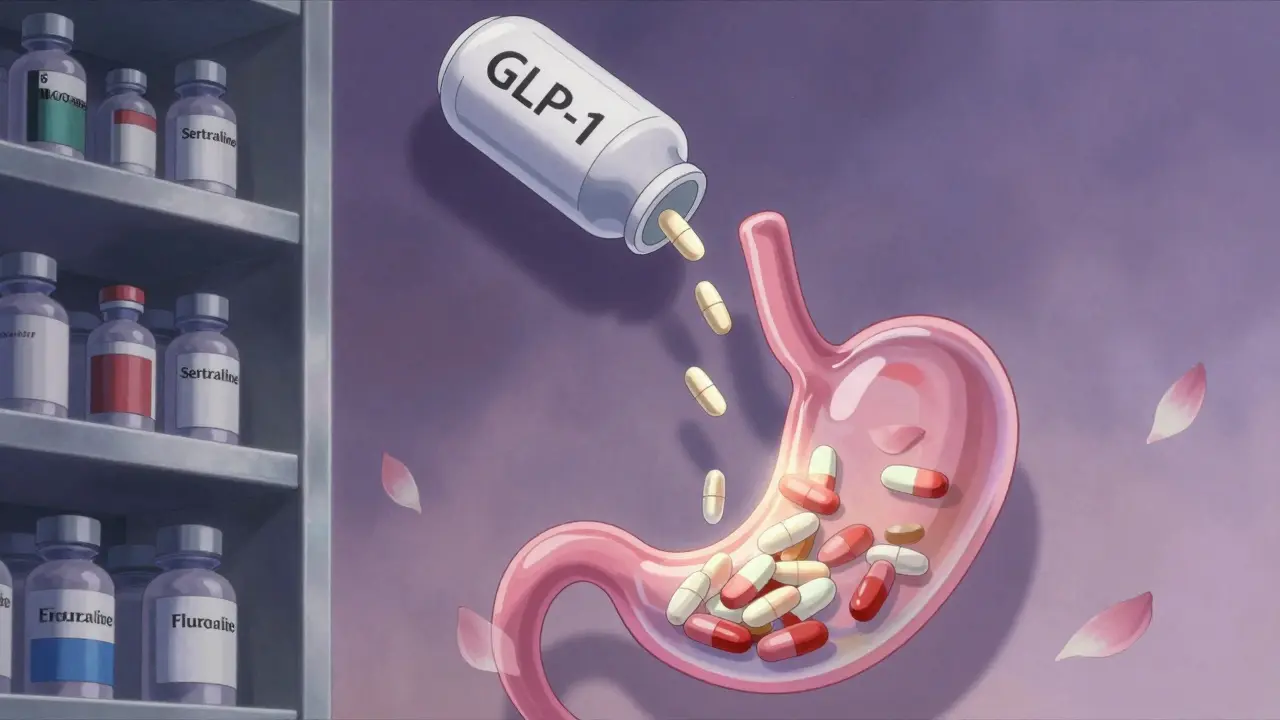
What About Antidepressants? The Hidden Absorption Problem
Many people on weight loss meds also take antidepressants. SSRIs like sertraline, fluoxetine, or escitalopram are common. But here’s the catch: if your stomach is emptying 30% slower because of Saxenda or Wegovy, your antidepressant might not be absorbed properly. Dr. Charles Nemeroff’s 2022 research found that GLP-1 drugs can reduce SSRI absorption by 18-25%. That means you’re getting less of the drug into your bloodstream. You might feel like your depression is coming back-not because the medication stopped working, but because your body isn’t absorbing it anymore.
Patients on Reddit’s r/SSRI forum reported exactly this: “My sertraline stopped working after starting Saxenda.” Their psychiatrists confirmed it wasn’t a relapse-it was a pharmacokinetic issue. The American Psychiatric Association now recommends separating GLP-1 medication doses from antidepressants by at least two hours. Take your weight loss pill in the morning, and your antidepressant at night, or vice versa. This simple timing change can help restore normal absorption.
And it’s not just SSRIs. The same delay affects other oral meds-thyroid pills, seizure drugs, even some antibiotics. If you’re on multiple daily medications, this isn’t just about depression. It’s about every pill you take by mouth.
What Doctors Are Doing to Manage These Risks
Clinicians are starting to treat this like a real medical problem-not just a side effect. The American Association of Clinical Endocrinologists now recommends checking blood pressure weekly for the first month after starting a GLP-1 drug. If you’re on an ACE inhibitor or ARB, they suggest cutting your dose by 25-50% right away. In a survey of endocrinologists, 63% already do this. For every 5% of body weight lost, they reassess your blood pressure meds. By the time you’ve lost 15%, 68% of patients need to reduce their dose.
For antidepressants, the standard advice is to space out the doses. Don’t take your weight loss pill and your antidepressant at the same time. If you take Wegovy in the morning, take your sertraline at bedtime. That gives your stomach time to empty before the antidepressant arrives.
And if you’re on phentermine? Your doctor should check your blood pressure before you even start. If it’s already above 140/90, they might hold off or choose a different option. And if you’re on an MAOI? That’s a hard stop. No phentermine until the MAOI is fully out of your system.

What You Should Do Right Now
- If you’re on a GLP-1 medication (Wegovy, Saxenda, Mounjaro) and also take blood pressure meds, schedule a check-up. Ask your doctor to check your blood pressure in both sitting and standing positions.
- If you feel dizzy, lightheaded, or faint when standing up, that’s not normal. Tell your doctor immediately. You might need a lower dose of your blood pressure pill.
- If you’re on an SSRI and notice your mood worsening after starting a weight loss drug, don’t assume it’s depression returning. Talk to your psychiatrist. You might need to adjust timing or dosage.
- If you’re prescribed phentermine, make sure your doctor knows every medication you take-especially antidepressants. If you’re on an MAOI, don’t start phentermine until you’ve been off it for at least 14 days.
- Keep a log: note your blood pressure readings, any dizziness, changes in mood, or energy levels. Bring it to your next appointment.
The bottom line: weight loss medications are powerful tools. But they’re not harmless. When you add them to a regimen of blood pressure or antidepressant drugs, you’re changing how your body works. Ignoring the interactions can lead to serious harm. But with the right monitoring and communication with your care team, you can lose weight safely-and keep your blood pressure and mood stable.
Can I take Wegovy if I have high blood pressure?
Yes, but only under close medical supervision. Wegovy lowers blood pressure, so if you’re already on antihypertensive meds like lisinopril or losartan, your doctor will likely reduce your dose before or soon after you start. Weekly blood pressure checks are recommended for the first month. Many patients end up needing lower doses of their blood pressure medication after starting Wegovy.
Does Saxenda interact with antidepressants?
Yes. Saxenda slows stomach emptying, which can reduce how much of your antidepressant (like sertraline or fluoxetine) gets absorbed into your bloodstream. This may make your antidepressant seem less effective. To reduce this risk, take your antidepressant at least two hours before or after Saxenda. Talk to your psychiatrist if you notice your mood worsening after starting Saxenda.
Is phentermine safe with blood pressure medication?
It depends. Phentermine raises blood pressure, so if your hypertension is uncontrolled, it’s not recommended. If your blood pressure is well-managed, your doctor might still prescribe it-but they’ll monitor you closely. Avoid phentermine if you’re on certain heart medications like beta-blockers or diuretics, as interactions can be unpredictable. Never take phentermine with MAOIs-it can cause a life-threatening spike in blood pressure.
How long does it take for blood pressure to drop after starting Wegovy?
Most patients see a drop in blood pressure within the first 4-8 weeks of starting Wegovy. The biggest changes happen as weight loss kicks in-usually around 10-12% of body weight lost. That’s why doctors recommend weekly blood pressure checks during the first month. If your pressure drops below 90/60 or you feel dizzy, your dose may need adjustment.
What should I do if I feel dizzy after starting a weight loss drug?
Dizziness-especially when standing up-is a red flag for low blood pressure. Sit or lie down immediately. Check your blood pressure if you have a home monitor. If it’s below 90/60 or you feel faint, call your doctor. Don’t stop your medication without talking to them, but do report the symptom. You may need a lower dose of your blood pressure or antidepressant medication.
What’s Next for Weight Loss Drugs and Drug Interactions
The market for GLP-1 drugs is exploding. In 2023, sales hit $18.7 billion, and prescriptions for Wegovy jumped 320% from the year before. As more people start these drugs, doctors are seeing more cases of low blood pressure, fainting, and antidepressant underdosing. The FDA has responded with updated safety labels and warnings. By 2025, most electronic health record systems will automatically flag patients who are prescribed both weight loss drugs and antihypertensives.
Researchers are already working on smarter solutions. The NIH is running a trial called PRECISION-OBESITY to see if genetic testing can help predict who’s at highest risk for dangerous drops in blood pressure. Other studies are looking at how new drugs like retatrutide-which targets three hormones at once-might affect antidepressants. Right now, there’s no data. That’s a gap.
For now, the safest approach is simple: talk to your doctor before starting any weight loss medication. Tell them every pill you take. Bring your list. Ask: “Could this interfere with my other meds?” If they don’t know, ask for a referral to an obesity medicine specialist. You’re not just trying to lose weight. You’re trying to stay healthy. And that means understanding how these drugs work together.
Eli Kiseop
February 2, 2026 AT 14:39Ansley Mayson
February 4, 2026 AT 00:19phara don
February 4, 2026 AT 07:31Hannah Gliane
February 6, 2026 AT 05:43Murarikar Satishwar
February 7, 2026 AT 19:05Dan Pearson
February 9, 2026 AT 13:05Ellie Norris
February 11, 2026 AT 01:57Marc Durocher
February 12, 2026 AT 21:25larry keenan
February 13, 2026 AT 14:46Nick Flake
February 14, 2026 AT 03:19Akhona Myeki
February 15, 2026 AT 13:44Chinmoy Kumar
February 16, 2026 AT 16:52