
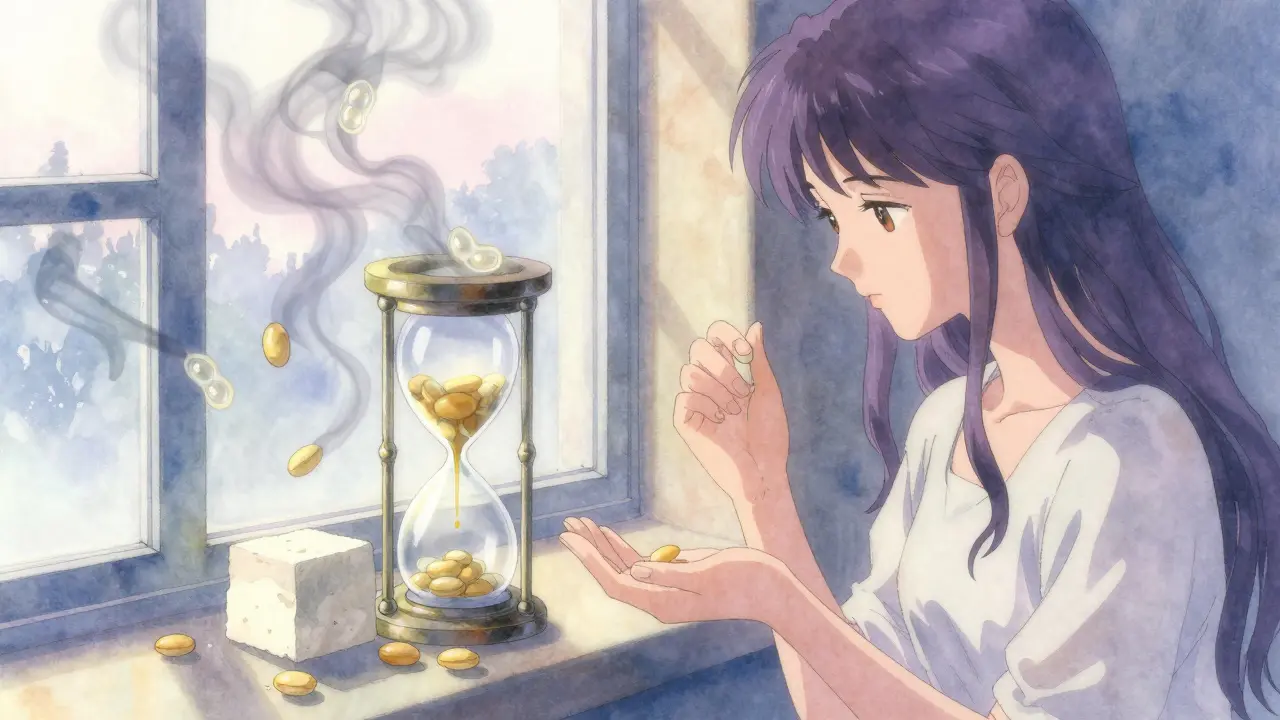
Levothyroxine & Soy Timing Calculator
Based on medical guidelines: Wait at least 3 hours between levothyroxine and soy consumption to ensure proper absorption
Enter times to see separation calculation
Safe Separation of 3+ hours: No interference
Unsafe Separation less than 3 hours: Reduced absorption
Why 3 hours? Medical studies show soy isoflavones bind to levothyroxine in the gut. A 3-hour gap is the minimum to prevent absorption interference.
If you take levothyroxine for hypothyroidism and eat soy products like tofu, soy milk, or edamame, you might be unknowingly reducing how well your medicine works. This isn’t a myth or a warning from a wellness blog-it’s backed by clinical studies, case reports, and guidelines from major medical groups. The interaction is real, measurable, and affects thousands of people every day. Many patients don’t even realize their TSH levels are high because of their morning soy latte or soy-based protein bar.
How Soy Interferes with Levothyroxine
Levothyroxine is a synthetic version of the thyroid hormone T4. It’s absorbed in the small intestine, and for it to work properly, it needs to pass through the gut lining without anything blocking it. Soy contains compounds called isoflavones-mainly genistein and daidzein-that bind tightly to levothyroxine in the digestive tract. This binding prevents the hormone from being absorbed into your bloodstream. Studies using liquid chromatography-tandem mass spectrometry show that when soy is taken at the same time as levothyroxine, peak hormone levels drop by about 22%, and total absorption falls by nearly 19%.
This isn’t just about timing. The amount of soy matters too. A 2006 study found that 20 grams of soy protein reduced absorption by 15.8%. At 40 grams, that number jumped to 35.2%. That’s roughly one cup of cooked soybeans or two servings of tofu. Soy is also hidden in a lot of foods-soy lecithin in chocolate bars, soy protein isolate in veggie burgers, and soy oil in salad dressings. The FDA estimates 70% of packaged foods in the U.S. contain soy derivatives, making it harder to avoid than you might think.
How Bad Is the Impact?
The consequences can be serious. In 2012, researchers documented two infant cases where babies with congenital hypothyroidism remained severely hypothyroid despite being on the correct levothyroxine dose. Why? Because they were on soy-based formula. One baby had a TSH level of 216 µIU/mL (normal is under 5). Another’s free thyroxine dropped below 0.4 ng/dL-far below the minimum needed for brain development. These weren’t rare flukes. They were predictable outcomes of a known interaction.
In adults, the effects are subtler but still dangerous. A 2021 review of 63 studies found that soy reduces levothyroxine absorption by an average of 25.3%. That’s more than coffee (21.4%) and high-fiber foods (17.8%), and nearly as bad as calcium supplements (35.2%). Unlike calcium or iron, which require a 4-hour gap, soy needs at least a 3-hour separation. Some patients don’t even notice the problem until their TSH jumps from 2.5 to 8.7-like one Reddit user who only figured out the cause after her endocrinologist finally asked about her daily soy milk.
Who’s Most at Risk?
Not everyone is affected the same way. Infants with congenital hypothyroidism are at the highest risk. Their brains are still developing, and even small drops in thyroid hormone can lead to permanent cognitive delays. The American Academy of Pediatrics now recommends immediate removal of soy formula in these cases.
Older adults are another vulnerable group. As we age, stomach acid production drops. Levothyroxine needs an acidic environment to dissolve properly. Combine that with soy’s interference, and absorption plummets. Nearly half of all levothyroxine users in the U.S. are over 65.
Vegetarians and vegans are also disproportionately affected. A 2023 survey found that 78% of vegetarians consume soy products three or more times a week. For many, soy is their main protein source. Yet, 63% of women aged 30-50 who take levothyroxine also consume soy regularly-making them a high-risk group that’s often overlooked.

What Does the Science Say? Contradictions and Confusion
You might have heard conflicting advice. Some doctors say soy is fine in moderation. A 2019 JAMA commentary noted that population studies didn’t show significant TSH changes in adults eating 1-2 servings of soy daily. But here’s the catch: those studies looked at averages. They didn’t catch the 10-15% of patients who are hyper-sensitive to soy. One person’s “moderate” soy intake might be enough to throw their hormone levels off.
The Mayo Clinic takes a balanced view: you don’t need to quit soy entirely. Just separate it from your medication. The American Thyroid Association and Endocrine Society both agree: temporal separation is key. That means not taking levothyroxine and eating soy at the same time. The 2021 Wiesner review concluded that a 3-hour gap is sufficient for most people. For infants, the rule is simple: no soy formula if you’re on levothyroxine.
Practical Tips: How to Stay in Control
Here’s what works, based on real-world data and clinical guidelines:
- Take levothyroxine on an empty stomach. Ideally, 30 to 60 minutes before breakfast. This gives the medicine time to absorb before food interferes.
- Avoid soy for at least 3 hours after taking your pill. If you take it at 7 a.m., wait until 10 a.m. before having tofu stir-fry or soy yogurt.
- Don’t rely on “soy-free” labels alone. Check for “soy lecithin,” “soy protein isolate,” or “hydrolyzed soy protein.” These are still sources of isoflavones.
- Consider switching to a non-soy formula if you’re giving it to a baby. Over 90% of infant formulas in the U.S. are soy-free. Ask your pediatrician.
- Ask about Tirosint. This is a softgel version of levothyroxine that absorbs better with soy. One study showed 18.3% higher absorption compared to tablets when taken with soy.
Also, keep a food and TSH log. If your TSH suddenly spikes after adding soy to your diet, it’s not a coincidence. Bring it up at your next appointment. Many endocrinologists still don’t ask about diet unless you bring it up first.
What’s Changing in 2026?
There’s new hope on the horizon. In 2024, the FDA approved a new dosing protocol called Thyrogen®-assisted dosing for patients who consume soy regularly. It uses recombinant TSH to measure exactly how much hormone your body needs, cutting out guesswork.
Also in development: Levo-Sorb®, a new formulation with an isoflavone-blocking agent. A 2023 trial showed it maintained 92.4% absorption even with soy present-compared to just 58.7% for regular tablets. If approved, it could be a game-changer for vegans and vegetarians.
Long-term, researchers are looking at genetic factors. About 40% of Caucasians have a gene variant (CYP1A2*1F) that affects how they metabolize soy isoflavones. In the future, a simple DNA test might tell you if you’re at higher risk.
Bottom Line
You don’t have to give up tofu or soy milk. But you do need to separate it from your medication. A 3-hour gap is enough for most people. Don’t assume your doctor knows this-many don’t. Don’t assume your TSH is stable just because you’re on a “correct” dose. Diet matters. Soy is not the biggest threat to levothyroxine absorption-calcium and iron are worse-but it’s one of the most common and least recognized.
If you’ve been struggling with high TSH levels despite taking your pill every day, ask yourself: When was the last time I checked my soy intake? That one change might be all you need to feel better.
Can I eat soy if I take levothyroxine?
Yes, you can eat soy, but not at the same time as your medication. Soy interferes with levothyroxine absorption. To avoid this, wait at least 3 hours after eating soy before taking your pill, or take your pill at least 3 hours before eating soy. Consistency matters-don’t switch between timing habits.
Does all soy affect levothyroxine the same way?
No. The amount of isoflavones varies. Tempeh has about 45 mg per 100 grams, tofu has around 25 mg, and soy milk can range from 15 to 30 mg per cup. Soy lecithin and soy oil have very little and are unlikely to cause interference. The main concern is whole soy foods with high protein and isoflavone content.
I take levothyroxine at night. Can I have soy for dinner?
If you take levothyroxine at night, wait at least 3 hours after dinner before taking your pill. Or, if you eat soy at dinner, take your pill before eating. The key is separation. Taking it right after a soy-heavy meal defeats the purpose. Some people find it easier to take levothyroxine first thing in the morning on an empty stomach to avoid this conflict entirely.
Should I switch to a different thyroid medication?
Not necessarily. Levothyroxine is still the most effective and safest treatment for hypothyroidism. If you’re having absorption issues, try separating soy from your dose first. If that doesn’t help, talk to your doctor about Tirosint®, a softgel form that absorbs better with soy. Other medications like liothyronine (T3) or natural desiccated thyroid aren’t better options-they come with their own risks and aren’t proven to avoid soy interference.
Is soy dangerous for babies on levothyroxine?
Yes. Soy formula can cause severe, life-threatening hypothyroidism in infants with congenital hypothyroidism. Even small amounts can block levothyroxine absorption. The American Academy of Pediatrics recommends switching to a non-soy formula immediately if a baby is diagnosed with hypothyroidism and is on soy formula. Delaying this switch can lead to permanent developmental delays.
Diane Croft
March 2, 2026 AT 02:13Soy and levothyroxine is one of those things no one talks about until your TSH skyrockets and you realize your morning smoothie was sabotaging you. I switched to oat milk and finally felt like myself again. No drama, just results.
Donna Zurick
March 2, 2026 AT 17:29I never knew soy lecithin counted until I read this. Now I check every label like a hawk. Game changer.
Ethan Zeeb
March 4, 2026 AT 01:43Doctors don't ask about diet because they're trained to fix symptoms, not trace root causes. This post is the reason I started reading medical blogs instead of waiting for my 10-minute appointment. If you're on levothyroxine and still tired, check your soy intake before doubling your dose.
Darren Torpey
March 5, 2026 AT 02:57Imagine your thyroid hormone walking into a room, only to get sucker-punched by a soy isoflavone in a lab coat. That’s what’s happening in your gut every time you chow down on tofu right after your pill. The science is wild, but the fix? Simple. Wait three hours. It’s not about giving up tofu - it’s about outsmarting the chemistry.
Lebogang kekana
March 6, 2026 AT 09:42This hit different. In South Africa, soy is everywhere - from cheap protein supplements to school lunches. I’ve seen young women with hypothyroidism struggle for years because no one told them. This isn’t just a Western problem. We need global awareness. Someone needs to translate this into Zulu and Xhosa. My cousin’s TSH dropped from 11 to 3.2 after ditching soy milk. Just. Three. Hours.
Pankaj Gupta
March 8, 2026 AT 02:56The data presented here is methodologically sound, with clear references to peer-reviewed studies and dosage thresholds. The distinction between isoflavone-rich whole soy products and trace derivatives such as soy lecithin is particularly well-articulated. A clinically significant interaction, well-documented, and actionable. Thank you for the comprehensive overview.
Renee Jackson
March 8, 2026 AT 23:08Thank you for this meticulously researched and clinically grounded article. The emphasis on temporal separation, rather than complete avoidance, reflects a balanced and patient-centered approach. I have shared this with my entire thyroid support group, and the feedback has been overwhelmingly positive. Knowledge is power, and this is a vital piece of it.
RacRac Rachel
March 10, 2026 AT 03:49My TSH was 9.8 for 18 months. I thought I was doing everything right. Then I realized my ‘healthy’ soy yogurt was the culprit. Switched to almond milk. Waited 3 hours. Now I feel like I’ve been asleep and just woke up. 🙌
Jane Ryan Ryder
March 10, 2026 AT 21:56Oh great, now I have to time my tofu stir-fry like a NASA launch? Next they’ll tell me to schedule my coffee with a calendar. I’m not a robot. This is why people stop taking their meds. Just let us live.