
Every year, millions of fake pills, contaminated injections, and mislabeled medicines slip into the global drug supply. These aren’t just poor-quality products-they’re dangerous. Some contain no active ingredient. Others have toxic substitutes. And if you’re a pharmacist, you’re often the last line of defense between these drugs and the patient.
Why pharmacist training on counterfeit detection matters now more than ever
In 2024, law enforcement agencies around the world reported over 6,400 incidents of pharmaceutical counterfeiting, theft, and illegal diversion. These weren’t isolated cases. They involved more than 2,400 different medicines-from antibiotics to cancer drugs-and affected 136 countries. The threat isn’t going away. In fact, it’s getting smarter. Criminals now sell fake insulin on Instagram. They ship counterfeit HIV meds through fake online pharmacies. They repack expired pills in legitimate-looking blister packs. And if a pharmacist doesn’t know how to spot the signs, the patient pays the price. The U.S. passed the Drug Supply Chain Security Act (DSCSA) in 2013 to build a digital tracking system for prescription drugs. By 2023, most major wholesalers and pharmacies were required to verify product identifiers. But that’s only part of the solution. Technology can flag anomalies, but it can’t replace human judgment. That’s where pharmacist education comes in.What pharmacists need to learn: beyond the basics
Most pharmacists learned in school how to count pills and check prescriptions. But counterfeit detection requires a whole new skill set. Modern training programs now teach:- How to recognize subtle packaging differences-font size, color shade, seal type, or batch number formatting
- When to question a price that’s 50% below wholesale acquisition cost (WAC)
- How to verify authorized distributors using manufacturer websites, not third-party directories
- Why specialty drugs like biologics or oncology treatments rarely enter the open market
- How to respond when a patient brings in medication bought online from an unverified source
Real tools, real training: what’s working today
Training isn’t just about lectures anymore. The best programs combine knowledge with hands-on tools. One standout example is RxAll’s handheld device. It uses spectral analysis and AI to scan a pill or vial in under five seconds. It compares the chemical signature against a database of verified drugs. If something’s off, it alerts the user. Pharmacists using this tool report a 70% reduction in verification time-and a 90% increase in confidence when dispensing high-risk medications. Online courses are also filling gaps. TrainingNow.com’s 45-minute Medicare Fraud, Waste, and Abuse (FWA) course is mobile-friendly, includes real-world scenarios, and offers CEUs. While it’s not focused solely on counterfeits, it teaches the mindset: question everything. Who’s selling this? Why is the price so low? Is the distributor authorized? The World Health Organization (WHO) and the International Pharmaceutical Federation (FIP) launched a competency-based curriculum in 2021, tested with 355 pharmacy students in Cameroon, Senegal, and Tanzania. After the training, students’ ability to identify counterfeit drugs improved by 68%. That curriculum is now being expanded globally, with a major update set for release in late 2024-this time with a focus on online sales.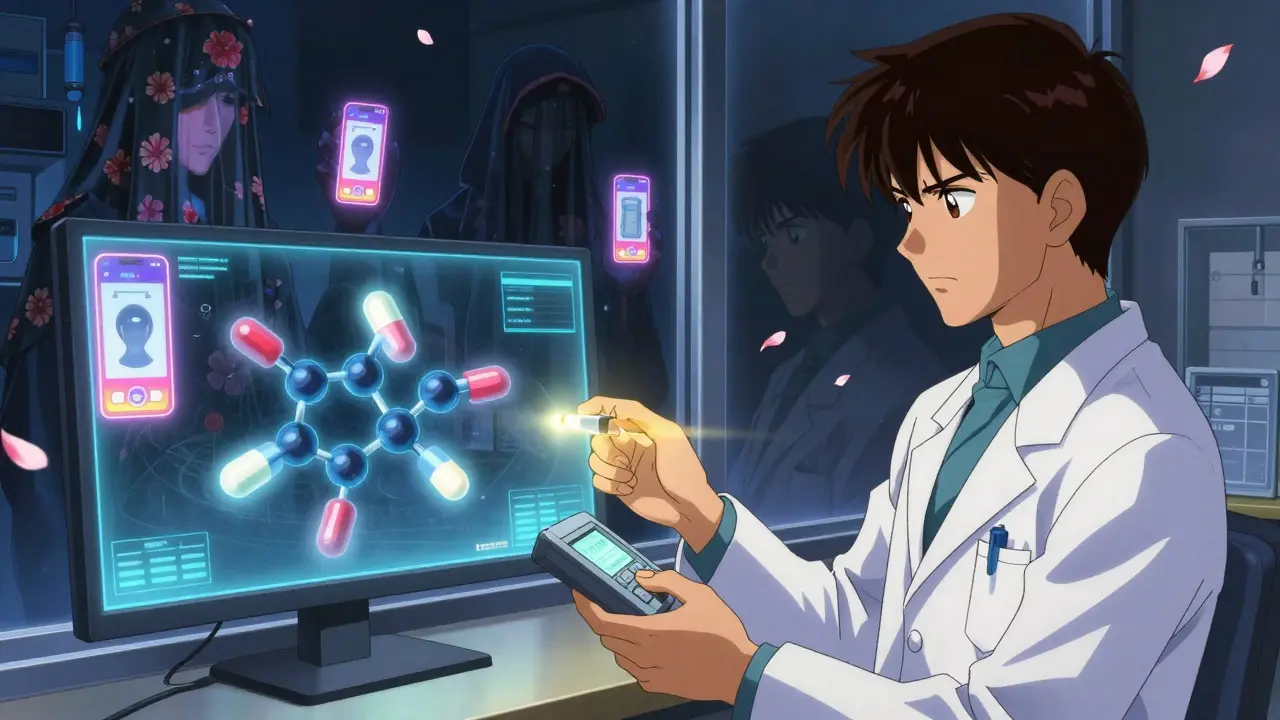
Where training falls short-and why
Not every country has access to advanced tools or updated curricula. In the U.S., pharmacists have the DSCSA system, manufacturer verification portals, and access to CE programs. But in many low-resource settings, pharmacists still rely on visual checks and phone calls to distributors. A 2023 survey of community pharmacies in Southeast Asia found that 62% had never received formal training on counterfeit detection. Many didn’t even know where to find manufacturer contact information. Some were told by suppliers, “Don’t worry, it’s the same thing.” And here’s the catch: counterfeiters are adapting. They now mimic the digital verification codes used in the DSCSA system. They copy QR codes that link to fake verification sites. That means training must evolve faster than the fraud.The human factor: skepticism as a skill
No device replaces a pharmacist’s instinct. The most effective pharmacists aren’t the ones with the fanciest gadgets-they’re the ones who ask questions. Ask: Why is this drug arriving from a distributor I’ve never heard of? Ask: Why is this oncology drug being sold on a website with no physical address? Ask: Why does the bottle smell faintly of alcohol when the label says it’s water-based? Pfizer’s Anti-Counterfeiting Program has trained law enforcement in 183 countries since 2004. But they’ve always said: “The real eyes are on the pharmacy floor.” That’s why training must go beyond compliance. It needs to build culture. It needs to reward caution. It needs to make pharmacists feel supported when they flag a suspicious product-even if it means delaying a patient’s refill.
What’s next: AI, biologics, and the future of detection
The next wave of counterfeit drugs will target biologics and gene therapies. These are complex molecules that can’t be easily replicated-but criminals are trying. A fake monoclonal antibody could be deadly. AI-powered detection tools are getting better. They’re learning to spot micro-variations in packaging, even when the human eye can’t. Some platforms now allow pharmacists to upload photos of suspicious packages and get instant feedback from a global network of peers. And patient education is becoming part of the role. RxAll’s platform includes resources patients can use to check their own meds. If a patient walks in with a bottle they bought on Facebook Marketplace, the pharmacist can show them how to verify it. The goal isn’t just to catch fakes. It’s to make the entire system more resilient.How to get trained: where to start
If you’re a pharmacist looking to strengthen your skills:- Check with your state board of pharmacy-many now require continuing education on counterfeit detection
- Enroll in TrainingNow.com’s FWA course or PowerPak’s “Fakes in the Pharmacy” module
- Request access to manufacturer verification portals (Pfizer, Roche, Novartis all offer them)
- Join the Pharmaceutical Security Institute’s newsletter for real-time alerts
- Ask your employer if they provide handheld verification tools like RxAll’s device
What are the most common signs of a counterfeit drug?
Look for mismatched packaging-wrong font, blurry printing, or inconsistent colors. Check for misspelled brand names or incorrect batch numbers. Be suspicious if the price is far below wholesale cost. Genuine specialty drugs rarely appear in general retail or unverified online stores. Also, inspect the tablet itself: unusual texture, odd smell, or unexpected color can indicate tampering.
Can I trust online pharmacies that offer cheap medications?
Almost never. The Partnership for Safe Medicines warns that 96% of online pharmacies operate illegally. Even if the site looks professional, it may be selling fake, expired, or contaminated drugs. Always verify the pharmacy through the National Association of Boards of Pharmacy’s Verified Internet Pharmacy Practice Sites (VIPPS) program or check the manufacturer’s official list of authorized distributors.
Is counterfeit drug training required by law?
In the U.S., the Drug Supply Chain Security Act (DSCSA) requires verification systems, but not specific training. However, CMS mandates Fraud, Waste, and Abuse (FWA) training within 90 days of hire for pharmacists handling Medicare claims. Many states and employers now require or strongly recommend counterfeit detection training as part of continuing education. In the EU and parts of Africa, formal training is increasingly mandatory for licensed pharmacists.
How do I report a suspected counterfeit drug?
Contact the manufacturer directly using their official website. Then report it to the FDA’s MedWatch program or your country’s national drug regulatory authority. If the drug was purchased online, file a complaint with the Internet Crime Complaint Center (IC3). Never return or destroy suspected counterfeit drugs-preserve them for investigation.
Are there free training resources available for pharmacists?
Yes. The WHO and FIP offer a free, bilingual (English/French) competency curriculum designed for pharmacy schools and continuing education. The Pharmaceutical Security Institute also provides public alerts and educational materials. Many manufacturers, like Pfizer and Gilead, offer free anti-counterfeiting training modules for pharmacists and pharmacy staff through their corporate websites.
Eileen Reilly
January 10, 2026 AT 12:56lol at people who think this is some new crisis. i’ve been seeing fake oxy pills since 2015. pharmacists? they’re too busy arguing with insurance companies to even look at the bottle. 🤷♀️
Monica Puglia
January 12, 2026 AT 00:59just had a patient bring in a bottle of metformin from a ‘discount pharmacy’ on Instagram. same thing happened to me last week. i scanned it with my RxAll device-totally fake. i called the manufacturer, they confirmed. patient was so embarrassed. i just said, ‘better safe than dead.’ 💊❤️
Cecelia Alta
January 12, 2026 AT 10:09oh wow, another ‘pharmacist hero’ story. let me guess-this is from someone who works in a CVS in Ohio and thinks they’re saving lives by squinting at pill colors? newsflash: most of us are just glorified cashiers who get yelled at for not having the exact dosage. and don’t get me started on these ‘handheld devices.’ $3,000 gadget that’s gonna break in six months? yeah right. i’ve seen the same three fake pills since 2018. nobody’s training us. nobody’s paying us. and now we’re supposed to be forensic chemists too? 🙄
Alex Fortwengler
January 14, 2026 AT 07:34you know what’s really happening? the feds are letting this happen on purpose. they want you to rely on tech so they can track every pill you dispense. the DSCSA? it’s not about safety-it’s about surveillance. and those ‘verified’ online pharmacies? half of them are run by Chinese cartels with fake FDA seals. they’re using AI to clone packaging now. even the QR codes are fakes. you think you’re safe? you’re just a data point in a bigger game.
steve ker
January 16, 2026 AT 00:58pharmacists in Africa don’t have devices or training. we use our eyes and God’s grace. if you can’t tell a fake from real by smell and weight, you shouldn’t be handling medicine. this whole western tech obsession is a distraction. the problem isn’t lack of gadgets-it’s lack of accountability.
TiM Vince
January 16, 2026 AT 08:36as a pharmacist who trained in Nigeria and now works in Detroit-this is the same battle. in Lagos, we’d call the manufacturer’s local rep on a landline. here, we scan QR codes. same fear. same stakes. the real gap isn’t tech-it’s respect. nobody listens to us until someone dies.
Abner San Diego
January 16, 2026 AT 19:28all this training is just a distraction. the real problem is that Big Pharma lets generics get made in unregulated factories so they can charge $2,000 for a bottle of insulin. if they didn’t price gouge, people wouldn’t buy from sketchy websites. blame the corporations, not the pharmacist who’s just trying to make rent.
jordan shiyangeni
January 17, 2026 AT 12:59you’re all missing the point. this isn’t about counterfeit drugs-it’s about the collapse of professional integrity. pharmacists used to be trusted healers. now they’re glorified order-fillers who don’t even question why a 60-year-old woman is getting 1000 pills of Adderall from a ‘pharmacy’ in Moldova. the training programs are too soft. they need mandatory psychological evaluations. if you can’t be suspicious, you shouldn’t be licensed. this isn’t a technical problem-it’s a moral failure. and it’s spreading.
Jessica Bnouzalim
January 18, 2026 AT 04:18YES!! I just finished the WHO/FIP training last week-free, 45 minutes, life-changing. I showed it to my whole team. We’re now doing a weekly ‘mystery pill’ review. One guy found a fake blood pressure med last Tuesday-turned out the batch number was backwards. We’re not heroes-we’re just finally paying attention. 💪💊 Let’s keep this momentum going-share the free resources! #PharmacistPower