
NSAID Risk Calculator
NSAID Risk Assessment
Calculate your risk of fluid retention and hospitalization when taking NSAIDs with heart failure. Note: Even short-term use can be dangerous.
For many people, popping an ibuprofen or naproxen for a headache, sore knee, or back pain feels harmless. But if you have heart failure, that little pill could be pushing your body toward a hospital bed. The connection isn’t subtle - it’s well-documented, urgent, and often ignored. NSAIDs don’t just mask pain; they interfere with how your kidneys manage fluid, and in someone with heart failure, that’s a dangerous mix.
How NSAIDs Trigger Fluid Retention
NSAIDs work by blocking enzymes called COX-1 and COX-2, which are involved in making prostaglandins - chemicals that cause inflammation and pain. But prostaglandins also play a quiet, critical role in your kidneys. They help keep blood flowing to the kidneys and signal them to release sodium and water instead of holding onto it.
When NSAIDs shut down prostaglandin production, your kidneys start clinging to sodium like a lifeline. That sodium pulls water with it. The result? Fluid builds up in your legs, lungs, and abdomen. For a healthy person, this might mean a little puffiness. For someone with heart failure, it’s a red flag that their heart is being overwhelmed.
Think of your heart like a pump that’s already struggling. Adding extra fluid is like asking it to move more water through a clogged pipe. Your heart can’t keep up. Blood backs up. Pressure rises. Symptoms like swelling, sudden weight gain, and shortness of breath appear - often within just a couple of days.
The Real Numbers Behind the Risk
This isn’t theoretical. A 2022 study tracking nearly 200,000 people with type 2 diabetes in Denmark found that even short-term NSAID use - as little as one to three days - raised the risk of hospitalization for heart failure by up to 88%. The highest risk came in the first week. Celecoxib, diclofenac, ibuprofen, and naproxen all carried similar danger.
Another study from the European Heart Journal showed that NSAIDs reduce blood flow to the kidneys by 20-30% in heart failure patients. That drop in kidney function directly correlates with fluid buildup. And it’s not just prescription NSAIDs. Over-the-counter versions - the kind you grab without a script - are just as risky. In fact, most heart failure patients who end up hospitalized after taking NSAIDs say they didn’t think it was a big deal because it was "just ibuprofen."
A 2018 American Heart Association survey found that 37% of heart failure patients had taken NSAIDs without realizing the danger. Of those, 62% had a worsening of symptoms serious enough to require emergency care.
There’s No Safe NSAID for Heart Failure
For years, people thought COX-2 inhibitors like celecoxib (Celebrex) were safer because they didn’t irritate the stomach as much. That turned out to be wrong. The same 2003 review by Bleumink et al. showed that these drugs affect the kidneys just like traditional NSAIDs. They cause the same sodium retention, the same drop in kidney function, the same spike in heart failure risk.
Even naproxen - sometimes called the "least risky" NSAID - still carries a significant danger. While some studies show slightly lower cardiovascular risk compared to others, no NSAID is safe for someone with heart failure. The European Society of Cardiology’s 2021 guidelines give NSAIDs a Class III recommendation: "harm proven." That means they should be avoided entirely.
And it’s not just about the drug class. Dose doesn’t save you. Even low doses used for a few days can trigger acute decompensation. One Reddit user shared that after taking two 400mg ibuprofen tablets for a backache, they gained 10 pounds of fluid in 72 hours. They ended up in the ER.
Why This Happens More in Older Adults
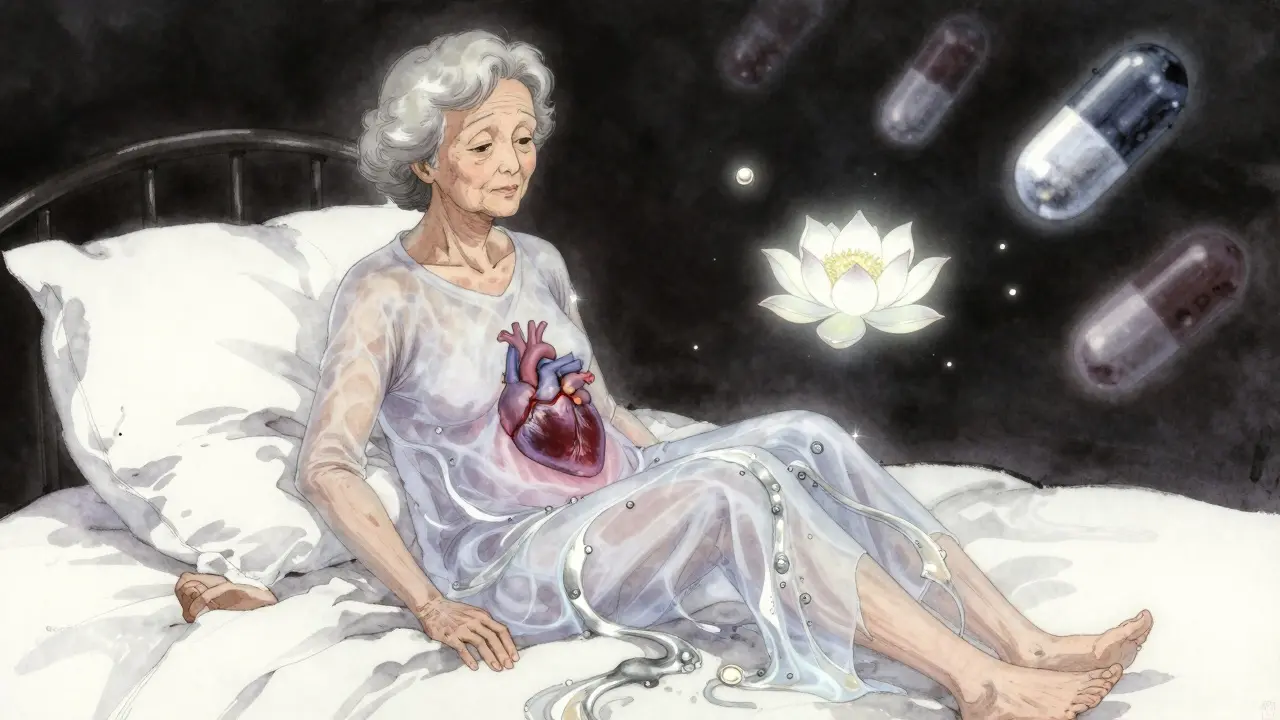
Heart failure is common in older adults. So are arthritis, back pain, and headaches. That’s a dangerous overlap. Elderly patients are more likely to have reduced kidney function to begin with. Their bodies hold onto fluid more easily. Their hearts are weaker. And they’re often on multiple medications - diuretics, ACE inhibitors, beta-blockers - that NSAIDs can interfere with.
NSAIDs blunt the effect of many heart failure drugs. For example, they can make diuretics less effective, so fluid isn’t flushed out. They can raise blood pressure, counteracting antihypertensives. They can worsen kidney damage caused by ACE inhibitors or ARBs. It’s a cascade effect: one pill triggers a chain reaction that your heart can’t handle.
Dr. Michael A. Chen from the University of Washington puts it plainly: "Taking a medicine that causes your body to retain sodium - like NSAIDs - may cause your heart failure to get worse."
What to Use Instead
Acetaminophen (Tylenol) is the go-to alternative. It doesn’t affect prostaglandins in the kidneys, so it doesn’t cause fluid retention. It’s not an anti-inflammatory, so it won’t help with swelling from arthritis. But for general pain - headaches, muscle aches, minor joint discomfort - it’s the safest choice.
Non-drug options matter too. Heat packs, gentle stretching, physical therapy, and massage can reduce pain without risking your heart. If inflammation is the real issue, talk to your doctor about other strategies. Sometimes a short course of low-dose steroids under close supervision is safer than daily NSAIDs.
Don’t assume natural remedies are safe either. Turmeric, ginger, and fish oil supplements can also thin the blood or affect kidney function. Always check with your provider before starting anything new.

What Patients and Families Need to Know
Many heart failure patients aren’t warned about NSAIDs. A 2021 survey found that only 43% of primary care doctors routinely ask their heart failure patients if they’re taking over-the-counter pain relievers. That’s a gap that can cost lives.
If you have heart failure:
- Never take ibuprofen, naproxen, diclofenac, or celecoxib without talking to your doctor first.
- Read labels on cold medicines, menstrual pain relievers, and arthritis creams - many contain NSAIDs under different names.
- Watch for sudden weight gain (more than 2-3 pounds in a day or 5 pounds in a week), increased swelling in ankles or belly, or new shortness of breath.
- Keep a list of all medications - including supplements and OTC drugs - and review it with your doctor every visit.
Family members play a key role. They can help by:
- Keeping NSAIDs out of the medicine cabinet.
- Checking labels before buying pain relievers.
- Noticing signs of fluid retention and reporting them immediately.
One simple rule: If it’s not acetaminophen and it’s for pain, don’t take it unless your cardiologist says yes.
The Bigger Picture: Why This Keeps Happening
The global NSAID market was worth over $11 billion in 2022. Most of those sales are over-the-counter. Companies market them as safe, everyday solutions. The FDA required stronger warnings on NSAID labels in 2020, but the message hasn’t reached everyone.
Meanwhile, heart failure patients are being discharged from hospitals with little follow-up on medication safety. A 2024 registry found that patients exposed to NSAIDs within 30 days of discharge had a 28% higher chance of being readmitted. That’s preventable.
New tools are coming. The American College of Cardiology plans to launch a mobile app in mid-2025 that will alert heart failure patients when they try to order or scan a medication containing NSAIDs. But until then, the responsibility falls on patients, families, and doctors to stay informed.
The bottom line: NSAIDs and heart failure don’t mix. No exception. No safe dose. No "just this once." The risk isn’t small - it’s life-threatening. And the alternative is simple: choose acetaminophen. Ask your doctor. Protect your heart.
Can I take ibuprofen if I have heart failure?
No. Ibuprofen and other NSAIDs increase the risk of fluid retention, worsen kidney function, and can trigger heart failure hospitalization - even with short-term use. Avoid all NSAIDs, including over-the-counter versions.
Is naproxen safer than ibuprofen for heart failure?
While some studies suggest naproxen may have a slightly lower cardiovascular risk than other NSAIDs, it still causes fluid retention and impairs kidney function in heart failure patients. No NSAID is considered safe. Acetaminophen remains the preferred pain reliever.
How quickly can NSAIDs cause heart failure symptoms to worsen?
Symptoms like swelling, weight gain, and shortness of breath can appear within 24 to 72 hours after taking an NSAID. Studies show the highest risk of hospitalization occurs in the first week of use, even with just one or two doses.
What pain reliever is safe for heart failure patients?
Acetaminophen (Tylenol) is generally the safest option for pain relief in heart failure patients because it doesn’t affect kidney function or cause fluid retention. Always check with your doctor before taking any new medication, even if it’s sold over the counter.
Do NSAIDs interfere with heart failure medications?
Yes. NSAIDs can reduce the effectiveness of diuretics, ACE inhibitors, ARBs, and beta-blockers - all common heart failure treatments. They can also raise blood pressure and worsen kidney damage, making your heart failure harder to control.
Should I stop NSAIDs if I notice swelling or weight gain?
Yes. Sudden swelling, rapid weight gain (more than 2-3 pounds in a day), or increased shortness of breath are signs your heart failure may be worsening. Stop taking NSAIDs immediately and contact your doctor. These symptoms could signal a medical emergency.
Are topical NSAID creams safe for heart failure patients?
Topical NSAIDs (like gels or patches) are absorbed into the bloodstream, though in smaller amounts. Even low levels can affect kidney function and fluid balance in heart failure patients. They are not considered safe. Use acetaminophen or non-drug methods instead.
Can I take NSAIDs if I have heart failure but no symptoms?
No. Even if you feel fine, your heart is still weakened. NSAIDs can trigger fluid retention and decompensation without warning. Guidelines from the American Heart Association and European Society of Cardiology state NSAIDs are contraindicated at all stages of heart failure - regardless of symptoms.
James Dwyer
January 28, 2026 AT 22:25This is one of those topics that gets buried under the noise of everyday life. I had no idea even a couple of ibuprofen could tank someone’s heart failure status. My uncle was discharged last year and his nurse didn’t mention this at all. Scary how common this is.
Phil Davis
January 29, 2026 AT 12:00So let me get this straight - we’re telling people not to take a drug that’s been on every drugstore shelf for 50 years because of a 2022 study? Meanwhile, acetaminophen kills more people from liver failure than NSAIDs ever did from heart issues. The real danger is the panic, not the pill.
Irebami Soyinka
January 31, 2026 AT 00:02Y’all in the US think you can just pop pills like candy and everything’s fine. In Nigeria, we know painkillers can kill - we’ve seen it. My aunt died after taking diclofenac for arthritis. She didn’t even know she had heart problems. You think this is new? It’s not. It’s just that your doctors finally noticed. 😒
Katie Mccreary
February 1, 2026 AT 03:27Acetaminophen is the ‘safe’ alternative? Sure. Until you overdose on it. 4,000 mg/day is the limit, but how many people actually track that? And don’t even get me started on how many OTC meds already contain it. You’re just swapping one silent killer for another.
SRI GUNTORO
February 2, 2026 AT 11:08It’s not just NSAIDs. It’s the entire modern medical system. People are taught to self-medicate like it’s a right, not a privilege. No one takes responsibility anymore. If you have heart failure, you should be on a 24/7 watchlist. No exceptions. No compromises. This isn’t a suggestion - it’s survival.
Kevin Kennett
February 3, 2026 AT 07:01My dad’s been on diuretics for 8 years. Last winter he took a naproxen for his knee - didn’t even think twice. Two days later he was in the ER with 12 pounds of fluid. We thought it was just a bad cold. Turns out, it was the pill. Now I keep all NSAIDs locked up. He doesn’t even know where they are. Best thing I ever did.
Jess Bevis
February 4, 2026 AT 03:14Topical NSAIDs aren’t safe either? That’s wild. I’ve been using the gel for my back. Guess I’m switching to heat wraps. Thanks for the heads-up.
Rose Palmer
February 4, 2026 AT 18:15As a registered nurse specializing in cardiac care, I cannot emphasize enough the urgency of this message. The clinical data is unequivocal. Patients who self-administer NSAIDs post-discharge exhibit statistically significant increases in 30-day readmission rates. Education must be standardized, documented, and reinforced at every point of contact. This is not optional.
Howard Esakov
February 6, 2026 AT 03:45Oh please. The AHA and ESC are just following Big Pharma’s new script. Acetaminophen is owned by Johnson & Johnson. Tylenol’s marketing budget is bigger than the entire NIH budget for heart failure research. This isn’t medicine - it’s corporate choreography. 🤡
Rhiannon Bosse
February 7, 2026 AT 11:31Wait - so you’re telling me my grandma’s arthritis cream is secretly trying to kill her? And her cold medicine? And that ‘natural’ turmeric supplement her yoga friend gave her? And the pharmacy tech didn’t even blink when she bought 100 pills? I think the system is rigged. I think they WANT us to get sicker. I’m moving to the woods.
Bryan Fracchia
February 9, 2026 AT 02:13It’s funny how we treat medicine like a vending machine. Pop a pill, feel better, move on. But the body isn’t a machine - it’s a conversation. Every drug you take is a word in that conversation. NSAIDs? They’re shouting. And if your heart’s already whispering, it gets drowned out. Maybe the real question isn’t ‘what’s safe?’ - it’s ‘are we listening?’