

When you take a generic version of a medication, you expect it to work just like the brand-name version. For most drugs, that’s true - and regulators allow a certain amount of variation in how the body absorbs the drug. But for narrow therapeutic index drugs, even small differences can be dangerous. These aren’t your everyday pills. They’re the ones where a tiny change in blood levels can mean the difference between healing and hospitalization - or worse.
What Makes a Drug Have a Narrow Therapeutic Index?
A narrow therapeutic index (NTI) means the gap between a drug’s effective dose and its toxic dose is razor-thin. The FDA uses a cutoff of 3 or less for the therapeutic index - meaning if the toxic dose is only three times higher than the effective dose, it’s classified as NTI. That’s a tiny window. For comparison, many common medications like ibuprofen or amoxicillin have therapeutic indexes in the hundreds or thousands.
Think of it like driving a car with no room for error. You’re not just speeding up or slowing down - you’re balancing on a tightrope. One wrong move, and you fall. That’s why drugs like warfarin, digoxin, levothyroxine, and phenytoin are so carefully managed. Too little warfarin, and you risk a clot. Too much, and you bleed internally. Same with levothyroxine: too little and your thyroid stays underactive; too much and your heart races, your bones weaken, and you risk atrial fibrillation.
These drugs have been monitored closely since the 1970s, when doctors started using blood tests to track levels in patients. Back then, it became clear that not all versions of the same drug performed the same way - especially when generics entered the market. That’s when regulators realized standard bioequivalence rules weren’t enough.
How Bioequivalence Rules Are Different for NTI Drugs
For most generic drugs, regulators accept a range of 80% to 125% for how much of the drug gets into the bloodstream (measured by AUC and Cmax). That’s a 45% spread. For NTI drugs, that’s too wide. The FDA, EMA, and Health Canada all tightened the rules - but they didn’t all do it the same way.
The FDA’s approach is the most complex. Instead of just tightening the range, they use something called Reference-Scaled Average Bioequivalence (RSABE). Here’s how it works: if the brand-name drug varies a lot from person to person (high variability), the FDA allows the generic to vary a bit more too - but only up to a point. Then they add two extra checks:
- The generic’s variability must not be greater than 2.5 times the brand’s variability.
- The average absorption must still fall within the standard 80-125% range.
This means a generic drug can’t just be close - it has to be consistent. If one patient gets a wildly different dose from another, it fails. This method was developed because some NTI drugs, like tacrolimus, show high variability naturally. A fixed 90-111% rule (used by the EMA) wouldn’t work for those cases.
The European Medicines Agency (EMA) takes a simpler route: they just shrink the acceptable range to 90-111% for NTI drugs. Health Canada uses 90.0-112.0% for AUC. These fixed limits are easier to test, but they don’t account for how much the original drug varies between people. The FDA’s method is more precise - but also more expensive and harder to run.

Why This Matters for Patients and Prescribers
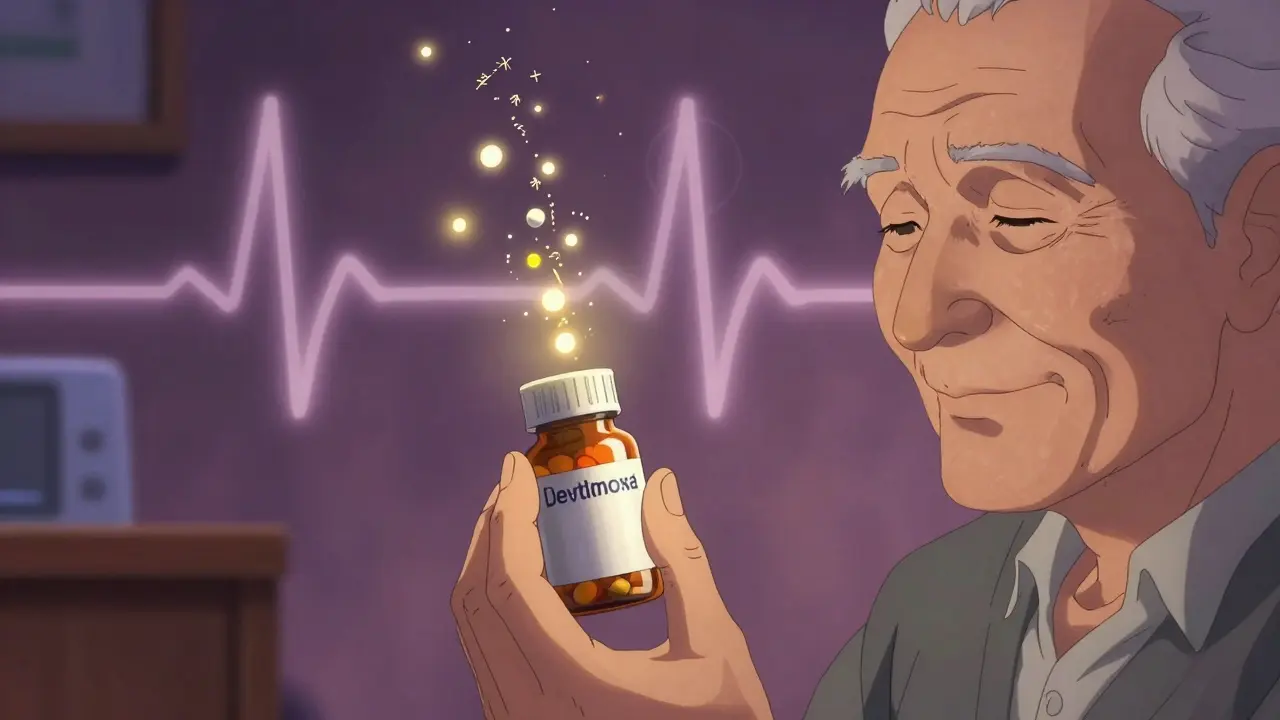
Patients on NTI drugs often take them for life. A transplant patient on tacrolimus can’t afford a sudden drop in drug levels - it could trigger organ rejection. An elderly person on digoxin can’t risk heart rhythm problems from a small spike. That’s why many doctors and patients are hesitant to switch from brand to generic, even when the generic is cheaper.
Real-world data, though, tells a different story. A 2017 study in the American Journal of Transplantation found no difference in rejection rates between patients on brand and generic tacrolimus - as long as the generic met the FDA’s stricter bioequivalence standards. Another study in Circulation: Cardiovascular Quality and Outcomes in 2019 showed no increase in bleeding or clotting events when patients switched from brand to generic warfarin.
So why the hesitation? Because for years, the rules weren’t clear. Generic manufacturers didn’t know exactly what was required. Some products entered the market with inconsistent results. That eroded trust. Now, with the FDA’s updated requirements - and more transparent guidance - that’s changing.
The Cost of Getting It Right
Testing a generic NTI drug isn’t cheap. Standard bioequivalence studies cost $300,000 to $700,000. For NTI drugs, the FDA’s approach requires larger studies - often 36 to 54 participants instead of 24 to 36 - and more complex designs. That pushes costs to $500,000 to $1 million per drug. That’s a big barrier for smaller generic companies.
Some experts worry this could reduce competition. If only big pharma can afford the studies, fewer generics enter the market - and prices stay high. Dr. Lawrence Lesko from the University of Florida has argued that not all NTI drugs need this level of scrutiny. He points out that drugs with very low variability, like lithium, might not benefit from the FDA’s complex model. A simpler fixed range might be enough.
But the FDA’s position is clear: safety isn’t optional. For drugs where a 10% difference in blood level can cause harm, the extra cost is justified. And the data backs them up. Since implementing these rules, there’s been no spike in adverse events linked to generic NTI drugs. In fact, the opposite is true - more patients are switching safely to generics, saving the U.S. healthcare system millions annually.
Which Drugs Are Classified as NTI?
The FDA doesn’t publish a single official list. Instead, they issue product-specific guidance for each NTI drug as it’s reviewed. As of 2023, they’ve issued formal bioequivalence guidance for 15 drugs, including:
- Warfarin
- Levothyroxine
- Digoxin
- Phenytoin
- Tacrolimus
- Carbamazepine
- Valproic acid
- Lithium carbonate
- Theophylline
- Sirolimus
- Everolimus
- Mercuraptopurine
- Thioguanine
These drugs are used for conditions ranging from epilepsy to heart failure to organ transplants. They’re not rare - collectively, they account for about $45 billion in U.S. sales each year. That’s a huge market, and generic versions could save billions more - if they can meet the standards.
What’s Next for NTI Drug Regulation?
The FDA is working on a more systematic way to classify NTI drugs. Right now, it’s case-by-case. In 2022, they released a pharmacometric approach using quantitative calculations to determine therapeutic index. By 2024, they plan to finalize guidance on the RSABE method, making it official policy.
There’s also talk of global harmonization. The EMA, Health Canada, and the FDA are all moving toward tighter standards - but with different methods. If they can align on a single framework by 2026, it could cut development costs by 15-20%, according to McKinsey & Company. That would mean more generics, lower prices, and broader access.
For now, the message is clear: safety comes first. The stricter rules aren’t about stopping generics - they’re about making sure they’re safe. And the data shows they are. When the right standards are applied, patients can switch with confidence.
Are generic NTI drugs safe to use?
Yes, when they meet the stricter bioequivalence standards set by regulators like the FDA. Real-world studies have shown no increase in adverse events when patients switch from brand to generic versions of drugs like warfarin, tacrolimus, and levothyroxine - as long as the generic passed the required testing. The key is ensuring the generic meets the tighter criteria, not just any generic.
Why do some doctors refuse to prescribe generic NTI drugs?
Some doctors are cautious because of past experiences when generic NTI drugs weren’t held to strict standards. In the early 2000s, some products had inconsistent absorption, leading to real patient harm. That created lasting distrust. Now, with clearer FDA rules and proven safety data, that’s changing - but habits take time to shift.
Does the FDA have a complete list of all NTI drugs?
No, the FDA does not maintain a public, comprehensive list. Instead, they identify NTI drugs on a case-by-case basis through product-specific bioequivalence guidance. As of 2023, they’ve issued formal guidance for 15 drugs. Other agencies, like the EMA, maintain broader lists, but the U.S. system is evolving toward a more quantitative classification method expected to be finalized by 2024.
How do I know if my generic drug is an NTI drug?
Check the drug’s prescribing information or ask your pharmacist. Common NTI drugs include warfarin, levothyroxine, digoxin, phenytoin, and tacrolimus. If you’re on one of these, your doctor may have already flagged it. You can also look up the drug on the FDA’s website - if there’s a specific bioequivalence guidance document, it’s likely an NTI drug.
Can I switch between different generic brands of an NTI drug?
It’s possible, but not always recommended without monitoring. Even though each generic must meet strict standards, switching between different manufacturers can still cause small changes in blood levels - especially with drugs like warfarin or levothyroxine. Your doctor may suggest staying on the same generic brand to avoid fluctuations. Always check with your provider before switching.
Akriti Jain
January 21, 2026 AT 10:22Mike P
January 22, 2026 AT 13:57Jasmine Bryant
January 24, 2026 AT 13:57Hilary Miller
January 25, 2026 AT 21:28Margaret Khaemba
January 26, 2026 AT 06:40Malik Ronquillo
January 26, 2026 AT 18:04Alec Amiri
January 27, 2026 AT 02:10Lana Kabulova
January 27, 2026 AT 03:55