

When you buy generic medications from an online pharmacy, your insurance might cover it - or it might not. It’s not as simple as showing your card at the counter. The truth is, most people don’t understand how insurance actually works with online pharmacies, especially when it comes to generics. You could be paying $15 for a 30-day supply of metformin at your local pharmacy, while the same drug through your insurer’s mail-order service costs just $10. Or you might pay nothing at all if you’re signed up for Amazon’s RxPass. But here’s the catch: not every online pharmacy accepts insurance. And even if it does, your plan might not cover the specific generic version they sell.
How Insurance Actually Covers Generic Drugs
Most health insurance plans organize drugs into tiers. Think of it like a pricing ladder. The lowest tier is for generic drugs - the cheapest option. These are exact copies of brand-name medications, just without the marketing costs. They’ve been around long enough that their patents expired, so other companies can make them. That’s why they cost so much less. Your insurance company doesn’t just cover any generic. They have a list called a formulary. This is their approved drug list. If your generic isn’t on it, you might pay full price. Even if it is, you might still pay a copay - usually $5 for a 30-day supply or $10 for a 90-day refill. Mail-order pharmacies, which are part of your insurer’s network, often give you the lowest copays because they’re designed for long-term, maintenance medications like blood pressure pills or cholesterol drugs. But here’s where it gets tricky: not all online pharmacies are the same. There’s a big difference between a mail-order pharmacy run by your insurer (like Express Scripts or CVS Caremark) and a random website you found on Google. The first one is built into your insurance plan. The second? It might not take insurance at all. You could end up paying out of pocket and then trying to get reimbursed - a messy, time-consuming process that often fails.Mail-Order vs. Independent Online Pharmacies
Mail-order pharmacies are part of your insurance plan’s pharmacy benefit manager (PBM) network. These are the big players: CVS Caremark, Express Scripts, Optum Rx. They handle everything - from verifying your coverage to processing prescriptions and shipping your meds. You typically need a 90-day prescription from your doctor, and delivery takes about a week. But if you’re on a stable medication, this saves money and hassle. One user on Reddit said they pay $10 for 90 days of metformin through mail-order, while their local CVS charges $15 for the same thing - same insurance plan. Independent online pharmacies? These are like Amazon or Walmart’s pharmacy websites. Some accept insurance. Others don’t. Some only let you pay upfront and submit a claim later. And even if they do accept insurance, they might not be in your plan’s network. That means you could pay full price and get nothing back. Always call ahead. Ask: “Do you accept my insurance plan? What’s my copay for this generic?” Don’t assume. One person in Seattle found out the hard way when they ordered lisinopril from a site that looked legit - only to find out their insurer wouldn’t cover it at all.Why Your Insurance Might Force You to Switch to a Generic
You might wake up one day and find your brand-name medication replaced with a generic - without your doctor’s input. This isn’t a mistake. It’s called non-medical switching. Insurance companies do this to cut costs. If a generic exists, they’ll make you use it. Even if your doctor says the brand works better for you, your plan may deny coverage unless you jump through hoops. To fight back, you need a formulary exception. That means your doctor has to submit paperwork explaining why the brand is medically necessary. It’s not easy. But it’s possible. Many people with autoimmune diseases, epilepsy, or mental health conditions have successfully appealed these switches. The key? Documentation. Your doctor needs to show that the generic caused side effects or didn’t work. If you’ve had a bad reaction, keep records. Emails, pharmacy notes, ER visits - all help.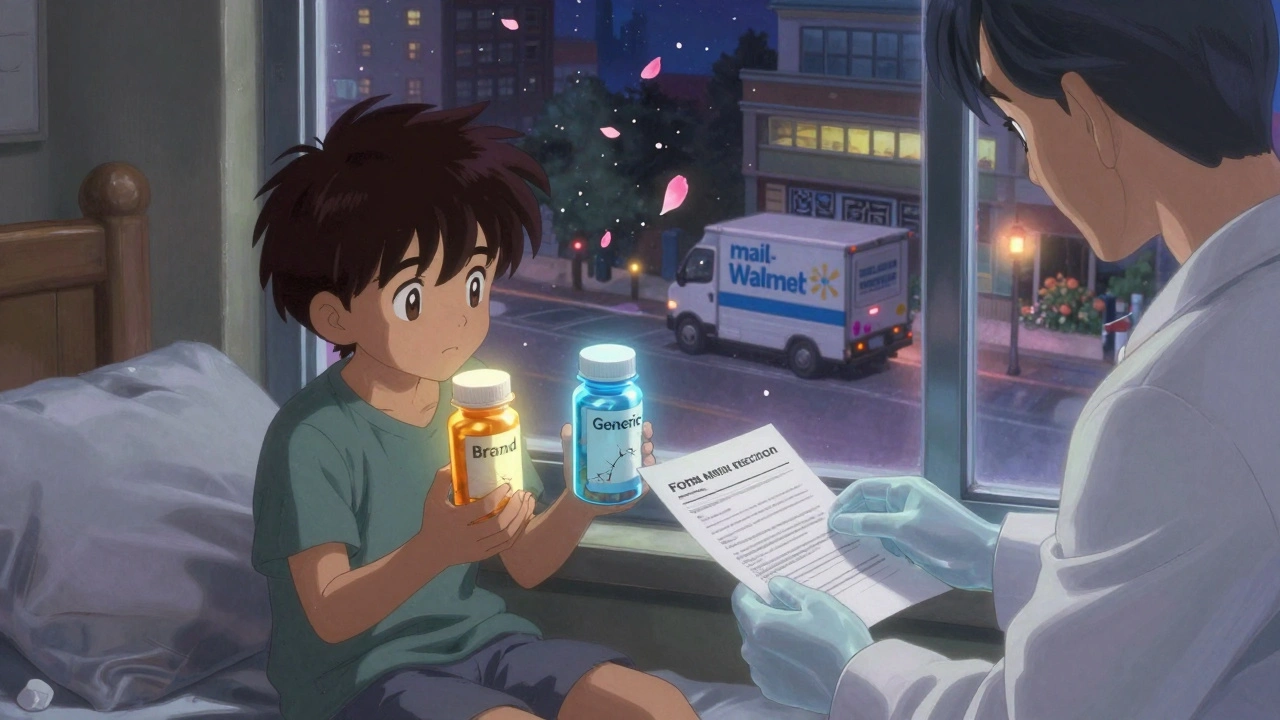
When a Generic Costs More Than Insurance
Here’s the counterintuitive part: sometimes, paying cash is cheaper than using insurance. Walmart, Target, and Costco all offer a $10 or $4 for 90-day supply of dozens of common generics - no insurance needed. If you have a high-deductible plan, you might be paying $20 or more per prescription until you hit your deductible. In that case, paying $10 cash saves you money and avoids the hassle of filing claims. Same goes for Amazon RxPass: $5 a month for unlimited access to over 100 common generics. No copay, no deductible. Just pay the flat fee. But RxPass has limits. It only covers specific drugs - things like metformin, atorvastatin, levothyroxine. If you’re on a niche medication, it won’t help. And you need an Amazon Prime membership. Still, for people on multiple maintenance drugs, it’s a game-changer.How to Check If Your Insurance Covers a Generic Online
Don’t guess. Check. Start with your insurer’s website. Most have a “Drug Search” tool. Type in the generic name - not the brand. Look for the tier and copay. If it says “preferred,” you’re good. If it’s “non-preferred,” you’ll pay more. If it’s not listed, you might not be covered at all. Next, check the pharmacy’s website. Amazon Pharmacy, GoodRx, and Blink Health all show your exact out-of-pocket cost based on your insurance. Enter your plan info, and they’ll tell you the price before you buy. No surprises. Finally, call your insurer’s pharmacy help line. Many plans, like MHBP, offer 24/7 nurse support. Ask: “Is this generic covered under my plan? Is it in-network? What’s my copay?” Write down the name of the rep and the date. If something goes wrong later, you’ll have proof.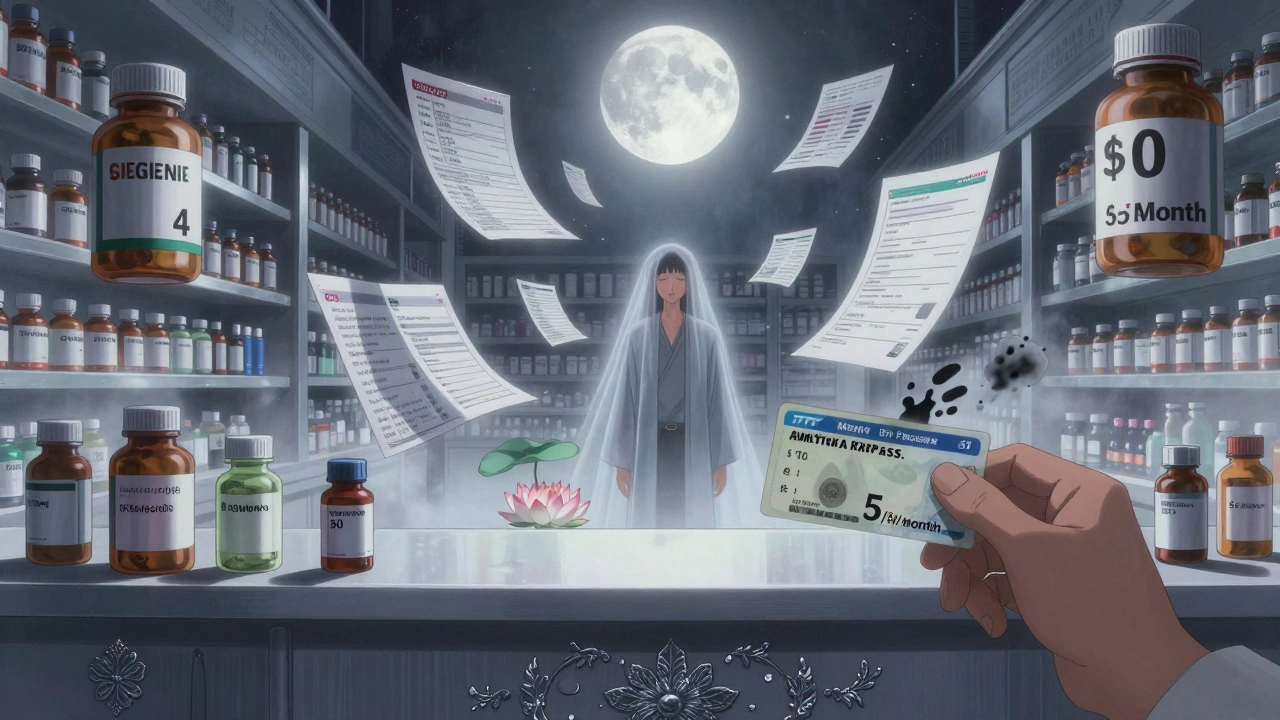
What to Do If Your Insurance Denies Coverage
If your plan denies coverage for a generic you need, you have options:- Ask your doctor to request a formulary exception - this is your best shot.
- Switch to a different generic. Not all generics are identical in how they’re absorbed. Your doctor might find one that’s covered and still effective.
- Use a cash-price pharmacy like Walmart or Costco. Often cheaper than your copay.
- Apply for patient assistance programs. Many drugmakers offer free or low-cost meds to qualifying patients.
The Big Picture: Why This Matters in 2025
By 2025, nearly half of all generic maintenance medications will be delivered through mail-order or home delivery. That’s up from 32% in 2022. Insurers are pushing harder for generics because they save billions. Employers are requiring them - 68% of large companies now mandate generic use when available. But this isn’t just about money. It’s about access. If you’re on a fixed income, a $5 monthly fee for your blood pressure pill could mean the difference between taking it or skipping doses. If you live in a rural area without a nearby pharmacy, mail-order might be your only option. The system isn’t perfect. PBMs control 92% of prescription drug plans. Their algorithms decide what’s covered, what’s not, and how much you pay. But you’re not powerless. You can use tools like GoodRx, check your formulary, call your insurer, and ask for exceptions. You can also choose to pay cash when it makes sense.What You Should Do Right Now
1. Find your plan’s formulary. Go to your insurer’s website and search for your medications. 2. Compare prices. Use GoodRx or Amazon RxPass to see what you’d pay without insurance. 3. Call your pharmacy. Ask if they accept your insurance and what your copay is for the generic you need. 4. Ask your doctor. If you’re being switched to a generic, ask if it’s medically necessary - or just cheaper. 5. Keep records. Save every receipt, email, and note from your insurer. You never know when you’ll need them. The system is complex. But you don’t need to be an expert to navigate it. You just need to ask the right questions - and be ready to push back when something doesn’t make sense.Do all online pharmacies accept insurance?
No. Only pharmacies that are part of your insurance plan’s network accept direct insurance billing. Many independent online pharmacies require you to pay upfront and file for reimbursement - which often doesn’t work. Always confirm with the pharmacy before ordering.
Can I use my insurance at Amazon Pharmacy?
Yes, but only if you’re using their standard pharmacy service. Amazon Pharmacy does accept most major insurance plans for individual prescriptions. But they also offer RxPass - a flat $5/month subscription for over 100 generics - which works without insurance. You can’t use both at the same time.
Why is my generic cheaper without insurance?
Many retail pharmacies like Walmart and Costco offer cash-price programs for common generics - often $4 to $10 for 90 days. If your insurance has a high deductible or high copay, paying cash can be cheaper. Insurance isn’t always the best deal - especially if you’re not close to meeting your deductible.
What if my insurance switches my brand drug to a generic without telling me?
This is called non-medical switching, and it’s common. Contact your pharmacy and insurer immediately. Ask for the name of the generic they switched you to. If you experience side effects, contact your doctor right away. You can request a formulary exception to get your original drug back - but you’ll need documentation from your doctor.
How do I know if a generic is safe?
All FDA-approved generics must contain the same active ingredient, strength, dosage form, and route of administration as the brand. They’re tested for bioequivalence - meaning they work the same way in your body. The only differences are in inactive ingredients (like fillers), which rarely cause issues. If you’ve had a bad reaction, talk to your doctor - it might be the filler, not the active ingredient.
Can I get generics shipped from overseas pharmacies?
Technically, importing prescription drugs from outside the U.S. is illegal under FDA rules. Even if the pharmacy looks legitimate, there’s no guarantee the medication is safe, properly stored, or even real. Insurance won’t cover it. Avoid international online pharmacies - the risks far outweigh the savings.
bobby chandra
December 3, 2025 AT 19:45Yo, this post is a godsend. I was paying $22 for my metformin until I found out Walmart had it for $4. No insurance needed. My bank account threw a party. Seriously, why does anyone still use insurance for generics? It’s like using a flamethrower to light a candle.
Archie singh
December 4, 2025 AT 04:26Let’s be real-the entire PBM system is a corporate extortion racket disguised as healthcare. These middlemen siphon billions while you’re left scrambling to understand why your $10 drug suddenly costs $47. Insurance isn’t protection-it’s a tax on desperation. And don’t get me started on Amazon RxPass. It’s not a service. It’s a lifeline for people who can’t afford to be sick.
Chloe Madison
December 5, 2025 AT 07:56If you’re on a high-deductible plan, always check cash prices before using insurance. I used to think insurance = savings. Then I paid $38 for a 30-day supply of lisinopril while Walmart had it for $6. I cried. Then I switched. Your insurance card isn’t magic-it’s a tool. Use it wisely. And if your insurer switches your med without telling you? Call them. Demand documentation. Write down the rep’s name. Keep receipts. You’re not being difficult-you’re being responsible.
Makenzie Keely
December 5, 2025 AT 16:01PLEASE NOTE: Not all generics are created equal! I had a bad reaction to one generic for levothyroxine-shaky hands, heart palpitations-so I switched to another brand-name version. My doctor was skeptical, but I had lab results, symptom logs, and pharmacy notes. We filed an exception. They approved it. It took three months. It was exhausting. But I’m alive. And now I have a folder labeled ‘Medication War Logs.’ You don’t need to be a superhero. You just need to be organized.
Also: GoodRx is your best friend. Amazon RxPass? Amazing for maintenance drugs. But if you’re on something rare? Call your insurer. Ask: ‘Is this on formulary?’ Write it down. Then call again. Repeat until you get a straight answer.
Francine Phillips
December 6, 2025 AT 15:17Yeah I just use GoodRx. Whatever’s cheapest. Don’t even look at insurance anymore. It’s too much work.
Katherine Gianelli
December 7, 2025 AT 01:04For anyone feeling overwhelmed-this isn’t your fault. The system is designed to confuse you. But you’re not alone. I’ve helped three friends navigate insurance denials this year. One had to fight for her epilepsy meds. Another got her insulin covered after showing ER records. You don’t need a lawyer. You need persistence. And a notebook. Write everything. Even the small stuff. When they say ‘no,’ ask ‘how do I appeal?’ Then do it. You’ve got this.
Joykrishna Banerjee
December 8, 2025 AT 02:19Pathetic. Americans think they’re entitled to cheap meds because they’re lazy. In India, we pay full price and are grateful for anything. Why do you think the FDA bans imports? Because your ‘$4 generics’ are often counterfeit or expired. You think you’re saving money? You’re risking your life. And now you want Amazon to hand you drugs like candy? This is why Western healthcare is collapsing-because no one takes responsibility.
Myson Jones
December 9, 2025 AT 20:29Thank you for this. I’ve been quietly screaming into the void about non-medical switching for years. My doctor’s office didn’t even tell me they switched my blood pressure med until I felt dizzy for three days. I had to request my old prescription three times before they gave in. It’s not just about cost-it’s about dignity. You deserve to know what’s in your body. And if your insurer doesn’t respect that? Push back. Gently. But firmly. And keep a copy of every email. Always.