
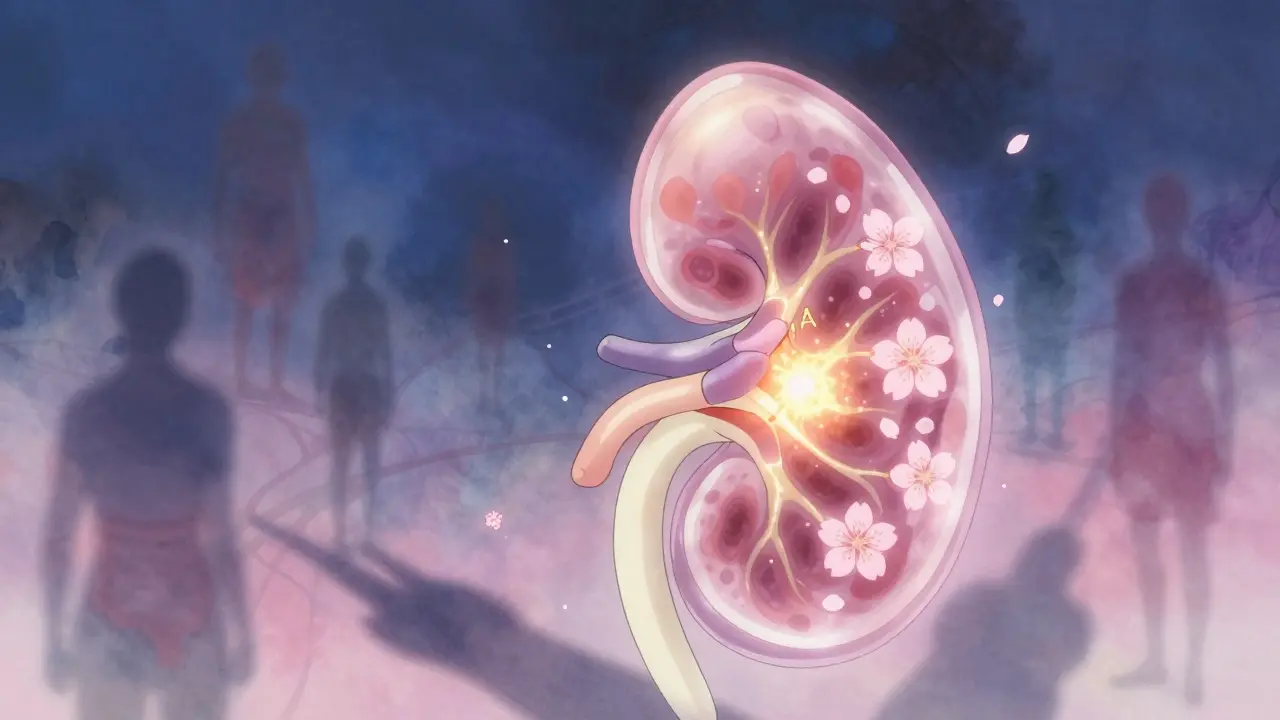
When your kidneys start to fail, it doesn’t always happen with a bang. For many people with IgA Nephropathy (IgAN), the warning signs are quiet: a faint pink tint in the urine after a cold, a persistent protein leak detected during a routine checkup, or a slow drop in kidney function that slips under the radar. This isn’t just a rare condition-it’s the most common cause of primary glomerulonephritis worldwide. In Western countries, it accounts for up to 40% of cases, and in parts of Asia, that number jumps to 50%. What’s more, up to half of those diagnosed will face kidney failure within 10 to 20 years if left unchecked.
What Is IgA Nephropathy?
IgA Nephropathy is an autoimmune kidney disease where immune complexes made of immunoglobulin A (IgA) build up in the filtering units of the kidneys, called glomeruli. This triggers inflammation, scarring, and gradual loss of kidney function. First identified in 1968 by French nephrologist Jean Berger, it’s now officially called Berger’s disease. But the name doesn’t matter as much as what’s happening inside the kidney.
The problem starts in the gut. In people with IgAN, the body produces abnormal IgA1 antibodies that lack a sugar molecule called galactose. These faulty antibodies clump together with other proteins, forming immune complexes. These complexes travel through the bloodstream and get stuck in the glomeruli. The immune system then attacks them-turning a normal defense into a self-inflicted injury. Over time, this leads to scarring, reduced filtering ability, and eventually, kidney failure.
Most patients are diagnosed between ages 15 and 35. Some notice visible blood in their urine after a throat or gut infection. Others never have symptoms until a blood test shows elevated protein levels or a drop in eGFR (estimated glomerular filtration rate). About 30-40% of cases are caught by accident during routine screening.
The New Prognosis: It’s Not Just About Proteinuria Anymore
For years, doctors focused on one number: how much protein was leaking into the urine. The old goal was to keep it under 1 gram per day. But new data changed everything.
A 2025 review from the Cleveland Clinic showed that even patients with proteinuria as low as 0.44 to less than 0.88 g/g (grams of protein per gram of creatinine) still had a 30% chance of developing kidney failure within 10 years. That’s not a small risk-it’s a ticking clock.
That’s why the KDIGO 2025 guidelines updated the target: proteinuria must be reduced to below 0.5 grams per day. This isn’t a suggestion-it’s the new standard. And it’s backed by real-world data from global registries. Lower proteinuria means slower progression. But hitting that target isn’t easy. It requires more than just one drug. It requires a combination approach.
How Treatment Changed in 2025: The Shift to Simultaneous Therapy
Before 2025, the standard was to start with blood pressure meds-usually ACE inhibitors or ARBs (RASi)-and wait three months. If proteinuria didn’t drop enough, then you added steroids or immunosuppressants. That waiting period was dangerous. While patients waited, their kidneys kept getting damaged.
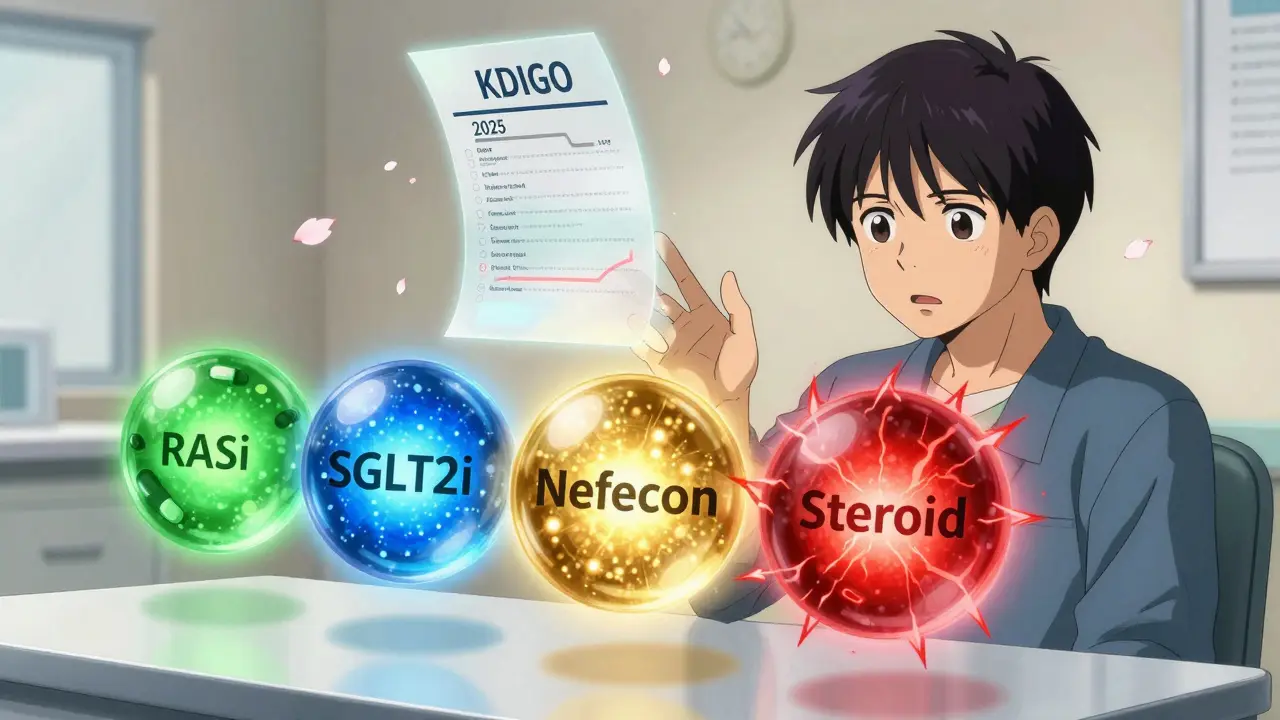
The KDIGO 2025 guidelines flipped that model. Now, for patients at high risk of progression-those with proteinuria above 0.75 g/day plus other risk factors like low eGFR or abnormal biopsy findings-the recommendation is clear: start everything at once.
Here’s what simultaneous therapy looks like:
- Anti-proteinuric therapy: RASi (like losartan or enalapril) or DEARA (sparsentan) to reduce pressure in the glomeruli and block protein leakage.
- SGLT2 inhibitors: Drugs like dapagliflozin or empagliflozin, originally for diabetes, now proven to protect kidneys regardless of blood sugar levels.
- Immunosuppression: Either Nefecon (a targeted-release budesonide) or systemic corticosteroids (like prednisone).
This isn’t just theory. Clinical trials showed patients on combination therapy had 50% less risk of kidney failure over five years compared to those on sequential treatment. One patient on Reddit, who goes by GFR_Warrior, put it simply: "The 90-day wait felt like watching my kidney function decline unnecessarily. Starting everything at once gave me back control."
Targeted Therapies: Nefecon and the Future of Precision Treatment
One of the biggest breakthroughs in IgAN treatment is Nefecon. Approved by the FDA in December 2023, it’s the first drug specifically designed to target IgAN at its source.
Unlike traditional steroids that flood the whole body, Nefecon releases budesonide directly into the gut-where abnormal IgA1 is made. By reducing the production of faulty IgA antibodies at the root, it cuts down the immune complexes before they reach the kidneys. In trials, Nefecon reduced proteinuria by 30-40% within a year and slowed eGFR decline by 65% compared to placebo.
Patients love it. A 2025 survey by the IgA Nephropathy Support Group found 72% of users reported fewer side effects than with oral steroids. No weight gain. No mood swings. No bone loss. But there’s a catch: it costs $125,000 a year in the U.S. Insurance denials are common. Many patients spend months appealing, delaying treatment.
Other emerging therapies include sparsentan (a dual endothelin receptor antagonist), which the EMA approved in June 2024 for high-risk IgAN patients, and newer drugs like ulotaront (Vera Therapeutics) in late-stage trials. These aren’t just alternatives-they’re stepping stones toward truly personalized treatment.
Regional Differences: Why Treatment Varies Around the World
What works in Japan doesn’t always work in the U.S. or China. That’s because IgAN isn’t one disease-it’s a spectrum shaped by genetics, environment, and healthcare systems.
In Japan, tonsillectomy is routine. Studies show removing the tonsils reduces IgA production and lowers relapse rates after infections. About 45% of eligible patients in Japan get the procedure.
In China, mycophenolate mofetil (MMF) is widely used. Clinical trials there show it cuts proteinuria and delays kidney failure, especially when paired with steroids. About 68% of Chinese patients with IgAN receive MMF.
Hydroxychloroquine, a drug used for lupus, is also common in China. It appears to stabilize IgA production and reduce flare-ups. But in Western countries, these approaches are rarely used-partly because the evidence isn’t as strong outside those populations.
This creates a global inequality. While 85% of patients in high-income countries get guideline-recommended care, only 22% in low- and middle-income countries do. For many, even basic RASi drugs are out of reach.

Monitoring and Patient Experience: What Life Looks Like on Treatment
Managing IgAN isn’t just about pills. It’s about routine. Monthly blood and urine tests. Strict blood pressure control. Watching for side effects. Patients often juggle three to four medications. One mother on Facebook described it: "Managing four different dosing schedules for my 16-year-old is exhausting."
The KDIGO 2025 guidelines recommend:
- Monthly checks for proteinuria and blood pressure during the first three months
- Quarterly checks after stabilization
- Regular monitoring of kidney function (eGFR), electrolytes, and medication side effects
- Biopsy confirmation for high-risk cases using the Oxford MEST-C score (a system that grades kidney scarring)
But implementation is lagging. A 2025 survey by the American Society of Nephrology found only 42% of U.S. nephrology clinics had fully integrated KDIGO tools into their electronic health records. Many doctors still rely on outdated protocols.
The Big Challenges: Cost, Access, and the Missing Biomarkers
The new guidelines are scientifically solid. But they’re not yet practical for everyone.
First, cost. Nefecon, sparsentan, and SGLT2 inhibitors are expensive. Even with insurance, copays can hit $500-$1,000 a month. Many patients skip doses or delay treatment because they can’t afford it.
Second, access. In rural areas or developing countries, even basic kidney tests aren’t available. A 2025 GlobalData report predicts the IgAN drug market will hit $2.1 billion by 2030-but that growth won’t help patients who can’t get to a nephrologist.
Third, we still don’t have biomarkers. We can’t yet predict who will respond to Nefecon, who needs steroids, or who should get a tonsillectomy. Until we can test for specific immune profiles, treatment is still guesswork. As Dr. Jonathan Barratt said, "Progress toward personalized therapy will depend on identifying biomarkers that can guide which patients benefit from complement inhibition, APRIL blockade, or targeted intestinal therapy."
What’s Next? The Road to Personalized Care
The future of IgAN isn’t just better drugs-it’s smarter treatment. Fifteen phase 3 trials are currently active, including the TARGET-IgAN study (NCT05921545), which will test whether biomarkers can guide therapy choice. Results are expected in 2027.
The NEPTUNE registry is expanding to include 5,000 more patients to gather real-world data on long-term outcomes. Researchers are also exploring drugs that block APRIL (a protein that drives IgA production) and complement inhibitors that stop the immune attack on the glomeruli.
One thing is clear: the goal is no longer just to slow kidney failure. It’s to prevent it entirely-while keeping patients healthy, active, and free from toxic side effects. As the KDIGO guideline states: "The goal remains simple but ambitious: delay and prevent kidney failure across an entire lifetime, while minimizing treatment burden and toxicity."
Can IgA Nephropathy be cured?
No, IgA Nephropathy cannot be cured yet. But with early diagnosis and proper treatment, progression to kidney failure can be slowed or stopped in many patients. The goal of modern therapy is long-term kidney protection, not elimination of the disease itself.
What are the side effects of Nefecon?
Nefecon is generally well-tolerated. Common side effects include mild upper respiratory infections, headache, and fatigue. Unlike oral steroids, it causes far less weight gain, mood swings, bone thinning, or high blood sugar because it targets the gut instead of flooding the whole body.
Is proteinuria below 0.5 g/day achievable for everyone?
Not always. Some patients respond well to combination therapy and hit the target. Others may need multiple drug trials or experience side effects that limit dosing. The focus is on individual progress-any reduction in proteinuria improves outcomes, even if the full 0.5 g/day goal isn’t reached.
Why is IgA Nephropathy more common in Asia?
The exact reason isn’t fully known, but genetics, environmental triggers (like frequent infections), and gut microbiome differences likely play a role. Higher rates of tonsil infections and specific immune system variations in Asian populations may contribute to increased IgA1 production and deposition in the kidneys.
Can I stop taking my meds if my proteinuria improves?
Never stop medications without consulting your nephrologist. Even if proteinuria drops, the underlying immune dysfunction remains. Stopping treatment too soon can lead to rapid relapse and accelerated kidney damage. Most patients need long-term, sometimes lifelong, therapy.
How often should I get a kidney biopsy?
Most patients need only one biopsy at diagnosis to confirm IgAN and assess scarring using the MEST-C score. Repeat biopsies are rare unless there’s a sudden change in kidney function, unclear diagnosis, or if treatment response is unexpectedly poor.
Scott Conner
February 10, 2026 AT 13:10So wait, if proteinuria is under 0.5 g/day but eGFR is still dropping, are we just pretending the numbers are good? I’ve seen patients stabilize protein but keep losing kidney function. Feels like we’re optimizing the wrong metric.
John Watts
February 11, 2026 AT 06:35Man, I wish I’d known all this 5 years ago. My dad’s been on RASi + SGLT2i for 3 years now. His proteinuria dropped from 1.8 to 0.4. He’s hiking again, no weight gain, no mood swings. Nefecon’s crazy expensive, but if you can get it? Do it. Life’s not about surviving - it’s about living. 💪
Randy Harkins
February 13, 2026 AT 02:49This is one of the most well-researched, compassionate deep dives I’ve seen on IgAN. Thank you for breaking down the science without jargon. I’m a nurse in a rural clinic, and most of my patients can’t even afford losartan. The global inequality here is heartbreaking. We need policy change, not just better drugs.
Chima Ifeanyi
February 13, 2026 AT 04:50Let’s be real - this KDIGO 2025 update is just Big Pharma’s latest monetization scheme. Nefecon? $125k/year? SGLT2 inhibitors were originally diabetes drugs repurposed by marketing teams. Tonsillectomy works in Japan because they’ve got cheaper access to ENT surgeons. Meanwhile, in the US, we’re turning a chronic condition into a profit center. Wake up.
Tori Thenazi
February 14, 2026 AT 01:02Okay, but have you heard about the 2024 CDC memo? They quietly classified IgAN as a "systemic autoimmune cascade triggered by glyphosate exposure in processed foods." I’ve got screenshots. The FDA knew. They buried it. Why? Because the same companies making Nefecon also make Roundup. Coincidence? I think not. 🤔
Elan Ricarte
February 15, 2026 AT 16:12They call it "simultaneous therapy" like it’s some revolutionary breakthrough. Nah. It’s just what we’ve been doing in the trenches for years. Docs who wait 90 days are basically playing Russian roulette with kidneys. I’ve seen patients go from 70 eGFR to 35 in six months while waiting for "approval." This isn’t medicine - it’s bureaucratic cruelty dressed in white coats.
Angie Datuin
February 16, 2026 AT 09:04I’ve been living with IgAN for 12 years. My proteinuria never hit 0.5, but I’ve held my eGFR steady at 48 for 5 years now. It’s not perfect. But it’s enough. You don’t need to be perfect to be alive. Just keep showing up. One lab test at a time.
Camille Hall
February 16, 2026 AT 20:17For anyone struggling with the cost: I work with a nonprofit that helps patients appeal Nefecon denials. We’ve gotten 89% of our cases approved in under 60 days. DM me if you’re stuck - you’re not alone. This disease is scary, but you don’t have to fight it alone.
Ritteka Goyal
February 17, 2026 AT 03:37Why are you all talking about Nefecon and SGLT2i like they’re magic? In India, we’ve been using mycophenolate + hydroxychloroquine for decades. It’s cheap, effective, and no one’s bankrupting themselves. Why are Western doctors ignoring what works? Because they don’t trust Asian medicine? It’s racism disguised as science. We’ve got better outcomes here - and no one even talks about it!
Monica Warnick
February 18, 2026 AT 04:00Wait - so if I stop my meds when my urine looks clear, I’m basically signing my own death warrant? 😳 I thought I was doing fine… I didn’t realize… I’m gonna cry now. Can someone send me a link to the KDIGO guidelines? I need to read it again. I’m so scared.