

Many older adults take five, six, or even more medications every day. Some were prescribed years ago for conditions that have changed-or disappeared. Others are duplicates, or no longer offer real benefits but still carry risks. If you’ve ever felt overwhelmed by your pillbox, or noticed that a medication is making you dizzy, foggy, or more tired than usual, you’re not alone. And you don’t have to wait for your doctor to bring it up. You can start the conversation yourself-and when you do, you’re far more likely to get results.
Why This Conversation Matters
Taking too many medications isn’t just inconvenient. It’s dangerous. About 15% of seniors on five or more drugs experience a serious side effect each year-falls, confusion, kidney damage, or even hospital stays. These aren’t rare events. They’re common, and they’re often preventable. Deprescribing-carefully stopping or lowering doses of medications that no longer help-can improve your energy, balance, memory, and independence. But it only happens when you speak up.Don’t Say ‘I Want Fewer Pills’
Too many people go into their appointment and say, ‘I just want to take fewer pills.’ That’s understandable. But doctors often hear it as a request for convenience, not safety. Research shows this approach fails 71% of the time. Instead, connect your concern to your life. Say something like:- ‘I’ve been feeling dizzy after my morning pill, and I almost fell last week. I want to keep walking my dog without worrying.’
- ‘I used to garden every weekend, but now I’m too tired by noon. Could any of these meds be causing that?’
- ‘I don’t want to be on something that makes me forget where I put my keys if it’s not helping my blood pressure anymore.’
These statements work because they link your medication to your goals-not just your symptoms. A 2021 study in JAMA Network Open found that when patients framed their concerns around activities they valued-like walking, cooking, or spending time with grandkids-doctors agreed to reduce medications 89% of the time. That’s not luck. It’s strategy.
Prepare Before You Go
Walking in with a list of your meds isn’t enough. You need a medication impact journal. For one week, write down:- What you take, and when (include supplements, OTC painkillers, and herbal products)
- Any side effects you notice (dizziness, nausea, confusion, sleepiness, constipation)
- When they happen (e.g., ‘drowsy 2 hours after taking atorvastatin’)
- How it affects your day (‘Couldn’t go to church because I felt too weak’)
One patient in Seattle brought this journal to her appointment and discovered her doctor had no idea she was taking three blood pressure pills. Her BP was already 90/60-but she was still getting a daily dose of lisinopril, hydrochlorothiazide, and metoprolol. Within three months, two were stopped. Her energy came back. She started gardening again.
Don’t forget to bring your pill bottles or a photo of your pillbox. About 23% of patients leave out key medications during appointments-especially supplements like fish oil, magnesium, or melatonin. These can interact with prescriptions, too.
Use the ‘Ask-Tell-Ask’ Method
This simple technique works better than any script. Here’s how:- Ask: ‘What’s your view on how my medications are working for me right now?’
- Tell: ‘I’ve noticed I’ve been really tired lately, and I think it might be from the sleep aid or the muscle relaxer. I’d like to see if we could try cutting one.’
- Ask again: ‘What’s the safest way to test if we can reduce this? Could we lower the dose slowly and check back in four weeks?’
Patients who use this method are 58% more likely to get a deprescribing plan than those who just ask for help. Why? It turns the conversation from ‘I want this gone’ to ‘Let’s figure this out together.’ Doctors respond better when they feel like partners, not targets.

Know Which Medications Are Most Often Overused
You don’t need to know all the science-but you should know the big ones. Based on the Beers Criteria and STOPP/START guidelines, these are the most common medications that may be safe to reduce or stop in older adults:- Proton pump inhibitors (like omeprazole) taken longer than 8 weeks without a clear reason
- Benzodiazepines or sleep aids (like zolpidem or lorazepam)-especially if taken nightly for more than a month
- Anticholinergics (like diphenhydramine or oxybutynin) that cause brain fog or dry mouth
- Multiple blood pressure or diabetes meds when numbers are already too low
- Statins for people over 75 with no history of heart attack or stroke
You don’t need to argue the science. Just say: ‘I read that these are often stopped in people my age if they’re not helping. Could we look at mine?’ Bring a printed summary from Deprescribing.org or the American Geriatrics Society’s guidelines. Patients who bring these materials are 33% more likely to get a change approved.
Expect Gradual Changes
No one should stop a medication cold turkey-especially for anxiety, blood pressure, or antidepressants. Most successful deprescribing happens slowly. Your doctor might suggest:- Reducing the dose by 25% every 2-4 weeks
- Trying a ‘drug holiday’-skipping a pill every other day for a week
- Switching to a different medication with fewer side effects
Ask: ‘How will we know if it’s working? What symptoms should I watch for?’ About 79% of doctors will only agree to deprescribe if you agree to a monitoring plan. That might mean checking in after two weeks, or tracking your balance or sleep in a simple log.
What If They Say No?
Sometimes, doctors say no. Maybe they’re worried about your blood pressure rising, or your anxiety coming back. That’s okay. Don’t walk away frustrated. Ask:- ‘What’s the biggest risk if we try reducing this?’
- ‘Is there a way we could test it safely?’
- ‘Could we try it for a month and then recheck?’
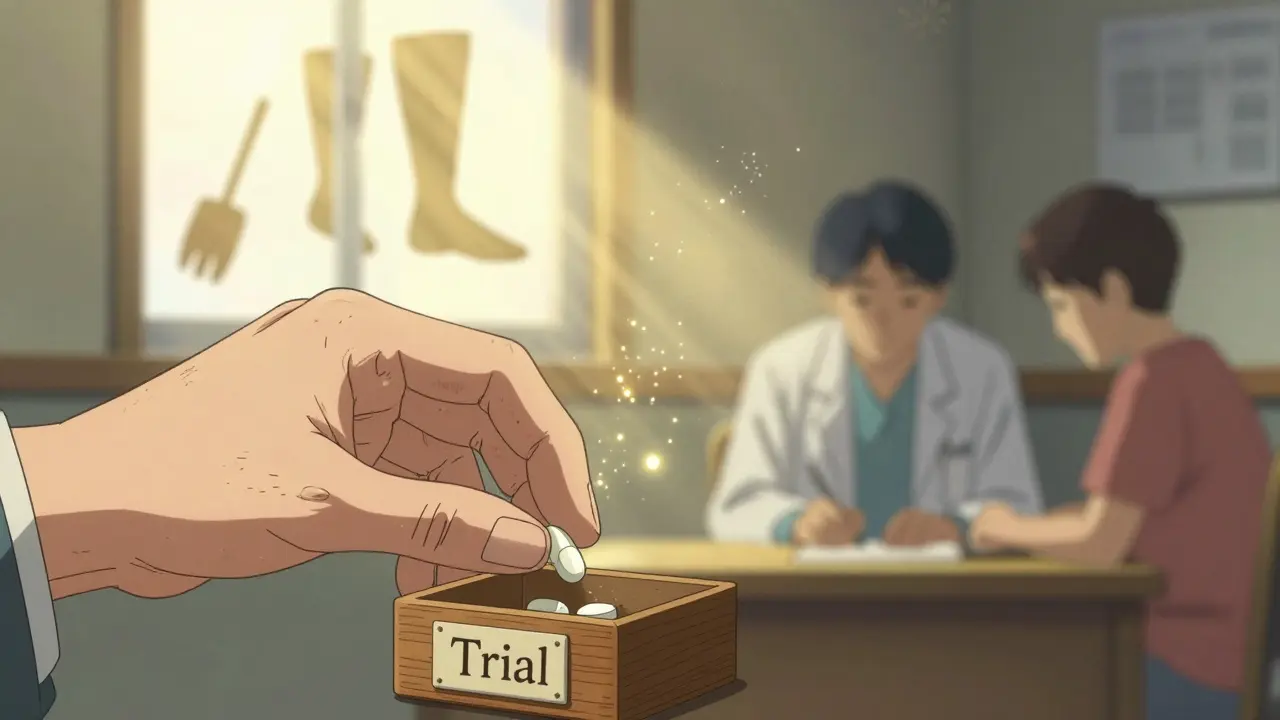
Many doctors will agree to a trial. You might be surprised how often a 30-day trial leads to a permanent change.
You’re Not Being Difficult
A lot of seniors worry they’ll be seen as ‘difficult’ or ‘noncompliant’ if they question their meds. That’s a myth. The American Academy of Family Physicians found that 92% of doctors say deprescribing conversations go better when patients initiate them. You’re not challenging your doctor-you’re helping them do their job better. You know how you feel. They know the science. Together, you make better decisions.What’s Changed in 2026
Medicare now requires doctors to review medications during your Annual Wellness Visit. Electronic health records now flag high-risk meds automatically. The CDC’s ‘Right Size My Meds’ campaign has reached over 12 million seniors. These changes mean doctors are more open than ever-but they still need you to lead the way.Next Steps
Start today. Write down your top three medications that bother you. Think of one activity you want to keep doing-walking, reading, cooking, playing with grandkids. Then, write one sentence connecting them:‘I want to keep cooking dinner without feeling dizzy after my blood pressure pill.’
Bring that sentence to your next appointment. That’s all it takes to start a conversation that could change your life.
Is deprescribing the same as stopping all my meds?
No. Deprescribing means carefully reducing or stopping medications that no longer help-or that do more harm than good. It’s not about cutting everything. It’s about keeping only what’s truly necessary for your current health and goals. Many people end up taking fewer pills, but still stay on key medications like aspirin for heart health or insulin for diabetes.
Can I just stop a medication on my own?
Never stop a medication suddenly without talking to your doctor. Some drugs, like blood pressure pills, antidepressants, or steroids, can cause serious withdrawal effects if stopped abruptly. Even over-the-counter sleep aids or painkillers can cause rebound symptoms. Always work with your provider to create a safe, gradual plan.
What if my doctor says I need all these meds?
Ask why. Request specifics: ‘Which one of these is most important for my current health?’ or ‘What would happen if I stopped this one for a month?’ Sometimes, doctors prescribe based on old habits or fear of liability. If you’re persistent and use goal-based language, many will agree to a trial. If not, ask for a referral to a geriatrician or pharmacist who specializes in medication reviews.
How long does it take to see results after stopping a medication?
It varies. For sleep aids or anticholinergics, people often feel clearer within days. For blood pressure or anxiety meds, it may take 2-6 weeks to notice changes. Keep a simple journal: note your energy, balance, sleep, and mood each day. Bring it to your follow-up. That’s the best way to show if the change helped.
Is deprescribing covered by insurance?
Yes. Medicare’s Annual Wellness Visit now includes a mandatory medication review, and many private insurers follow the same standard. You can ask for a ‘medication optimization visit’ when scheduling. If your doctor doesn’t offer it, ask if they can bill it under preventive care. Most do.
What if I’m worried my condition will get worse?
That’s a common fear-and a valid one. But the goal of deprescribing isn’t to leave you untreated. It’s to remove drugs that aren’t helping anymore. Your doctor will always monitor your condition closely after making changes. Many people find their symptoms actually improve because they’re not fighting side effects from too many drugs. If you’re nervous, ask for a trial period: ‘Can we try reducing this for 4 weeks and then check my numbers?’
Katherine Carlock
January 11, 2026 AT 19:10I started doing the medication journal last month after my doctor kept pushing me to take that sleepy pill again. I wrote down how I’d nod off mid-conversation with my grandkids. Turned out I didn’t need the zolpidem at all-just needed to stop drinking tea after 6pm. Now I’m sleeping better and actually remembering their names. 🙌
Sona Chandra
January 13, 2026 AT 19:05THIS IS WHY OLD PEOPLE ARE DUMB. You think your grandma’s tired because of meds? Nah, she’s just lazy. My aunt took 12 pills and lived to 92. Stop being dramatic and swallow your damn pills. You think the system’s out to get you? It’s not. You’re just weak.
beth cordell
January 15, 2026 AT 07:04OMG I DID THIS 😭 I brought my pillbox pic and my journal and my doc was like ‘Wait… you’re on THREE blood pressure meds??’ I cried. I actually cried. Now I’m back to gardening and my cat even noticed I’m less grumpy. 🌿💊🫶
Lauren Warner
January 16, 2026 AT 13:26Let’s be real. This whole deprescribing trend is just a lazy way to avoid accountability. If you’re too tired to walk your dog, maybe you’re not exercising enough. Or maybe you’re obese. Or maybe you’re addicted to sugar. Don’t blame the meds. Blame your lifestyle. This article reads like a wellness cult pamphlet.
Lelia Battle
January 16, 2026 AT 19:23The notion that we can reduce medication burden by framing concerns around personal values is both psychologically astute and clinically pragmatic. It reflects a shift from biomedical paternalism to patient-centered care, where autonomy is not an afterthought but the foundation of therapeutic alliance. Yet one must ask: is this strategy accessible to those with cognitive decline, low health literacy, or limited social support? The success rate cited may reflect selection bias.
Rinky Tandon
January 17, 2026 AT 18:20As a geriatric pharmacologist I can tell you this is pure pseudoscience. You can’t just stop statins in seniors without reviewing lipid profiles and cardiovascular risk stratification. The Beers Criteria are outdated. You need polypharmacy risk scores, CYP450 enzyme mapping, and renal clearance metrics. This article is dangerous because it gives laypeople false confidence to self-manage complex pharmacotherapy. You’re not a doctor. Stop.
Ben Kono
January 18, 2026 AT 03:43I took my wife’s meds to the doc and he said half of them were for stuff she doesn’t even have anymore. We got rid of three pills. She’s not dizzy anymore. She started dancing again. No more pills no more drama. Done.
Cassie Widders
January 19, 2026 AT 05:08My dad did this last year. He brought a list, a journal, and one sentence: ‘I want to play with my grandkids without feeling like a zombie.’ They cut his sleep med and one blood pressure pill. He sleeps better, walks farther, and doesn’t nap at 3pm anymore. Simple. Effective. No drama.
Konika Choudhury
January 20, 2026 AT 18:21Why are Americans so obsessed with pills? In India we use turmeric and yoga. We don’t need 10 drugs to live. You think your body can’t heal itself? You’re weak. Take less medicine. Be strong. Stop blaming doctors. Blame your lifestyle.
Darryl Perry
January 22, 2026 AT 04:09Study says 89% success rate. Who funded that study? Pharma? A nonprofit with a grant? The methodology isn’t cited. Also, ‘garden more’ isn’t a medical outcome. What’s the endpoint? Mortality? Hospitalization? Functional status? This feels like feel-good fluff.
Windie Wilson
January 23, 2026 AT 17:50So let me get this straight. You want to stop taking pills so you can… garden? Walk your dog? Be less foggy? Wow. I thought we were talking about medicine. Turns out we’re just talking about wanting to feel human again. How radical. 🙄
Daniel Pate
January 25, 2026 AT 05:32There’s a deeper question here. Why are we prescribing so many medications in the first place? Is it because we’re scared of uncertainty? Because we’re incentivized to treat, not to observe? Because we’re running out of time in the clinic? The deprescribing movement isn’t just about pills-it’s about reclaiming medical humility.
Amanda Eichstaedt
January 25, 2026 AT 08:30I used to think I needed all these meds because my doctor said so. Then I started reading the side effect lists. One of them said ‘may cause hallucinations.’ I was like… wait, why do I feel like my toaster is talking to me? Turns out it was the anticholinergic. Stopped it. Toaster’s quiet now. Also, I can remember where I put my glasses. Small wins, people.
Cecelia Alta
January 27, 2026 AT 08:13Look, I get it. You want to feel better. But you can’t just cherry-pick which meds to stop based on how you feel on a Tuesday. What about the 30% of people who get rebound hypertension or withdrawal anxiety? You think your doc doesn’t know this? They do. They just can’t risk being sued if you have a stroke because you stopped your aspirin. This whole thing is a trap. You think you’re empowered? You’re just playing Russian roulette with your health. And now you’re telling other people to do it too? That’s not bravery. That’s negligence dressed up as activism. And don’t even get me started on the ‘medication impact journal’-that’s just a fancy way of saying ‘I’m keeping a diary of my symptoms because I don’t trust the system.’ Well guess what? The system is designed to keep you alive, not to make you feel like a wellness influencer. You want to be in control? Fine. But don’t pretend you’re saving lives when you’re just trying to feel less bored on a Tuesday afternoon.