

Every year, over a million children in the U.S. end up in the emergency room because of mistakes with over-the-counter (OTC) medicines. Most of these errors happen because parents give the wrong dose - not because they’re careless, but because the labels are confusing. You’re not alone if you’ve stared at a bottle of children’s Tylenol or Advil, wondering: How much do I give? Is it based on age? Weight? That tiny line on the syringe? The answer matters. Too little won’t help. Too much can cause liver failure, seizures, or even death.
Why Weight Matters More Than Age
You’ve probably seen dosing charts on medicine bottles that list age ranges: "For children 2-3 years: 5 mL." But here’s the truth: weight is the real guide. Age is just a rough estimate. A 2-year-old who weighs 40 pounds needs more medicine than a 2-year-old who weighs 20 pounds. Using age alone leads to dosing errors in 23% of cases, according to Johns Hopkins Children’s Center. Underdosing happens in 15% of cases - meaning the medicine doesn’t work. Overdosing? That’s 8%. And for acetaminophen, that’s especially dangerous.Acetaminophen overdose is the leading cause of acute liver failure in children. The Acute Liver Failure Study Group found that in 2017, nearly half of all pediatric liver failures linked to OTC meds were from too much acetaminophen. That’s why the American Academy of Pediatrics (AAP) and the FDA now say: Always use weight if you know it. If you don’t know your child’s weight, use age - but get them weighed at the next doctor’s visit. Keep that number handy.
What to Look for on the Label
Not all labels are created equal. Since 2011, the FDA has required all liquid children’s medications to follow strict rules. Here’s what you need to spot on every bottle:- Active ingredient - Is it acetaminophen? Ibuprofen? Never assume. Two different bottles might look the same but contain different drugs.
- Concentration - This is critical. All liquid acetaminophen must now be 160 mg per 5 mL. That’s 32 mg per mL. Ibuprofen is 100 mg per 5 mL. Older bottles might say "infant drops" - those were 80 mg per 0.8 mL. If you’re using an old bottle, double-check the concentration. Mixing old and new can cause serious overdose.
- Dosing instructions by weight - Look for a chart like this: "12-17 lbs: 2.5 mL; 18-23 lbs: 3.75 mL; 24-35 lbs: 5 mL." These are standard across brands. If you don’t see this, the product may not meet current safety standards.
- Do not use under [age] - Ibuprofen is not approved for babies under 6 months. Acetaminophen can be used as early as 2 months - but only with a doctor’s advice for kids under 2.
- Maximum doses per day - Acetaminophen: no more than 5 doses in 24 hours. Ibuprofen: no more than 4 doses in 24 hours. Never mix them unless a doctor tells you to.
- Warning: Do not combine with other medicines containing acetaminophen - This is the #1 cause of accidental overdose. Cold and flu meds often contain acetaminophen too. Giving Tylenol + a cold syrup? You’re doubling the dose.
Measuring the Right Way
Never use a kitchen spoon. Not even the "measuring spoon" in your drawer. A regular teaspoon holds anywhere from 4 to 7 mL - that’s up to 40% more than it should. The St. Louis Children’s Hospital found that 42% of medication errors came from parents using spoons.Only use what comes with the medicine:
- Oral syringe (the kind with mL markings)
- Dosing cup (with clear lines)
- Medicine dropper (for infants)
And here’s a trick: Always use the syringe that came with the bottle. If you lose it, buy a new one at the pharmacy - they’re cheap and come in packs of 3. Don’t reuse a syringe from another medicine unless it’s the exact same concentration. Cross-contamination can cause errors.
Also, know this: 1 teaspoon = 5 mL. 1 tablespoon = 15 mL. If the label says "tsp," it means teaspoon. If it says "tbsp," it’s 3 times as much. One parent on Reddit accidentally gave their 2-year-old 15 mL thinking it was 5 mL because they misread "tsp" as "tbsp." Their child ended up in the ER.
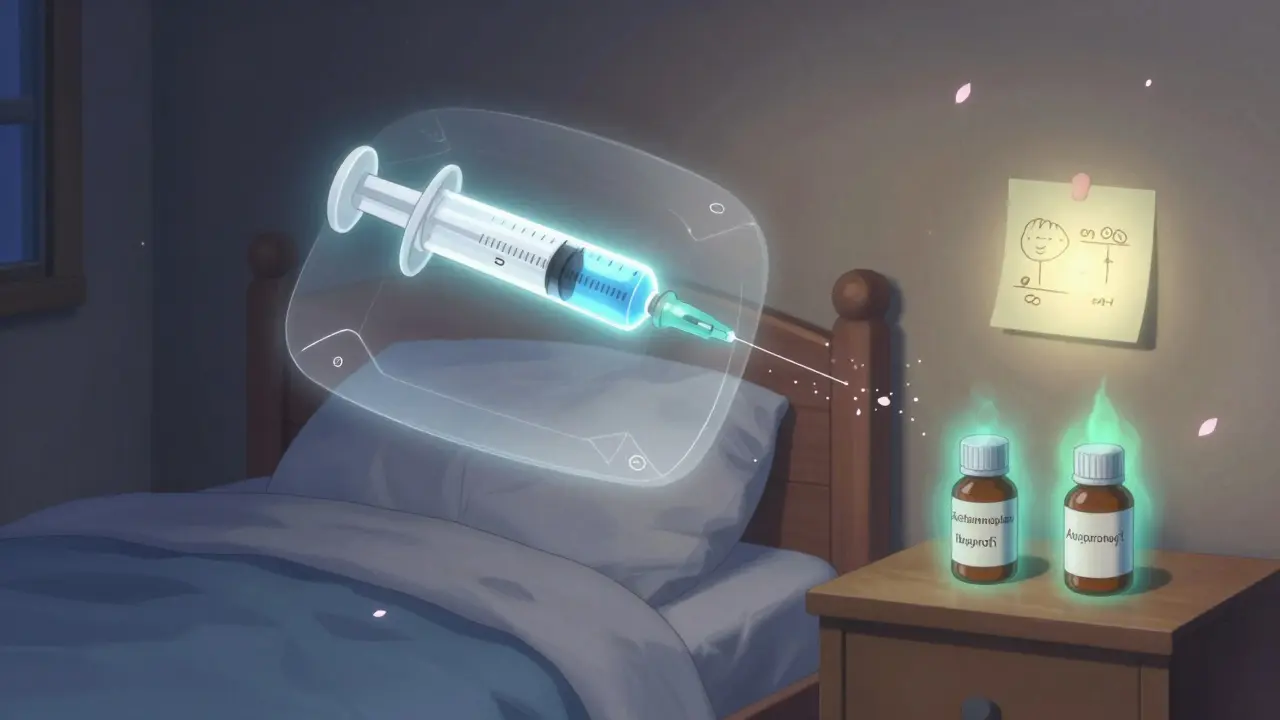
Acetaminophen vs. Ibuprofen: Key Differences
You might think they’re interchangeable. They’re not.| Feature | Acetaminophen (Tylenol) | Ibuprofen (Advil, Motrin) |
|---|---|---|
| Minimum age | 2 months (with doctor approval) | 6 months |
| Dosing frequency | Every 4 hours | Every 6-8 hours |
| Max doses per day | 5 | 4 |
| Concentration | 160 mg per 5 mL | 100 mg per 5 mL |
| Primary risk | Liver damage from overdose | Stomach upset, kidney stress |
| Best for | Fever, mild pain | Fever, inflammation, swelling |
For a child weighing 24-35 lbs, both drugs use 5 mL - but acetaminophen has more active ingredient. That’s why you can’t swap them one-for-one. Always follow the chart on the bottle. If you’re unsure, call your pediatrician. Don’t guess.
What About Chewables and Tablets?
Liquid isn’t the only option. Chewables and tablets are common for older kids. But they’re trickier because dosing isn’t always obvious.- Children’s chewable acetaminophen: 80 mg per tablet
- Children’s tablet acetaminophen: 160 mg per tablet
- Adult tablets: 325-500 mg - never give these to a child
One parent gave their 5-year-old two 160 mg tablets thinking they were 80 mg - that’s a 2x overdose. Always count the milligrams, not the number of tablets. Look for "mg" on the label. If it’s not there, don’t give it.
Benadryl and Other Common Mistakes
Benadryl (diphenhydramine) is often used for allergies or sleep. But it’s not safe for kids under 2 unless a doctor says so. The AAP warns against it. Why? Because the liquid comes in 12.5 mg per 5 mL, and the tablets are 25 mg. Parents sometimes give a tablet thinking it’s half the liquid dose - it’s not. It’s double.Also, never give cough and cold medicines to kids under 6. The FDA says they don’t work and can cause serious side effects. If your child has a cold, use saline drops, a humidifier, and fluids. Don’t reach for the medicine cabinet.

What to Do If You’re Not Sure
You’re not expected to be a pharmacist. If the label is unclear, if your child’s weight falls between two categories, or if you’re giving medicine for the first time - call your pediatrician or pharmacist. Most pharmacies have a free 24/7 hotline. You can also use the free dosing calculator from HealthyChildren.org. It’s been used over 17,000 times with 98% accuracy.Here’s a quick rule: If your child is under 2, call before giving any OTC medicine. If they’re under 3 months and have a fever, call right away. Fever in babies that young can be a sign of something serious. Medicine won’t fix the cause.
Future Changes Coming
The FDA is pushing for even clearer labels. By 2025, most children’s medicines will have QR codes that link to video instructions. Some bottles will include syringe markings in 0.2 mL increments to reduce measurement errors. The goal? Cut emergency visits by another 20%.But until then, your best tools are simple: know your child’s weight, use the right measuring device, read every word on the label, and never combine medicines unless told to.
Can I use a kitchen teaspoon to measure my child’s medicine?
No. A kitchen teaspoon can hold anywhere from 4 to 7 milliliters, while the correct dose is exactly 5 mL. That variation can lead to a 40% overdose. Always use the syringe, dropper, or dosing cup that comes with the medicine.
What if my child’s weight isn’t listed on the label?
If your child’s weight falls between two categories, always round down to the lower weight range. For example, if your child weighs 37 pounds and the chart lists 24-35 lbs and 36-47 lbs, use the 36-47 lbs dose. If you’re unsure, call your pediatrician. Never guess.
Is it safe to give acetaminophen and ibuprofen together?
Only if your doctor says so. Alternating them can help if fever isn’t breaking, but you must track doses carefully. Never give both at the same time. Write down the time and medicine given each time to avoid doubling up.
Why do some labels say "infant drops" and others say "children’s liquid"?
Infant drops are more concentrated (80 mg per 0.8 mL) and were used before 2011. Now, all liquid acetaminophen is standardized at 160 mg per 5 mL. If you have old infant drops, don’t use them with new dosing charts. Always check the concentration on the bottle. Mixing them can cause a dangerous overdose.
What should I do if I think I gave my child too much medicine?
Call Poison Control immediately at 1-800-222-1222. Do not wait for symptoms. Acetaminophen overdose can cause liver damage without obvious signs for hours. Keep the medicine bottle handy - you’ll need to tell them the exact name, concentration, and amount given.
Julie Chavassieux
December 23, 2025 AT 09:36Jeremy Hendriks
December 24, 2025 AT 08:48jenny guachamboza
December 25, 2025 AT 04:12Tarun Sharma
December 26, 2025 AT 04:53Kiranjit Kaur
December 26, 2025 AT 15:54Jim Brown
December 26, 2025 AT 18:53Sam Black
December 28, 2025 AT 00:41Jamison Kissh
December 29, 2025 AT 08:09Tony Du bled
December 29, 2025 AT 08:56Kathryn Weymouth
December 30, 2025 AT 04:54Nader Bsyouni
December 31, 2025 AT 13:27Herman Rousseau
January 1, 2026 AT 00:44Sai Keerthan Reddy Proddatoori
January 2, 2026 AT 14:29