

Antibiotic Side Effects Guide
Get personalized advice on managing side effects while safely finishing your antibiotic course
Your Action Plan
Important Warning
Antibiotics save lives. But for many people, the side effects feel worse than the infection they’re meant to treat. Nausea. Diarrhea. Upset stomach. Fatigue. Some stop taking their pills early-thinking they’re better, or just can’t take it anymore. That’s dangerous. Stopping early doesn’t just make your infection come back-it helps create superbugs that no drug can kill. The antibiotic side effects you’re feeling? Most of them are manageable. And finishing your course is non-negotiable.
Why Finishing Your Antibiotics Matters More Than You Think
When you start an antibiotic, it kills the weakest bacteria first. The ones that survive? They’re the toughest. If you stop early, those survivors multiply. They pass on their resistance. That’s how antibiotic-resistant infections like MRSA and C. diff spread. The CDC says 30% of outpatient antibiotic prescriptions in the U.S. are unnecessary. But when you do need them, skipping doses or quitting early is one of the biggest drivers of resistance. Studies show people who don’t finish their course are 12% more likely to develop a resistant infection later.
And it’s not just about you. Resistant bacteria don’t care where you live. They spread in hospitals, schools, and even grocery stores. The World Health Organization calls antibiotic resistance one of the top 10 global health threats. Your decision to finish your pills isn’t just personal-it’s public health.
Most Side Effects Are Mild (And Normal)
Let’s get real: 1 in 4 people on antibiotics get diarrhea. About 1 in 5 feel nauseous. Bloating? Loss of appetite? These aren’t signs you’re allergic. They’re signs your gut microbiome is being disrupted. Antibiotics don’t just target bad bacteria-they wipe out good ones too. That’s why stomach issues are so common.
Here’s what’s normal:
- Mild diarrhea (no blood, no fever)
- Occasional nausea or bloating
- Reduced appetite for a few days
- Minor stomach cramps that ease up
These don’t mean the drug isn’t working. They mean your body is adjusting. The key? Don’t panic. Most of these symptoms fade within 24-48 hours after you finish the course. But if you see blood in your stool, have a fever over 101°F, or can’t keep anything down, call your doctor. That could be C. diff-a serious infection that needs immediate treatment.
How to Tame Nausea and Upset Stomach
Nausea is the #1 reason people quit antibiotics early. But it doesn’t have to be that way. The fix isn’t always stronger medicine-it’s timing and what you eat.
For most antibiotics like amoxicillin, azithromycin, or cephalexin: take them with a small, bland snack. Think toast, crackers, or a banana. Not a greasy burger. A light protein snack-like a spoonful of Greek yogurt or a hard-boiled egg-works best. It coats your stomach without interfering with absorption.
But here’s the catch: not all antibiotics work the same way.
- Doxycycline: Must be taken on an empty stomach. No food for 1 hour before or after. Swallow with a full glass of water while sitting up. Lying down right after? That can burn your esophagus.
- Tetracycline: Same rules as doxycycline. No dairy, antacids, or iron supplements within 2 hours.
- Amoxicillin: Can be taken with food. Food reduces nausea without hurting effectiveness.
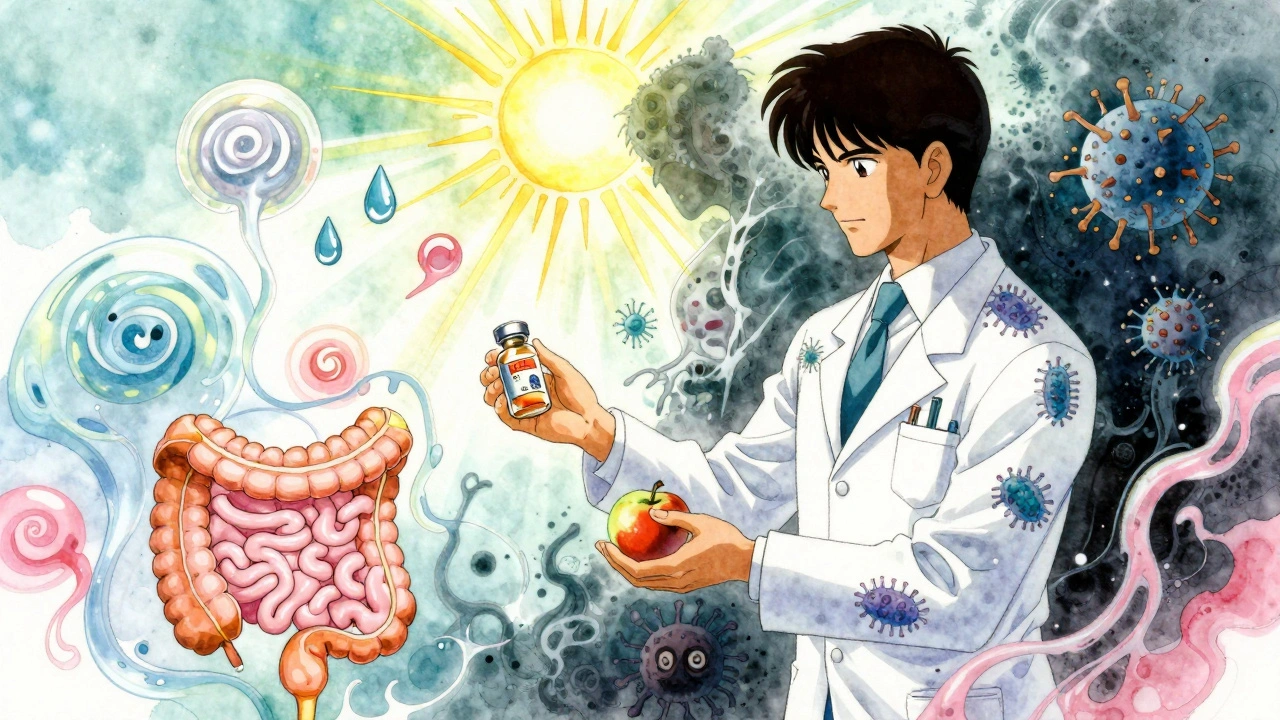
Pro tip: If you’re taking doxycycline and feel nauseous, try taking it with an apple. The fiber helps absorb the drug gently. Wait at least an hour before lying down. This trick works for many people-confirmed by patient reports and clinical guidelines.
Managing Antibiotic-Induced Diarrhea
Diarrhea happens because antibiotics kill off the good bacteria in your gut. The solution? Help them come back faster.
Research shows that taking a probiotic with Lactobacillus rhamnosus GG reduces antibiotic-associated diarrhea by half. You don’t need fancy supplements. Plain, unsweetened yogurt with live cultures works too. Look for “live and active cultures” on the label. Two servings a day during your course can make a big difference.
What to avoid:
- High-sugar foods and drinks (they feed bad bacteria)
- Artificial sweeteners like sorbitol (they worsen diarrhea)
- Spicy, fatty, or fried foods (they irritate your gut)
Stay hydrated. Water, broth, or oral rehydration solutions (like Pedialyte) help replace lost fluids and electrolytes. Don’t reach for sports drinks-they’re loaded with sugar.
What to Do About Sun Sensitivity
Some antibiotics-especially doxycycline, tetracycline, and ciprofloxacin-make your skin burn easily. You can get a bad sunburn even on a cloudy day.
Here’s what works:
- Use sunscreen with SPF 30+ that protects against both UVA and UVB rays
- Reapply every 2 hours if you’re outside
- Wear a wide-brimmed hat and long sleeves
- Avoid direct sun between 10 a.m. and 4 p.m.
Even if you’re just walking to the mailbox, protect your skin. Sunburns from antibiotics can blister and take weeks to heal.
When to Call Your Doctor (Not Just Quit)
Most side effects are annoying, not dangerous. But some are red flags.
Call your doctor right away if you have:
- Bloody or mucus-filled diarrhea
- Severe abdominal pain or cramping
- Fever over 101°F
- Difficulty breathing, swelling of the face or throat
- Rash, hives, or itching all over
- Unusual bruising or bleeding
- Severe dizziness or joint pain
These could mean an allergic reaction, C. diff infection, or other serious issue. Don’t wait. Don’t guess. Call.
But if you just feel queasy or have loose stools? That’s normal. Stick with it.
How Pharmacists Can Help You Stay on Track
Most people never talk to their pharmacist about side effects. Big mistake. Pharmacists are trained to help you manage this exact problem.
A 2022 study found that when pharmacists spent 10 minutes counseling patients on what to expect and how to handle side effects, early discontinuation dropped by 28%. They’ll tell you:
- Which foods to avoid with your specific antibiotic
- When to take it for best results
- Which probiotics actually work
- When to call the doctor vs. when to wait it out
Ask your pharmacist for a printed side effect guide. Studies show patients who get one are 42% more likely to finish their course.

What No One Tells You About Probiotics
Probiotics aren’t magic. But the right ones, taken at the right time, help.
Don’t take them at the same time as your antibiotic. Wait at least 2 hours after your pill. That way, the good bacteria don’t get wiped out before they can settle in.
The best strains for antibiotic diarrhea:
- Lactobacillus rhamnosus GG (most studied)
- Saccharomyces boulardii (a yeast, not a bacteria-works well with antibiotics)
- Bifidobacterium lactis
Look for products with at least 5 billion CFUs. Cheap probiotics often have too little or the wrong strains. Read the label.
Antibiotics Are Not a One-Size-Fits-All
Doctors don’t always know your gut health. But new tools are changing that. In 2023, the FDA approved the first probiotic pill specifically for preventing antibiotic diarrhea. And research is moving toward personalized antibiotic selection-using your microbiome to pick the drug least likely to cause side effects.
Right now, you can’t get that test at your local clinic. But you can still take control. Ask your doctor: “Is there a gentler option?” Sometimes switching from a broad-spectrum antibiotic to a targeted one cuts side effects in half.
You’re Not Alone. And You Can Do This.
Over 68% of people who finished their antibiotics said the biggest help was when their doctor explained what to expect. That’s the key. Knowledge reduces fear. Fear makes you quit.
You’re not weak for feeling sick. You’re human. But finishing your course? That’s strength. It protects you. It protects your family. It protects the next person who might need this drug to survive.
Take your pill. Eat your apple. Drink your water. Wait an hour before lying down. Pop your probiotic. And keep going-even when it’s hard. You’re not just treating an infection. You’re helping stop a global crisis-one pill at a time.
Sam Mathew Cheriyan
December 7, 2025 AT 05:47Ernie Blevins
December 8, 2025 AT 03:45Ted Rosenwasser
December 8, 2025 AT 12:46Helen Maples
December 10, 2025 AT 06:06Olivia Hand
December 10, 2025 AT 22:23Desmond Khoo
December 11, 2025 AT 04:04Kyle Oksten
December 11, 2025 AT 13:12Sadie Nastor
December 13, 2025 AT 10:38Sangram Lavte
December 15, 2025 AT 08:02