
Why Your Family Needs a Medication Routine
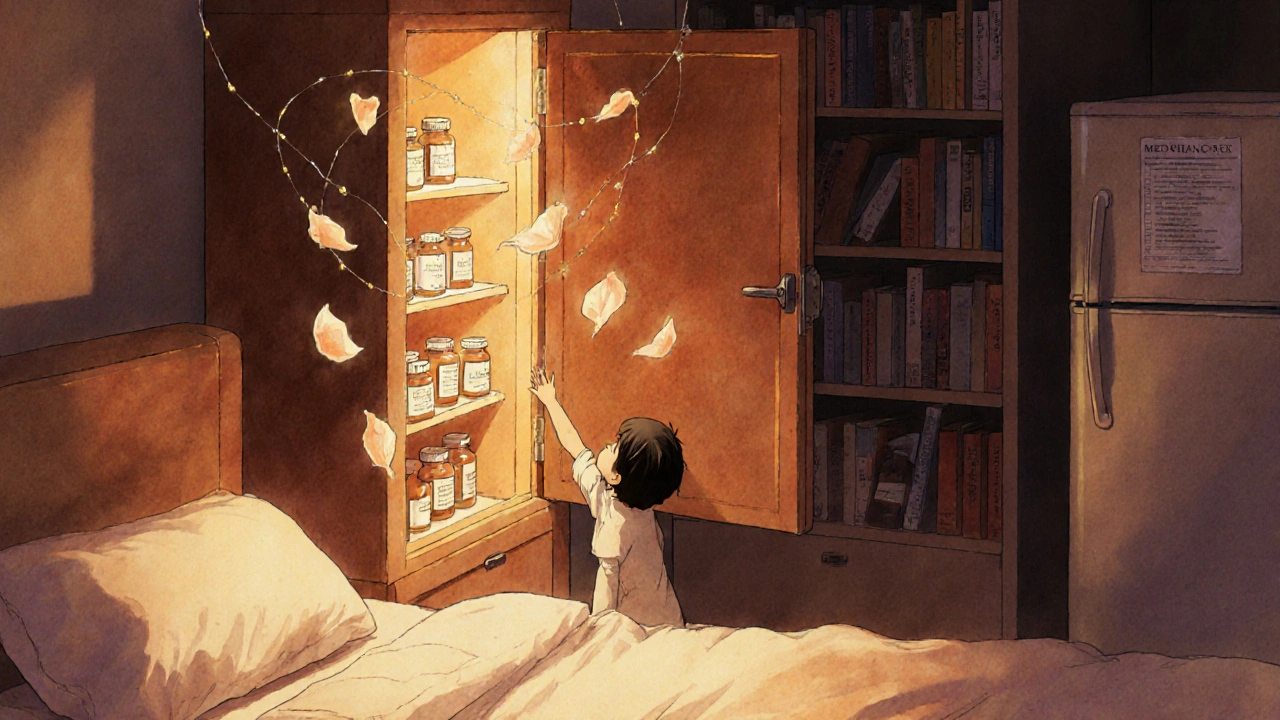
Every year, nearly 60,000 kids end up in the emergency room because they got into medicine they weren’t supposed to. Most of the time, it wasn’t because a parent was careless-it was because the medicine was left where a curious toddler could reach it. A grandparent’s purse on the couch. A pill bottle on the bathroom counter. A medicine cabinet that’s just a little too easy to open. These aren’t rare accidents. They’re predictable ones-and they’re completely preventable.
Creating a safe medication routine isn’t about being perfect. It’s about building habits that protect your family, especially young kids and older adults, from the most common dangers: accidental overdoses, mix-ups between similar-looking pills, and missed or doubled doses. The goal isn’t to turn your home into a hospital. It’s to make sure that when someone needs their medicine, they get the right one, at the right time, in the right amount-and nothing else ever gets touched by accident.
Store Medications Up and Away, and Locked
Keeping medicine out of reach isn’t enough. You need to keep it up and away-and locked. The CDC and Children’s Hospital Los Angeles both stress this rule. A shelf above the fridge? Good. A cabinet you can lock? Better. A drawer in the nightstand? Dangerous.
Most kids who get into medicine are between 1 and 2 years old. They climb. They pull. They open drawers and bags. Studies show 25% of exposures happen when medicine is left in purses, coats, or bags on counters. That’s why locked cabinets are non-negotiable. Even if you think your child can’t reach it, assume they can. Locks don’t have to be fancy. A simple cabinet lock from the hardware store works. For homes with opioids, keep naloxone (Narcan) on hand. It can reverse an overdose in minutes.
Don’t store meds in the bathroom. Humidity from showers and sinks can ruin pills and liquids, making them less effective or even unsafe. Instead, pick one cool, dry spot-like a bedroom closet or kitchen cabinet-and stick with it.
Use Original Containers with Child-Resistant Caps
Never transfer pills into random containers. That’s a recipe for disaster. A blue capsule in a spice jar? A child might think it’s candy. An adult might mix it up with another pill. Always keep medicines in their original bottles. That way, you know exactly what’s inside, the dosage, and the expiration date.
Child-resistant caps aren’t child-proof. But they do slow kids down. The Poison Prevention Packaging Act requires them on over 200 prescription drugs and 40 OTC products. Yet only 55% of parents use them correctly. That means they’re either not closing them fully, or they’re leaving them off. Make sure you hear the click every time. If a cap feels loose, it’s not locked.
Build a Master Medication List
Write down everything your family takes. Not just prescriptions. Include vitamins, herbal supplements, over-the-counter pain relievers, allergy meds, and even topical creams. Many people forget these. But they can interact with prescriptions and cause serious side effects.
Your list should include:
- Medication name (brand and generic)
- Dosage (e.g., 10 mg, 5 mL)
- How often to take it (e.g., once daily, every 6 hours)
- Why it’s prescribed
- Start date
- Any side effects you’ve noticed
Keep a printed copy on the fridge. Share a digital version with your pharmacist and primary doctor. Review it every six months with your pharmacist using the “brown bag” method-bring everything you take, in the original bottles, to your pharmacy. They’ll spot duplicates, interactions, and drugs you might not need anymore.

Follow the Five Rights of Medication Administration
Before giving any medicine, ask yourself these five questions:
- Right child? Is this medicine for the person I’m giving it to?
- Right medication? Does the label match what I’m holding?
- Right dose? Am I giving the exact amount? Don’t guess. Use an oral syringe for liquids-not a kitchen spoon.
- Right route? Is it meant to be swallowed, applied to the skin, or inhaled?
- Right time? Is it the correct time of day? Some meds need to be taken with food, others on an empty stomach.
These rules aren’t just for nurses. They’re for every parent, grandparent, or caregiver. Skipping even one step can lead to a dangerous mistake. A 2022 study found that using oral syringes instead of cups reduces dosing errors by 47%.
Use Tools to Stay on Track
People forget. Especially when juggling multiple meds. That’s why tools help.
For families with kids or older adults taking several pills, a 7-day pill organizer is one of the most effective tools. AARP’s caregiver survey found 68% of users said it reduced errors. Color-code containers with painter’s tape if multiple people take similar pills. Red for blood pressure. Blue for cholesterol. Simple, visual cues cut confusion.
Digital apps like Medisafe or MyTherapy can send reminders and track doses. But don’t rely on them if someone in the house isn’t tech-savvy. Many older adults abandon apps after a few weeks. If that’s the case, use a printed schedule taped to the fridge with check boxes. Mark each dose with a pen. It’s low-tech, but it works.
For households with multiple caregivers, try a “buddy system.” One person sets the pills, another double-checks. It takes two minutes, but it cuts errors nearly in half.
Know What to Do If You Miss a Dose
Everyone forgets sometimes. But what you do next matters.
HealthyChildren.org gives clear advice: If you miss a dose, give it as soon as you remember. Then go back to your regular schedule. Never double up. Giving two doses at once can cause overdose, especially with painkillers like acetaminophen or ibuprofen.
For antibiotics or blood pressure meds, timing matters more. If you miss a dose by more than a few hours, call your doctor or pharmacist. Don’t guess. They’ll tell you whether to skip it or adjust.
Dispose of Old or Unused Meds Safely
Don’t flush pills down the toilet or toss them in the trash. That’s bad for the environment-and dangerous if someone else finds them.
Look for a drug take-back program. Many pharmacies, hospitals, and police stations have drop boxes. The DEA holds National Prescription Drug Take Back Days twice a year. If you can’t get to one, mix pills with coffee grounds or cat litter in a sealed bag before throwing them out. Remove labels from bottles to protect privacy.
Dispose of expired or unneeded meds at least once a year. It clears clutter and removes temptation.
Review Medications Regularly-Especially for Seniors
Older adults often take five or more medications daily. The American Geriatrics Society says many of these aren’t needed anymore. Some increase fall risk by 50%. These are usually anticholinergic drugs-common in sleep aids, allergy meds, and bladder treatments.
Ask your doctor or pharmacist every six months: “Is this still necessary?” “Can we reduce the dose?” “Is there a safer alternative?” This is called deprescribing. It’s not about cutting meds-it’s about removing the ones that do more harm than good.
Medicare now covers virtual medication reviews for seniors. You can do one from your living room. It’s free. Use it.
Teach Your Family About Medicine Safety
Don’t assume kids know medicine isn’t candy. Talk to them. Say, “This is not food. It’s only for when Mom or Dad says so.” Use simple words. Show them what a locked cabinet looks like. Let them help put pills in the organizer. Make it part of the routine.
Teach older relatives to call Poison Control (1-800-222-1222) if they’re unsure. Only 35% of households have a current medication list. And 60% don’t even know that number. Make sure your family does.
Start Small. Build the Habit.
You don’t need to fix everything at once. Pick one thing to start with this week:
- Lock the medicine cabinet.
- Write down your first medication list.
- Buy a pill organizer for one person.
- Call your pharmacist for a brown bag review.
It takes 2 to 3 weeks to build a new habit. After that, it becomes automatic. And that’s when your family is truly safer.
Know the Emergency Number
Keep 1-800-222-1222 written on the fridge, saved in your phone, and posted on the back of your medicine cabinet. That’s Poison Control. They’re available 24/7. No judgment. No cost. Just help. If you think someone swallowed medicine by accident-even if they seem fine-call immediately. Waiting can be deadly.
tushar makwana
November 30, 2025 AT 09:59Richard Thomas
December 1, 2025 AT 02:34Sara Shumaker
December 1, 2025 AT 04:31Also, the brown bag method? Total game-changer. My pharmacist found three things I didn’t even know I was still taking.
Scott Collard
December 1, 2025 AT 05:32Robert Bashaw
December 2, 2025 AT 23:32Now I have a lockbox, a pill organizer, a printed list taped to the fridge, and a tiny alarm that goes off every time I open the cabinet.
My kid thinks it’s a game. I think it’s my only chance at not losing my mind.
Bernie Terrien
December 3, 2025 AT 14:42Jennifer Wang
December 3, 2025 AT 19:09stephen idiado
December 4, 2025 AT 20:59Subhash Singh
December 6, 2025 AT 06:01Geoff Heredia
December 7, 2025 AT 05:43Tina Dinh
December 7, 2025 AT 19:52