

When you walk out of a pharmacy, you likely see two prices for medicines that treat the exact same condition. One costs a few dollars, while the other might run hundreds. This gap isn't just about pocket change; it drives the entire stability of our national health economy. Recent data reveals a staggering reality: in 2024, generic medications delivered generic drug savings totaling $482 billion to the U.S. healthcare system alone. Yet, despite making up 90% of all prescriptions filled, these affordable options account for just 12% of total drug spending. Understanding where that money goes-and where it gets stuck-is crucial for anyone navigating today's complex medical landscape.
The Real Math Behind Prescription Savings
To understand the scale of efficiency here, we have to look at the volume versus the cost. Think of the market like a grocery store. Generics are the staples bought in bulk daily, while brand-name drugs are the specialty items few purchase often but pay heavily for. According to the Association for Accessible Medicines (AAM)A nonprofit organization advocating for accessible medication, generic medicines comprised 3.9 billion prescriptions in 2024. That is nine out of every ten prescriptions filled nationwide. However, because they are so inexpensive, their total spending was only $98 billion compared to the $700 billion spent on brand-name drugs.
| Metric | Generic Medications | Brand-Name Drugs |
|---|---|---|
| Prescriptions Filled | 3.9 billion (90%) | 435 million (10%) |
| Total Spending Share | $98 billion (12%) | $700 billion (88%) |
| System Savings Generated | $482 billion | N/A |
This disparity highlights the core engine of cost containment. Without generics, those 3.9 billion prescriptions would have likely been filled with expensive alternatives, exploding budgets across insurance plans, hospitals, and households. The IQVIA Institute tracks this carefully, noting that since 2016, the cost share of generics has steadily dropped even as volume increased. This means Americans are buying more medicine for less overall cash than before, which helps keep inflation in check for the wider economy.
Biosimilars: The Next Frontier in Cost Cutting
While traditional generics copy small-molecule chemical drugs, there is a newer category gaining massive traction called biosimilars. These are near-identical versions of biologic medicines-complex proteins used to treat cancer, autoimmune diseases, and chronic conditions like rheumatoid arthritis. Just like generic aspirin lowers the price of aspirin, a biosimilar version of a high-cost biologic lowers the price of that therapy.
Take Humira, a widely prescribed biologic for years. When biosimilar competitors finally entered the market, private-label strategies helped boost adoption from just 3% to 28% in 2024. This shift allowed health plans to save significantly. Similarly, Stelara, a drug with over $6 billion in annual sales, now faces seven FDA-approved biosimilars entering the market in 2025. These versions are available for more than 80% less than the original reference product.
Biosimilar Medicines are biological products highly similar to an already approved biological product.However, the road isn't perfectly smooth. The AAM report highlights a worrying "biosimilar void." Despite the potential for another $234 billion in savings over the next decade, 90% of brand-name biologics losing patent protection currently have zero biosimilar competition in development. This suggests that unless innovation accelerates, billions in potential savings remain locked away behind patents that prevent cheaper alternatives from reaching patients.

How Government Policy Shapes Drug Costs
You cannot talk about savings without discussing who holds the power to negotiate prices. For a long time, private insurers were the main players, but federal policy is changing the rules. The Inflation Reduction Act has mandated new pathways for Medicare to negotiate drug prices directly. While the program started slow, projections from Stanford Medicine suggest that expanding these negotiations to 30 drugs per year starting in 2026 could generate between $500 billion and $550 billion in savings over a decade.
This isn't just about senior citizens anymore. Recent policy moves show spillover effects. For instance, the White House announced Most-Favored-Nation pricing initiatives in late 2025, targeting high-profile obesity and diabetes medications. Prices for Ozempic and Wegovy were reduced from upwards of $1,000 a month down to $350 through these agreements. Additionally, Medicare beneficiaries saw insulin costs capped at $35 per month starting in 2025, a move expected to expand to commercial insurance plans by 2027.
Dr. Aaron Kesselheim, a professor of medicine at Harvard Medical School, noted in a March 2025 commentary that the current pricing system is unsustainable. He argues that generic medications are the single most effective mechanism for controlling pharmaceutical costs without compromising patient outcomes. When policies support switching to these cheaper options rather than protecting monopolies, the whole system becomes more efficient.
Hidden Barriers: Why Prices Stay High
If generics save so much money, why aren't they available everywhere immediately? Sometimes the answer lies in legal tactics designed to keep competition off the shelf. A notable practice known as "pay for delay" involves brand-name manufacturers paying potential generic challengers to delay their market entry. Blue Cross Blue Shield analysis documents that companies spend an average of $1.2 billion per year in settlements just to extend patent protections artificially.
Manufacturing quality is another factor. While we want cheap drugs, we need safe ones. The FDA recorded 1,247 Form 483 observations in 2024 regarding quality issues at generic manufacturing facilities. These checks ensure that the low price doesn't come at the expense of safety. However, strict enforcement can sometimes slow down approvals, creating a delicate balance between speed to market and regulatory compliance.
Furthermore, there is the issue of therapeutic interchangeability. Some patients report frustration when pharmacists substitute different generic versions of a drug. While chemically equivalent, minor differences in inactive ingredients can cause varying side effects for sensitive individuals. One user on Reddit's r/Pharmacy subreddit mentioned that switching generic albuterol saved them $300 monthly, but others expressed concerns about different inhaler mechanics affecting asthma control. This highlights that while the financial savings are clear, individual patient experiences vary.
The Human Cost: Debts and Access
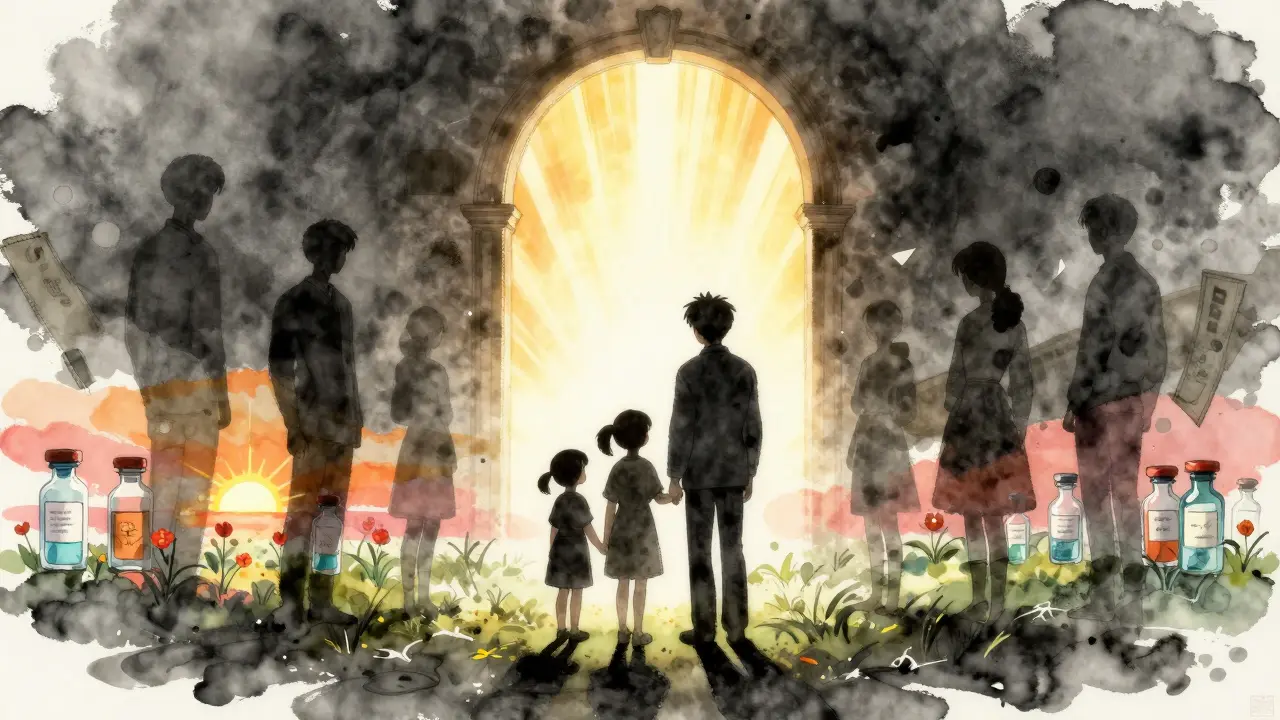
Numbers tell one story, but family budgets tell another. Almost 1 in 12 Americans carried medical debt specifically attributed to prescription costs in 2025, according to GoodRx research. For many, access to a generic alternative is the deciding factor on whether they take the medicine at all. When a generic option isn't available, patients face a choice between skipping doses or draining savings accounts.
Data from the Centers for Medicare & Medicaid Services (CMS) adds nuance here. Less than 1% of Medicare beneficiaries reaching catastrophic coverage phases rely solely on generics. This indicates that for the sickest seniors, high-cost brand-name specialties are still driving the bulk of expenses. It's a reminder that while generics handle the volume, the highest costs remain concentrated among those using complex biologics and novel therapies.
The impact extends beyond wallets. Financial toxicity-the stress caused by high medical bills-affects treatment adherence. Studies show that when out-of-pocket costs drop, people are more likely to fill their prescriptions consistently. This improves health outcomes and reduces emergency room visits, which further lowers the broader societal burden of healthcare delivery.
Looking Ahead: 2025 to 2030 Trends
As we move through 2026, the outlook mixes promise with caution. The IQVIA Institute forecasts that increased utilization of generics and biosimilars could reduce total U.S. prescription drug spending by 15-18% by 2030 if current trends hold. However, the growth in specialty drug spending threatens to offset some of these gains. Specialized treatments are projected to reach $1.2 trillion annually by 2030.
Success depends heavily on filling that "biosimilar void." If developers can bring more competitors for expiring biologic patents online, we might see savings climb higher. The industry supports approximately 350,000 jobs across 46 states, making this economic engine vital. Yet, maintaining manufacturing quality while scaling production remains a technical hurdle that requires constant vigilance from regulators like the FDA.
Ultimately, the goal isn't just cheap pills; it's sustainable care. Every dollar saved on generic administration funds other parts of the system-new facilities, better staff training, or expanded mental health services. By keeping the foundational layer of medicine affordable, we create room to innovate without bankrupting families. The math is solid, the evidence is clear, and the path forward relies on keeping pressure on systems that block access.
Calvin H
April 1, 2026 AT 10:53Just another way to tell us why your insurance premiums keep creeping up while profits hit the roof for pharma giants.
Victor Ortiz
April 2, 2026 AT 16:37You guys miss the mark completely on the supply chain dynamics here.
Generic manufacturing requires specific facility certifications that most plants lack capacity for right now.
It isn't magic.
Carolyn Kask
April 3, 2026 AT 22:37And that is exactly why domestic production is so vital for American security!
There is no reason to rely on overseas factories when we could produce this ourselves.
Ruth Wambui
April 4, 2026 AT 18:21They want you to think the void is natural when it is clearly engineered by shadow committees.
Amber Armstrong
April 6, 2026 AT 03:11I really appreciate the detailed breakdown here because it highlights the real struggles families face daily trying to budget for essentials.
I know my own neighbor often skips doses just to afford groceries and seeing this data confirms her fears.
We need more genuine compassion in the legislative process regarding how these approvals happen globally.
It feels like the human suffering element frequently gets lost inside these massive spreadsheets.
Every single statistic represents a real person struggling to breathe or sleep without proper medication.
Hopefully the push for biosimilars will eventually help those currently left behind by the complex system.
Safety standards are absolutely necessary but they cannot become a secret weapon against basic access.
Thank you for sharing this specific perspective on the financial toxicity issue affecting so many.
We must understand that cost control is effectively health care delivery for millions of people.
The available statistics show a clear path forward if we choose to follow it together.
I genuinely hope politicians read this report and actually change the laws soon enough.
Healthcare dignity is something every citizen deserves regardless of their income bracket.
This situation is likely why community support groups are becoming more popular recently everywhere.
We can solve this massive issue if we focus on the patient needs first always.
Keep advocating strongly for what is right and fair for everyone involved in this mess.
Jonathan Sanders
April 7, 2026 AT 17:32Wow such beautiful feelings but nothing changes until the wallets empty out faster than the promises get made.
Katie Riston
April 8, 2026 AT 22:04The dichotomy between profit margins and biological necessity creates a moral paradox inherent to capitalism itself.
We see this struggle manifest in every pharmacy aisle we walk through daily.
Medicine is a fundamental human requirement we simply owe each other.
The numbers suggest a market solution yet the reality suggests a humanitarian crisis requiring deeper intervention.
Perhaps the real cost is measured in lives saved versus profits gained annually.
Michael Kinkoph
April 9, 2026 AT 00:43One must admit! the fiscal responsibility demonstrated! by generic adoption! is truly commendable! However! regulatory hurdles! remain! significant! obstacles! preventing immediate relief! for citizens!!
Brian Yap
April 10, 2026 AT 01:25Yeah regulations are tough everywhere mate! But good news is prices are dropping slowly.