
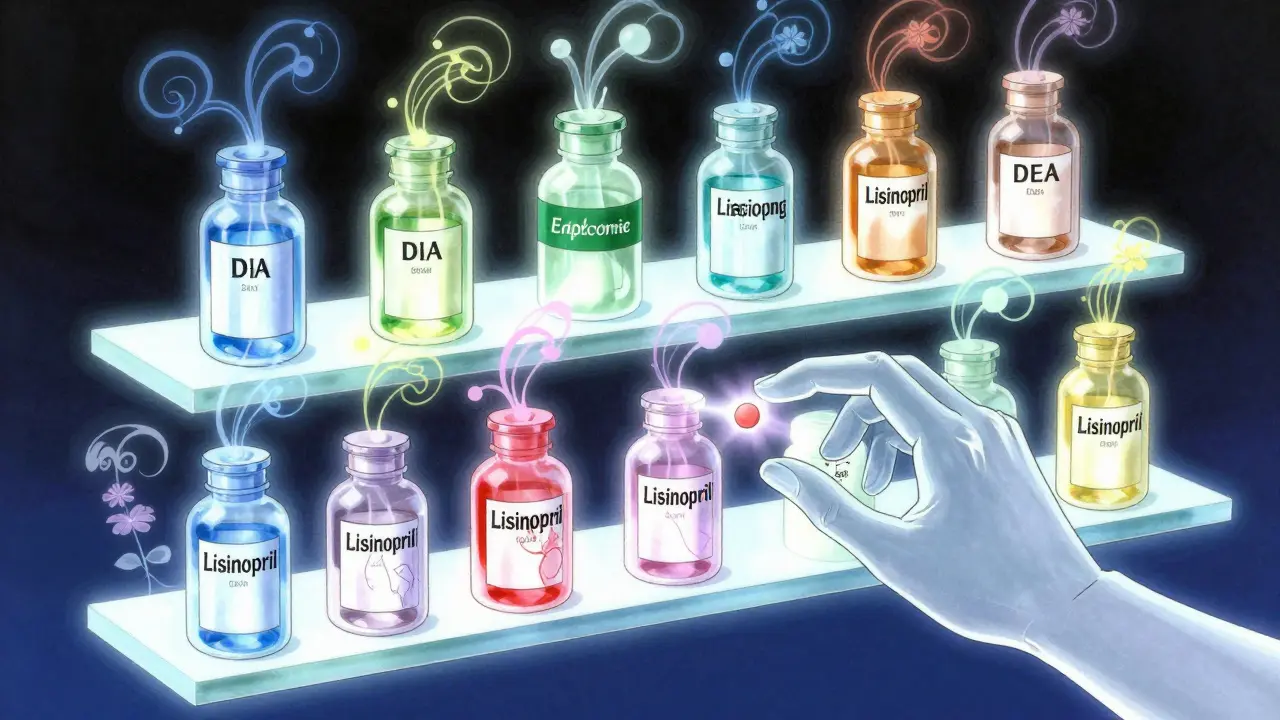
When you pick up a prescription at the pharmacy, you might see a drug labeled as generic - but what does that really mean? It’s not just about cost. Generic drugs are grouped into specific classifications that tell doctors, pharmacists, and patients how they work, what they’re used for, and how they’re regulated. These systems aren’t just bureaucratic clutter - they’re the backbone of safe, effective medication use. Without them, prescribing would be chaotic. A drug like aspirin could be called a painkiller, a blood thinner, or even an anti-inflammatory - and without a standard way to classify it, you’d never know which use was intended.
Therapeutic Classification: What the Drug Treats
The most common way to group generic drugs is by what condition they treat. This is called therapeutic classification. It’s the system your doctor uses when they say, “I’m prescribing you a blood pressure medication” or “This is an antidepressant.” The FDA and USP maintain the official model, which breaks drugs into over 300 categories. Some major ones include:
- Analgesics - pain relievers, split into non-opioid (like ibuprofen) and opioid (like morphine)
- Cardiovascular Agents - drugs for heart disease, high blood pressure, or cholesterol (e.g., lisinopril, atorvastatin)
- Antineoplastics - cancer treatments, including chemotherapy and targeted therapies
- Endocrine Agents - hormones and diabetes drugs like metformin or levothyroxine
- Antibiotics - fight bacterial infections, such as amoxicillin or doxycycline
Each of these has subcategories. For example, under cardiovascular agents, you’ll find diuretics, beta-blockers, and calcium channel blockers. The advantage? It’s practical. A nurse can quickly find all diabetes drugs on a formulary. A pharmacist can spot a duplicate therapy. But there’s a flaw: many drugs treat more than one condition. Aspirin, for instance, reduces pain, thins blood, and reduces inflammation. Where does it belong? The new FDA Therapeutic Categories Model 2.0, launching in 2025, will let one drug have a primary and secondary classification to handle this.
Pharmacological Classification: How the Drug Works
Therapeutic classification tells you what the drug does. Pharmacological classification tells you how it does it. This is the science side - the mechanism of action. For example, all beta-blockers (like metoprolol or propranolol) work by blocking adrenaline receptors in the heart. That’s why they’re grouped together, even if one treats high blood pressure and another treats anxiety or migraines.
This system has over 1,200 distinct pharmacologic classes. Some are very specific:
- Proton pump inhibitors - drugs ending in “-prazole” like omeprazole, which shut down stomach acid production
- SSRIs - selective serotonin reuptake inhibitors like sertraline, used for depression and anxiety
- EGFR inhibitors - cancer drugs like erlotinib that block a specific protein growth signal
These classes are crucial for researchers and specialists. But they’re not always helpful at the bedside. A family doctor doesn’t need to know that a drug inhibits a kinase pathway - they need to know it lowers blood pressure. That’s why pharmacological classification is used more in clinical trials and drug development than in daily prescribing. Still, the naming system helps. If you see a drug ending in “-lol,” you know it’s a beta-blocker. If it ends in “-prazole,” it’s a proton pump inhibitor. That’s the USP stem naming convention, adopted in 1964 and still used today. It reduces prescribing errors by about 18%, according to NEJM data.
DEA Scheduling: Legal Control and Abuse Risk
Not all drugs are treated the same under the law. The Drug Enforcement Administration (DEA) classifies controlled substances into five schedules based on abuse potential and medical use. This isn’t about how well the drug works - it’s about how dangerous it is if misused.
- Schedule I - No accepted medical use. Examples: heroin, LSD. These are illegal everywhere.
- Schedule II - High abuse risk, but medical use. Examples: oxycodone, fentanyl, Adderall. Prescriptions can’t be refilled.
- Schedule III - Moderate abuse risk. Examples: ketamine, buprenorphine, some cough syrups with codeine.
- Schedule IV - Low abuse risk. Examples: Xanax, Valium, tramadol.
- Schedule V - Very low abuse risk. Examples: cough meds with tiny amounts of codeine (under 200mg per 100ml).
This system affects how prescriptions are written, stored, and tracked. A Schedule II drug like oxycodone requires a signed paper prescription in most states, while a Schedule IV drug like alprazolam can be called in. But there’s controversy. Marijuana is still Schedule I, even though it’s approved for medical use in 38 states and FDA-approved cannabinoid drugs like dronabinol are Schedule II. Critics say this creates a legal mess that blocks research and confuses patients.

Insurance Tiers: What You Pay Out of Pocket
Insurance companies don’t care about mechanisms or legal schedules - they care about cost. That’s why they use tiered formularies. Most plans have five tiers:
- Tier 1 - Preferred generics (cheapest). Usually 75% of generic drugs fall here.
- Tier 2 - Non-preferred generics. Slightly more expensive, often because the insurer has a contract with a different brand.
- Tier 3 - Preferred brand-name drugs. You pay more, but less than for non-preferred brands.
- Tier 4 - Non-preferred brands. High cost-sharing, often because there’s a cheaper generic available.
- Tier 5 - Specialty drugs. Rare, expensive, often for cancer or autoimmune diseases. These make up only 5-7% of prescriptions but 50% of drug spending.
Here’s the kicker: two identical generic drugs can be in different tiers. Why? Because of pharmacy benefit manager contracts. One insurer might favor a generic made by Company A, while another favors Company B - even if they’re chemically identical. This causes confusion. Pharmacists report that 43% of prior authorization requests come from tier disputes, not medical necessity. Patients end up paying $20 for a drug they could have gotten for $5 if it were on Tier 1.
The ATC System: Global Standard for Drug Tracking
While the U.S. uses its own systems, the World Health Organization’s Anatomical Therapeutic Chemical (ATC) classification is used in 143 countries. It’s a five-level code that breaks down every drug into:
- Level 1 - Body system (e.g., A = Alimentary tract and metabolism, C = Cardiovascular system)
- Level 2 - Therapeutic subgroup (e.g., C03 = Diuretics)
- Level 3 - Pharmacological subgroup (e.g., C03A = High-ceiling diuretics)
- Level 4 - Chemical subgroup (e.g., C03CA = Sulfonamides)
- Level 5 - Specific chemical (e.g., C03CA01 = Furosemide)
ATC is used for research, public health tracking, and international drug comparisons. The WHO adds over 200 new codes every year for new drugs. It’s not used for prescribing - but it’s the backbone of global drug statistics. If you’re studying how many people take statins in Germany versus Brazil, ATC is how they’re counted.
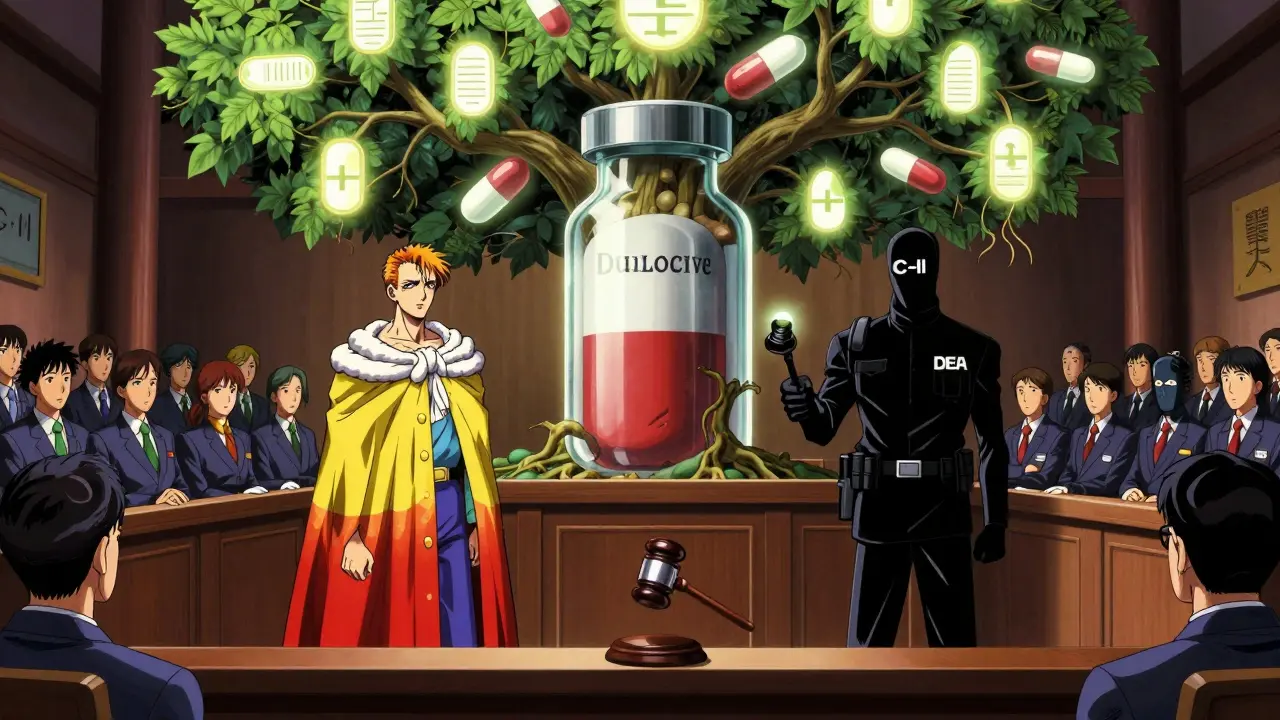
Why Classification Matters in Real Life
These systems aren’t just for textbooks. They affect your daily health. A 2022 ASHP study found that hospitals using standardized therapeutic classification reduced medication errors by 31%. Nurses verified medications 47% faster. But confusion still happens. A 2023 survey of 1,243 physicians showed 68% struggled to tell the difference between therapeutic and pharmacological categories - especially with drugs like duloxetine, which is both an antidepressant and a painkiller. That confusion can lead to missed treatments or dangerous overlaps.
For patients, tier systems create real financial stress. You might be told your generic is “covered,” but then find out it’s on Tier 2 and costs $35 instead of $5. You don’t know why - because the classification system isn’t explained to you. And for prescribers, spending 12-18 minutes per patient sorting through conflicting systems adds up to hours lost each day.
There’s movement toward change. The FDA’s new model allows multiple indications. AI tools like IBM Watson’s Drug Insight platform are learning to predict the best classification for new drugs with 92.7% accuracy. But the biggest shift may come from the MORE Act - if marijuana is moved from Schedule I to Schedule III, it could force a nationwide re-evaluation of how we classify drugs with dual medical and recreational use.
What You Need to Know
You don’t need to memorize every classification. But understanding the basics helps you ask better questions:
- If your doctor says “this is a beta-blocker,” ask why - is it for blood pressure, heart rhythm, or anxiety?
- If your pharmacy says your generic isn’t covered, ask which tier it’s on and if there’s a Tier 1 alternative.
- If you’re prescribed a controlled substance, know the schedule - it tells you how strict the rules are.
- If you’re on multiple meds, check if any have overlapping uses. That’s where classification helps avoid duplicates.
Drug classification isn’t perfect. It’s messy, sometimes contradictory, and often hidden from patients. But it’s the system that keeps your prescriptions safe, effective, and affordable. Knowing how it works means you’re not just taking a pill - you’re understanding why it’s the right one for you.
What’s the difference between generic and brand-name drug classifications?
There’s no difference. Generic drugs use the exact same classification systems as brand-name drugs - therapeutic, pharmacological, DEA schedule, and insurance tier. The only difference is cost and manufacturer. A generic lisinopril is classified the same way as Zestril. The classification is based on the active ingredient, not the brand name.
Why do some generic drugs cost more than others if they’re the same?
It’s all about insurance tiers. Two identical generic drugs can be in different tiers because of contracts between your insurer and pharmacy benefit managers. One might be on Tier 1 (lowest cost), while another - chemically identical - is on Tier 2 because the insurer negotiated a better deal with a different maker. It’s not about quality or effectiveness - it’s about business deals.
How do I know if my drug is a controlled substance?
Check the prescription label - controlled substances are marked with a “C” and a number (e.g., C-II). You can also ask your pharmacist. Common ones include opioids (oxycodone), stimulants (Adderall), and benzodiazepines (Xanax). Schedule I drugs like heroin aren’t prescribed at all. If your drug requires a special prescription form or can’t be refilled, it’s likely a controlled substance.
Can a drug belong to more than one classification?
Yes, absolutely. Aspirin is a painkiller (therapeutic), an anti-inflammatory (therapeutic), and a blood thinner (pharmacological). Duloxetine treats depression and nerve pain. The new FDA system allows one drug to have a primary and secondary classification. This is becoming more common as drugs are found to work in multiple ways.
Is the ATC system used in the U.S.?
Not for prescribing, but yes for research and data tracking. The FDA, CDC, and NIH use ATC codes to analyze drug use patterns, track side effects, and compare U.S. data with other countries. Your doctor won’t use it, but the government does. It’s the global language of drug statistics.
Will drug classifications change in the next few years?
Yes. The FDA’s new Therapeutic Categories Model 2.0 (2025) will let drugs have multiple primary uses. The WHO is adding new codes for biologics and cell therapies. And if marijuana is rescheduled from Schedule I to III, it could trigger changes across DEA, insurance, and clinical systems. AI is also starting to predict classifications for new drugs - meaning the system won’t just be static anymore.
Juan Reibelo
January 25, 2026 AT 04:42Wow, this is actually one of the clearest breakdowns of drug classification I’ve ever read. I’ve been a pharmacist for 14 years, and even I had to re-read the DEA scheduling part-especially how tier systems mess with generics. The aspirin example? Perfect. It’s like a Swiss Army knife with a prescription label.
Sawyer Vitela
January 25, 2026 AT 14:17Wrong. The FDA doesn’t maintain therapeutic classifications. USP does. And ATC isn’t used by the CDC-it’s WHO. You’re conflating agencies. Fix your sources before posting.
Tiffany Wagner
January 25, 2026 AT 21:51I didn’t realize how much of my medication confusion came from tier systems. I just thought my insurance was being cheap. Now I know to ask for Tier 1 alternatives. Thanks for explaining this so plainly.
Amelia Williams
January 26, 2026 AT 00:58This is exactly the kind of info we need to share with patients! I’m a nurse and I’m printing this out for our patient education board. The part about dual classifications? Game-changer. So many people think their meds are ‘wrong’ when they’re just multi-use. Love this!
Dolores Rider
January 27, 2026 AT 22:46They’re lying about the ATC system. It’s not for research-it’s a government tracking tool to control us. Why else would they hide it from doctors? And why is marijuana Schedule I but alcohol isn’t? COINCIDENCE?? 😏
Vatsal Patel
January 28, 2026 AT 07:15Ah yes, the great pharmaceutical illusion. We’re taught to believe in ‘classifications’ like they’re divine laws. But in reality? It’s all corporate lobbying dressed up as science. Why does a $5 generic cost $35? Because someone’s got a contract. Not because it’s better. Just ask the guy who invented the wheel-he’d laugh at this.
Sharon Biggins
January 28, 2026 AT 19:46This made me feel so much less alone. I’ve been asking my pharmacist the same questions for years and no one ever explained it. Now I get why my insulin is on Tier 5. I’m gonna print this and take it to my next appointment. Thank you for writing this!
John McGuirk
January 29, 2026 AT 21:00So you’re telling me the government lets Big Pharma decide which generic gets which tier? And we’re supposed to trust this? I bet the same companies that make the drugs also own the pharmacy benefit managers. It’s a pyramid scheme with pills.
lorraine england
January 31, 2026 AT 20:14I love how you broke down the -prazole and -lol endings! I always thought those were just weird names. Now I know they’re like secret codes. My grandma’s gonna be so proud I finally understand her meds 😊
Kevin Waters
February 1, 2026 AT 10:59Great summary. Just to add: the 18% prescribing error reduction from stem naming? That’s from a 2018 NEJM meta-analysis. Also, the FDA’s new model is already being piloted in 12 states. It’s not just 2025-it’s happening now. Check the FDA’s Drug Classification Dashboard if you want live updates.
Sushrita Chakraborty
February 3, 2026 AT 05:32It is indeed a remarkable exposition on the intricate architecture of pharmaceutical taxonomy. One must acknowledge the profound utility of standardized nomenclature in ensuring patient safety, especially in multicultural, multilingual healthcare environments. The ATC system, though underutilized in clinical practice, remains indispensable for global epidemiological surveillance. It is, in essence, the lingua franca of pharmacovigilance.
Kat Peterson
February 5, 2026 AT 04:52OMG I just realized my anxiety meds are on Tier 2?? And I’ve been paying $40 for YEARS?? This is a SCAM. I’m starting a TikTok campaign. #GenericDrugConspiracy #IWantMy5DollarPills 🤯💸