

Living with chronic pain isn’t just about hurting every day-it’s about learning how to live anyway. When pain lasts longer than three months, it stops being a symptom and becomes a condition of its own. Millions of people in the U.S. deal with this reality, and many feel trapped between ineffective treatments and the fear of relying on pills that might do more harm than good. The truth? chronic pain management doesn’t mean chasing a cure. It means rebuilding your life around what you can do, not what you can’t.
Why Pain Becomes Chronic-and Why Pills Often Fail
Pain that sticks around past the healing time of an injury isn’t just “worse pain.” It’s a sign your nervous system has changed. Think of it like a stuck alarm. Even after the fire is out, the alarm keeps blaring. That’s what happens in chronic pain: nerves become hypersensitive, and your brain starts interpreting normal sensations as dangerous. This isn’t “in your head.” It’s biology. And treating it like a simple injury with painkillers rarely works long-term. Opioids might give you relief at first, but studies show their effectiveness drops sharply after three to six months. By then, you’re taking higher doses for less benefit, and your risk of dependence, overdose, and even increased pain sensitivity goes up. The CDC’s 2022 guidelines made this clear: opioids should only be used after other options have been tried-and even then, only at the lowest possible dose for the shortest time. For most people, they’re not the answer.What Actually Works: The Evidence-Based Approach
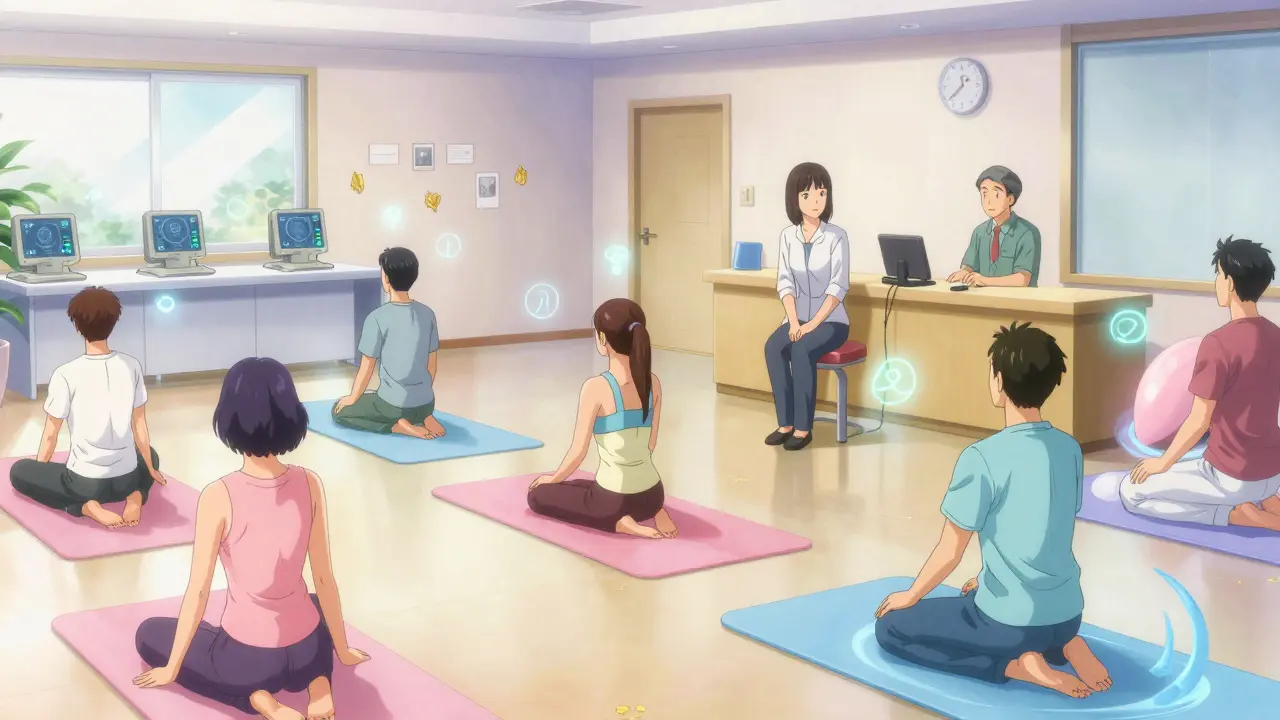
The best way to manage chronic pain isn’t a single pill, a single therapy, or a single doctor. It’s a mix of strategies that target the body, mind, and lifestyle together. This is called the biopsychosocial model-and it’s backed by decades of research. Exercise isn’t optional-it’s medicine. Movement doesn’t fix the damaged tissue, but it rewires the nervous system. Aerobic exercise, strength training, yoga, tai chi, and water-based workouts have all been shown to reduce pain by 15-30% and improve daily function by 20-40%. The key? Consistency. Programs that last 6-12 weeks, with sessions 2-3 times a week, create real change. You don’t need to run a marathon. Walking 30 minutes a day, doing light resistance bands, or swimming twice a week can make a measurable difference. Cognitive Behavioral Therapy (CBT) changes how you relate to pain. This isn’t “just talking.” CBT is a structured, time-limited therapy-usually 8 to 12 weekly sessions-that teaches you to spot unhelpful thoughts, manage stress, and break the cycle of fear-avoidance. People who complete CBT report 25-40% less pain intensity, 30% less disability, and up to 50% less catastrophizing (the habit of imagining the worst). One veteran reduced his opioid use from 120 MME/day to 30 MME/day-not because his pain vanished, but because he learned to function better despite it. Multidisciplinary pain rehabilitation is the gold standard. Programs like the one at Mayo Clinic bring together doctors, physical therapists, psychologists, and occupational therapists in a three-week intensive course. They teach pacing, biofeedback, relaxation, and how to rebuild daily routines without letting pain control you. Sixty to seventy-five percent of participants see major improvements in function, and half reduce or quit opioids entirely. The catch? These programs are rare. Only 15-20% of eligible patients can access them due to cost, location, or insurance barriers.Other Proven Tools Beyond Pills and Therapy
There are other options that work for specific types of pain:- Acupuncture helps with osteoarthritis and some types of back pain, offering 20-30% more pain relief than fake treatments-but it doesn’t work well for nerve pain.
- Non-opioid medications like duloxetine (60-120 mg/day) and pregabalin (150-600 mg/day) can help with nerve-related pain. NSAIDs like ibuprofen or naproxen are fine for short-term flare-ups but aren’t safe for daily long-term use due to kidney and stomach risks.
- Wearable neuromodulation devices, like Nevro’s Senza, send gentle electrical pulses to block pain signals. They’re FDA-cleared and have shown 30-40% pain reduction in trials.
The Hidden Barriers: Why So Many People Still Struggle
Knowing what works doesn’t mean you can get it. Most people with chronic pain face serious roadblocks:- Doctors aren’t trained. Only 35% of primary care providers have received proper training in non-opioid pain management. Many still default to prescribing pills because they don’t know what else to offer.
- Insurance won’t cover it. CBT, physical therapy, and pain rehab programs are often denied or limited to just a few sessions-even though guidelines say they’re first-line treatments. One in three patients reports being turned down for non-drug therapies.
- Cost is prohibitive. A full multidisciplinary program can cost $15,000-$20,000. Even individual CBT sessions can run $100-$150 each. For people on fixed incomes or without good insurance, these aren’t options-they’re luxuries.
- Access is unequal. Black patients are 40% less likely to receive recommended non-drug treatments than white patients, even when pain levels are the same. Rural areas have almost no pain specialists. In 65% of rural counties, there isn’t a single provider trained in chronic pain management.
How to Start Taking Control-Even If You’re Overwhelmed
You don’t need to fix everything at once. Start small:- Track your pain and function. Use the Brief Pain Inventory or a simple journal. Note what makes pain better or worse-not just intensity, but how it affects sleep, walking, cooking, or socializing.
- Ask your doctor for a referral to physical therapy. Don’t wait for them to suggest it. Say: “I want to try movement-based therapy first. Can you refer me to someone who specializes in chronic pain?”
- Look for online CBT programs. Apps like PainCare or This Way Up offer structured, evidence-based CBT courses for chronic pain. Some are covered by insurance or available through employer wellness programs.
- Join a support group. Reddit’s r/ChronicPain has over 100,000 members sharing real tips. Hearing others say, “I’m still here, and I’m still living,” can be powerful.
- Push for coverage. If your insurance denies CBT or physical therapy, file an appeal. Cite the CDC and WHO guidelines. Many denials are overturned when you provide official recommendations.
The Goal Isn’t to Eliminate Pain-It’s to Reclaim Your Life
The most successful people with chronic pain aren’t those who are pain-free. They’re the ones who learned to live with it without letting it take over. One man with spinal stenosis started with a cane and couldn’t walk to his mailbox. After six months of aquatic therapy and CBT, he walks two miles daily and volunteers at his church. His pain didn’t disappear. But his life did. The future of pain care is moving away from pills and toward empowerment. Digital tools, wearable devices, and better training for providers are slowly expanding access. But right now, the biggest tool you have is knowledge-and the courage to ask for better care.Can chronic pain ever go away completely?
For most people, chronic pain doesn’t fully disappear. But that doesn’t mean it has to control your life. The goal isn’t to eliminate pain-it’s to reduce its impact. Many people learn to manage their pain well enough to return to work, enjoy hobbies, sleep through the night, and spend time with loved ones. Studies show that with the right combination of movement, therapy, and self-management, 60-75% of participants in multidisciplinary programs achieve meaningful improvements in daily function.
Is it safe to take NSAIDs every day for chronic pain?
No. Long-term daily use of NSAIDs like ibuprofen or naproxen increases the risk of stomach ulcers, kidney damage, and heart problems. They’re fine for occasional flare-ups, but not for ongoing daily use. If you’re relying on them every day, talk to your doctor about safer alternatives like duloxetine, pregabalin, or non-drug therapies like exercise and CBT.
Why won’t my insurance cover CBT or physical therapy for chronic pain?
Many insurers still treat chronic pain like a short-term issue, not a long-term condition. They may limit visits or require pre-authorization. But guidelines from the CDC and WHO clearly state that non-drug therapies are first-line treatments. If you’re denied, file an appeal. Include copies of the CDC 2022 guideline and WHO 2023 guideline. Many denials are reversed when you provide official evidence.
Are opioids ever appropriate for chronic pain?
Only in rare cases, and only after all other options have been tried. Opioids might help for a few weeks or months in severe cases, but their benefits drop sharply after three to six months. The risk of addiction, overdose, and increased pain sensitivity rises with long-term use. The CDC recommends opioids only when benefits clearly outweigh risks-and even then, at the lowest dose possible, with monthly check-ins and urine drug screens.
What should I look for in a pain specialist?
Avoid providers who only offer pills or injections. Look for someone who talks about movement, mental health, sleep, and daily function. Ask if they use the biopsychosocial model. Check if they’re trained in CBT, physical rehab, or multidisciplinary approaches. The American Chronic Pain Association has a provider directory that lists specialists who follow evidence-based guidelines.
How do I know if a pain program is evidence-based?
Ask: Do they use standardized tools like the Brief Pain Inventory or PROMIS? Do they track function, not just pain scores? Do they include physical therapy, psychology, and education? Do they avoid relying on opioids or injections as the main treatment? Programs that follow CDC, WHO, or ACP guidelines will have these elements. If a program promises a “cure” or relies heavily on one treatment like nerve blocks, be cautious.
Gloria Parraz
December 19, 2025 AT 06:09This post hit me right in the chest. I’ve been living with fibromyalgia for 11 years, and no one ever told me that pain becoming a condition of its own wasn’t my fault. I spent years blaming myself for not ‘just pushing through.’ The biopsychosocial model isn’t just theory-it’s survival. I started with 10-minute walks. Now I garden. I still hurt, but I’m not broken.
CBT didn’t erase the pain, but it gave me back my voice. I stopped saying ‘I can’t’ and started saying ‘I’ll try this way.’ That shift changed everything.
If you’re reading this and feel hopeless-please know: you’re not alone. And you’re not weak. You’re just in a system that doesn’t care enough to help you properly.
Keep going. One step. One breath. One day.
Dorine Anthony
December 21, 2025 AT 04:00Just wanted to say thank you for writing this. I’ve been too scared to talk about my pain because people think I’m just lazy or addicted. This feels like the first time someone got it without judging.
William Storrs
December 22, 2025 AT 22:45Exercise isn’t optional-it’s medicine. I heard that line and finally did something about it. Started with water aerobics twice a week. No weights. No pressure. Just floating and moving. Three months in, I’m sleeping through the night. My doc was shocked. I didn’t cure myself-I reclaimed my life. You can too. Start small. Stay consistent. It’s not about pain-free. It’s about life-full.
Alisa Silvia Bila
December 24, 2025 AT 18:56Acupuncture helped my knee, but not my back. CBT didn’t fix me, but it stopped me from spiraling. There’s no one-size-fits-all. What works for one person might do nothing for another. The key is trying without shame. And finding what gives you back哪怕一点点 control. Even five minutes of movement counts.
Marsha Jentzsch
December 26, 2025 AT 11:13YOU’RE ALL BEING MANIPULATED! The pharmaceutical companies and the CDC are in bed together to keep you dependent on ‘therapy’ so they can charge you $150/hour for CBT while you’re still paying $300/month for opioids they told you to take in the first place! They don’t want you to heal-they want you to keep paying! The truth? The real cure is fasting, infrared saunas, and magnesium oil-BUT THEY’RE NOT PATENTABLE, SO THEY’RE BANNED! I’ve been pain-free for 18 months since I stopped trusting doctors. You’re being lied to!
Janelle Moore
December 27, 2025 AT 06:58They’re hiding the truth. Pain is caused by toxins in your body from vaccines and 5G. I had chronic back pain for 10 years. I stopped using my phone, drank lemon water every morning, and slept on the floor. No more pain. No pills. No therapy. Just truth. Why won’t they tell you this? Because they profit from your suffering. Wake up.
Henry Marcus
December 28, 2025 AT 01:50Let me tell you something they don’t want you to know-this whole chronic pain industry is a multi-billion-dollar scam. The FDA? Controlled by Big Pharma. The CDC? A puppet. They push CBT because it’s cheap to run and doesn’t require expensive drugs. Meanwhile, the real solution? Cold laser therapy, PEMF mats, and a diet of raw garlic and apple cider vinegar. I’ve seen it work. But you? You’re too busy scrolling to notice the truth. They don’t want you to heal-they want you to keep buying.
William Liu
December 30, 2025 AT 00:21I was skeptical about CBT too. Thought it was just ‘think positive.’ But after 8 sessions, I noticed I wasn’t dreading my mornings anymore. The pain didn’t vanish-but my fear of it did. That made all the difference. If you’re reading this and feel stuck-try one thing. Just one. You’ve got this.
Mike Rengifo
December 31, 2025 AT 10:00My wife has chronic pain. I used to think she was exaggerating. Then I read this. Now I get it. We started walking after dinner. Five minutes. No pressure. Just us. It’s not about fixing her. It’s about being there. This post helped me understand what that actually means.
Ashley Bliss
January 1, 2026 AT 23:57They say ‘reclaim your life’ like it’s some noble quest. But what about the people who lost everything? The jobs. The relationships. The dreams? What about the ones who tried everything and still wake up in agony? This post feels like a pep talk for people who still have hope. But not everyone gets to be ‘resilient.’ Some of us are just surviving. And that’s okay too. We don’t need to be inspirational. We just need to be seen.
Meenakshi Jaiswal
January 2, 2026 AT 07:55I live in India, and chronic pain here is ignored unless it’s visible. I have neuropathy from diabetes. No one here talks about CBT or movement. But I started yoga at home using YouTube videos. Slowly, I moved from 5 minutes to 20. I still have pain-but now I also have quiet moments where I feel strong. Thank you for validating what so many of us go through silently.
bhushan telavane
January 2, 2026 AT 15:06Back home in India, we say ‘dard chalta hai, zindagi jari hai’-pain continues, life goes on. But no one teaches you how. This post is the first thing I’ve seen that actually shows how. I’m sharing it with my cousin who’s been suffering for years. Maybe it’ll help her find a way.
Mahammad Muradov
January 3, 2026 AT 02:33You’re all wrong. Pain is a test from God. You’re not supposed to ‘manage’ it-you’re supposed to endure it with patience. Exercise? Therapy? Those are distractions from spiritual growth. Real healing comes from prayer and fasting. If you’re not suffering with grace, you’re not truly faithful.
Connie Zehner
January 3, 2026 AT 21:52OMG I’M SO GLAD I’M NOT THE ONLY ONE!! I’ve been doing all this stuff and people think I’m crazy. I do yoga, CBT, wear a TENS unit, take magnesium, avoid gluten, sleep in a Faraday cage, and drink celery juice at 4am. My pain is 30% better, but my husband says I’m obsessed. WELL I’M NOT OBSESSED-I’M SURVIVING!! YOU’RE ALL MY PEOPLE!! 🙌❤️
holly Sinclair
January 5, 2026 AT 16:01It’s fascinating how the biopsychosocial model reframes pain as a systemic, emergent phenomenon rather than a localized pathology. The nervous system’s neuroplasticity isn’t just adaptive-it’s predictive. Chronic pain emerges from a feedback loop where sensory input, emotional valence, and cognitive appraisal converge into a self-sustaining perceptual state. This isn’t ‘in your head’-it’s your head reorganizing itself to survive a world that failed to heal you. The tragedy isn’t the pain-it’s that our medical infrastructure still operates under a Cartesian model of body-as-machine, ignoring the embodied mind. We treat symptoms because we’re terrified of confronting the social, economic, and psychological architecture that produces suffering in the first place. And so we hand out pills and call it care. But care isn’t a prescription. It’s a reweaving of context. Can we ever truly heal if the world around us remains broken?