
Medication Timing Calculator
Medication Interaction Calculator
Bile acid sequestrants can bind to other medications if taken too close together. This calculator helps you determine the safest timing to avoid dangerous interactions.
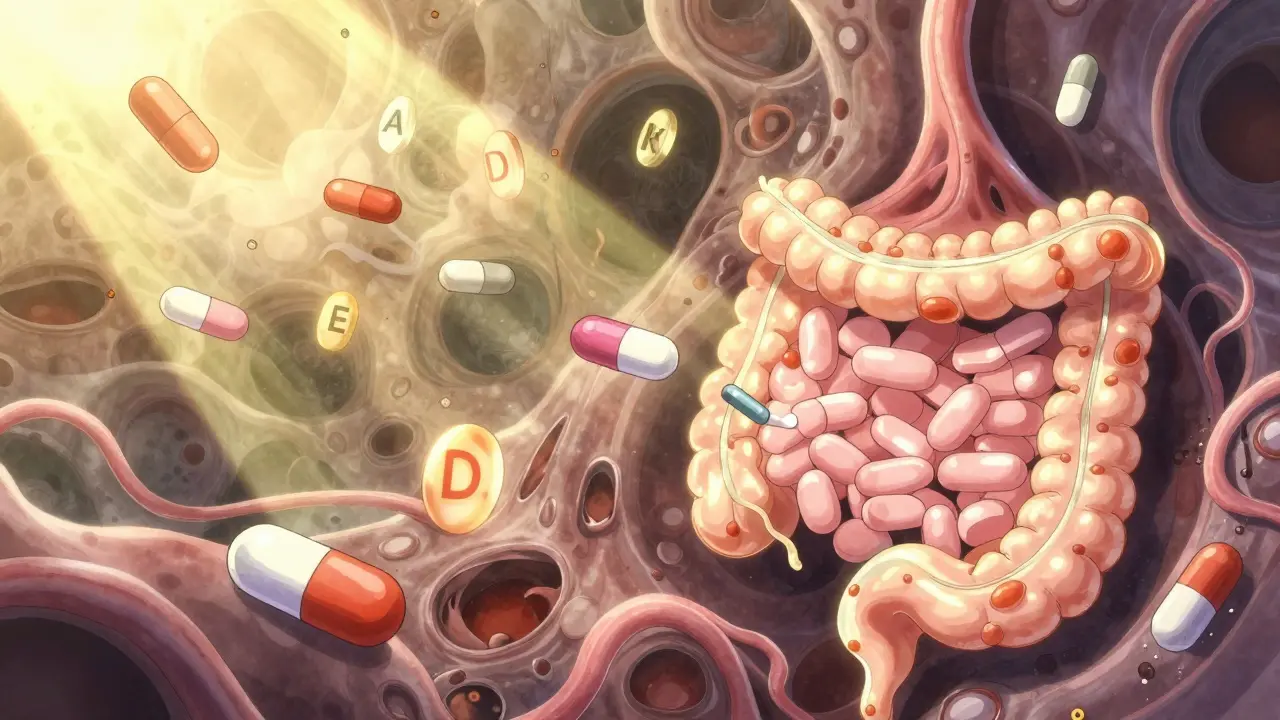
When you’re taking bile acid sequestrants like cholestyramine, colestipol, or colesevelam to lower your cholesterol, you’re not just managing one thing-you’re managing a whole system of medications that can interfere with each other. These drugs work by binding bile acids in your gut, which forces your liver to pull more cholesterol from your blood. Simple enough. But here’s the catch: they don’t just bind bile acids. They bind medications too. And if you take them at the wrong time, your blood pressure pill, thyroid medicine, or even birth control might not work at all.
Why Timing Matters More Than Dose
Most people think the problem with bile acid sequestrants is side effects-constipation, bloating, nausea. Those are real. But the silent killer here is timing. These drugs are resins. Think of them like tiny magnetic sponges floating in your intestines. They grab onto anything with a negative charge. That includes bile acids, yes-but also vitamins, minerals, and most prescription drugs. If you swallow your warfarin right before your cholestyramine, your INR could drop. If you take levothyroxine with your colesevelam tablet, your TSH might spike. No one warns you about this until something goes wrong.How These Drugs Actually Work
Cholestyramine (Questran), colestipol (Colestid), and colesevelam (Welchol) are all different in form but the same in mechanism. They’re not absorbed. They stay in your gut. Cholestyramine, the oldest, binds the most-about 3.5 milliequivalents per gram. Colesevelam, the newest, binds a little less, but it’s easier to take as a tablet instead of a chalky powder. All three can reduce LDL cholesterol by 15% to 30%. That’s impressive. But their binding power is also their biggest flaw. The FDA says cholestyramine can bind up to 12 times its weight in bile acids. That same surface area? It grabs your meds too.Which Medications Are Most at Risk?
Not all drugs are equally affected. Some are more vulnerable because they’re absorbed quickly in the upper gut, where bile acid sequestrants hang out. Here’s the shortlist of high-risk medications:- Warfarin: Even small drops in absorption can lead to clots or bleeding. Studies show INR levels fluctuate in up to 28% of users who don’t separate doses properly.
- Levothyroxine: Thyroid hormone replacement is absorbed in the duodenum-the exact spot where these resins sit. A 2022 study found 23% less absorption even with a 4-hour gap. Some patients need 8 hours.
- Oral contraceptives: Birth control pills can be rendered ineffective. There are documented cases of unintended pregnancies in women taking cholestyramine without proper spacing.
- Metformin: Especially the extended-release version. Colesevelam reduces its absorption by up to 15% if taken together.
- Thyroid meds, antidepressants, antifungals, and some antibiotics: All have documented interactions. The list is longer than most people realize.
The 4-Hour Rule-And When It’s Not Enough
Most guidelines say: take other medications at least 4 hours before or after your bile acid sequestrant. That’s the standard. But it’s not universal. The American College of Cardiology and the American Heart Association both endorse this rule. But real life isn’t textbook. For levothyroxine, 4 hours might not cut it. Some patients need 6 to 8. For warfarin, 4 hours is the minimum-but if your INR is unstable, you might need 6. Colesevelam (Welchol) is a bit gentler. One study showed 30-40% less interference with warfarin compared to cholestyramine. So if you’re switching from Questran to Welchol, your timing might relax a little. But don’t assume. Always check with your pharmacist.
Real Stories, Real Consequences
A 68-year-old woman in Ohio was on cholestyramine and levothyroxine. She took both at breakfast. Her TSH jumped from 5.2 to 18.1 in three months. She felt exhausted, gained 15 pounds, and nearly lost her job. She didn’t realize the timing was the issue until her pharmacist flagged it. A 42-year-old man in Texas took his birth control pill and cholestyramine together every morning. He thought the constipation was normal. He didn’t know his pill wasn’t working until his wife got pregnant. He told Reddit: "I followed the label. I just didn’t know the label didn’t tell me everything." These aren’t rare. A 2022 survey of 452 BAS users found 41% had at least one interaction. Most were preventable.How to Get It Right Every Time
There’s no magic trick. Just structure. Here’s how to build a routine that works:- Know your meds. Make a list of every pill you take daily, including supplements. Highlight the ones with known interactions.
- Map your schedule. Bile acid sequestrants are usually taken with meals. That means breakfast and dinner. Use that as your anchor.
- Separate high-risk meds. Take levothyroxine first thing in the morning on an empty stomach. Wait 6 hours before your first dose of Welchol. Take warfarin at bedtime, at least 4 hours after your last BAS dose.
- Use apps. 42% of BAS users use Medisafe or similar apps to set alarms. Set two: one for your BAS, one for your other meds.
- Keep a log. Write down what you took and when. Note any symptoms-dizziness, fatigue, irregular heartbeat. Bring it to every appointment.
What About Vitamin Deficiencies?
Bile acid sequestrants don’t just steal drugs. They steal vitamins. Fat-soluble ones-A, D, E, K-get swept out with bile. Long-term users have a 12.7% risk of vitamin K deficiency, which can lead to bleeding. That’s why doctors recommend annual blood tests. Some patients need daily vitamin D (2,000 IU) and vitamin K (100 mcg). Don’t take them at the same time as your BAS. Separate by 4 hours, like your meds.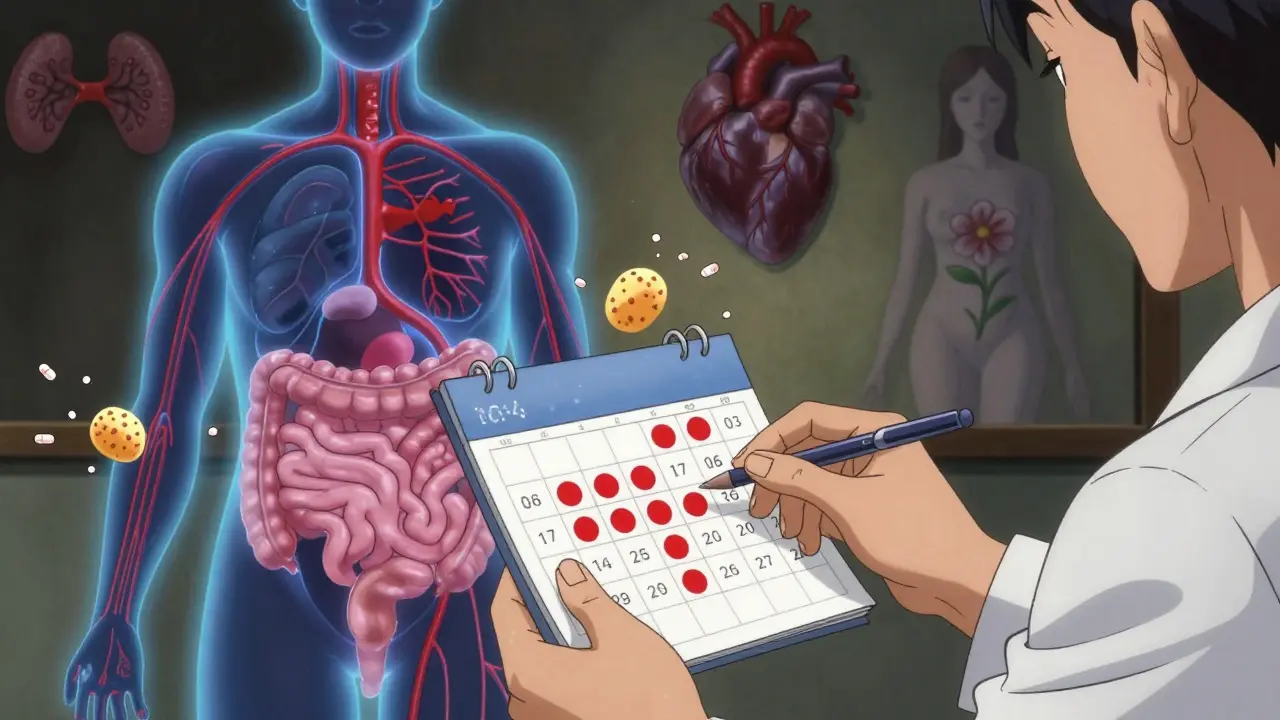
Is There a Better Option?
If timing feels impossible, ask your doctor about alternatives. Statins work better and don’t bind-but 7-29% of people can’t tolerate them due to muscle pain. Ezetimibe? It’s a pill, no binding issues, but only lowers LDL by 15-20%. PCSK9 inhibitors like evolocumab drop LDL by 50-60%, but they’re injections that cost $5,800 a year. Colesevelam is the most tolerable BAS. Newer formulations released in 2023 bind less, so interactions are fewer. If you’re on cholestyramine and struggling, switching to Welchol might be the easiest fix.When to Call Your Doctor
If you notice any of these, call your provider:- Unexplained bruising or bleeding (possible warfarin issue)
- Feeling unusually tired, cold, or gaining weight (possible thyroid issue)
- Missed period or pregnancy while on birth control
- Unstable blood sugar (if you have diabetes and take metformin)
These aren’t side effects. They’re signs your meds aren’t working.
Bottom Line: It’s Not About Willpower-It’s About Systems
This isn’t about being "forgetful" or "not caring." It’s about a system that’s hard to manage. You’re juggling pills, meals, timing, and side effects. That’s why 48% of people stop taking bile acid sequestrants within a year. But it doesn’t have to be that way. With a clear plan, a good pharmacist, and a little structure, you can make this work. You don’t have to choose between lowering your cholesterol and staying safe. You just need to know how to time it right.Can I take my bile acid sequestrant with food?
Yes, you should. All bile acid sequestrants are taken with meals to improve effectiveness and reduce stomach upset. But if you’re taking other medications, separate them by at least 4 hours before or after your meal and BAS dose. Don’t mix your pills into the same glass or food as the powder.
Is colesevelam (Welchol) safer than cholestyramine?
Yes, in terms of drug interactions. Colesevelam has a lower binding capacity and causes fewer interactions with warfarin, levothyroxine, and other medications. It’s also easier to take as a tablet instead of a chalky powder. If you’re struggling with timing or side effects, switching to Welchol may reduce your risk of interactions by 30-40%.
How long should I wait between taking levothyroxine and bile acid sequestrants?
Take levothyroxine on an empty stomach first thing in the morning. Wait at least 4 hours before taking your bile acid sequestrant. For some people, especially those with unstable thyroid levels, waiting 6 to 8 hours is safer. Check your TSH levels regularly and tell your doctor if you’re still feeling tired or gaining weight.
Can I take vitamins with bile acid sequestrants?
Yes-but not at the same time. Fat-soluble vitamins (A, D, E, K) can be bound and excreted. Take them at least 4 hours before or after your BAS dose. Many patients take their vitamins at bedtime, after their last meal and BAS dose, to avoid interference.
What should I do if I miss a dose of my bile acid sequestrant?
Take it as soon as you remember, but only if it’s still within the same day. If it’s close to your next dose, skip it. Don’t double up. If you missed it and took another medication within 4 hours, note it in your log. You may need to check your INR, blood sugar, or thyroid levels sooner than usual.
Do I need to tell every pharmacist I visit about my bile acid sequestrants?
Absolutely. Every time. Even if you’re picking up a new antibiotic or painkiller. Bile acid sequestrants interact with over 50 common medications. Pharmacists are trained to spot these. Don’t assume they know what you’re taking unless you tell them.
Thomas Anderson
December 16, 2025 AT 07:48I was on cholestyramine for a year and didn’t know my blood thinner wasn’t working right until I got a scary INR spike. My pharmacist caught it-said I was taking them 2 hours apart. Total dumbass move. Now I set two alarms: one for my pill, one for the chalky powder. Life’s easier when you stop guessing.
Also, Welchol is a game-changer. No more mixing powder in applesauce like some kind of medieval medicine.
Alexis Wright
December 16, 2025 AT 11:01Oh, so now we’re treating adults like toddlers who need a fucking schedule? You think this is the first time someone’s mixed up meds? The system’s broken, not the patient. You people act like this is some revolutionary insight when it’s just basic pharmacology 101.
And don’t get me started on ‘set alarms’-like your phone’s gonna save you when your doctor didn’t bother to warn you. This isn’t a life hack, it’s negligence dressed up as advice.
Daniel Wevik
December 16, 2025 AT 20:22From a clinical pharmacology standpoint, the binding kinetics of bile acid sequestrants are non-linear and pH-dependent, which means the 4-hour rule is an oversimplification rooted in population averages-not individual pharmacokinetics.
For patients on narrow-therapeutic-index drugs like warfarin or levothyroxine, therapeutic drug monitoring is not optional. The FDA’s guidance is a floor, not a ceiling. We need individualized dosing windows based on gastric emptying time, co-administered food matrix, and CYP enzyme activity.
Also, colesevelam’s lower binding affinity is due to its polymeric structure and reduced cation exchange capacity-this is why it’s less disruptive to statins and metformin. But it still affects fat-soluble vitamins. Annual 25-OH-D and INR checks are mandatory, not suggestions.
And yes, if you’re on this regimen, you need a pharmacist on speed dial. Not just once. Every time a new med is added.
Tim Bartik
December 17, 2025 AT 04:01Y’all actin like this is some deep secret, but if you ain’t got your meds timed right, you ain’t got nothin’. I took my BP med and that chalky crap together for 8 months-thought my head was just buzzin’ from stress. Turns out my systolic was 180 and I didn’t even know it.
Now I keep my pills in a little box with labels like ‘AM: Thyroid ONLY’ and ‘Dinner: BAS + Vit D later’. My wife even made me a color-coded chart. Yeah, I’m that guy. But I’m alive.
Also, Welchol? Best thing since sliced bread. No more chokin’ on powder like I’m in a 1970s commercial.
Rich Robertson
December 18, 2025 AT 13:43In Japan, they use a similar resin called sevelamer for kidney patients, and the timing protocols are even stricter-8 hours between meds is standard. The cultural difference is striking: here, we treat this like a personal failure if you forget. Over there, it’s seen as a system design flaw.
Pharmacists in Tokyo are trained to flag these interactions before the script is even filled. We need that here. Not just ‘take it 4 hours apart’-but a mandatory pharmacist consultation when a BAS is prescribed. It’s not patient error. It’s system failure.
Also, vitamin K deficiency is way underdiagnosed. I had a patient with unexplained bruising-turns out her INR was normal, but her prothrombin time was off because she was taking BAS and vitamin D together. She didn’t even know they were related.
Natalie Koeber
December 19, 2025 AT 19:26They don’t want you to know this, but the FDA knows bile acid sequestrants were designed to make you dependent on more meds. Think about it-now you need vitamins, you need timing, you need apps, you need to avoid meals, you need blood tests. Who profits? Big Pharma. They sold you a drug that breaks your body so they can sell you 7 more to fix it.
And they call it ‘healthcare’. I’ve seen the documents. It’s all planned. The 4-hour rule? A distraction. The real fix is ditching the resin entirely. Eat more fiber. Walk more. Stop trusting pills that make you a slave to your calendar.
Wade Mercer
December 20, 2025 AT 17:55I read this whole thing and still think people who can’t manage a 4-hour gap between pills shouldn’t be on these meds. It’s not complicated. It’s not rocket science. You take your thyroid pill on an empty stomach, you wait. You take your BAS with food. You don’t mix them. You don’t make excuses.
If you can’t follow a simple schedule, maybe you shouldn’t be managing your own meds. That’s not harsh-that’s reality. People die because they think ‘close enough’ is good enough.
Dwayne hiers
December 21, 2025 AT 13:00Correction: The 2022 study on levothyroxine absorption showed a 23% reduction with a 4-hour gap-but only when colesevelam was taken 1 hour after levothyroxine. When levothyroxine was taken 6 hours before, absorption was within 5% of baseline. This is critical.
Also, extended-release metformin is more affected than immediate-release due to prolonged gastric residence time. The 15% reduction cited is from a 2021 RCT with 120 patients-powerful data, but only if timing is strictly controlled.
And yes, vitamin K deficiency is real, but it’s not just about supplementation. The gut microbiome’s vitamin K2 production is suppressed by bile acid sequestration. Probiotics like L. reuteri may help restore it. Talk to your GI specialist.
Bottom line: Timing isn’t optional. It’s pharmacokinetic law. And if your pharmacist doesn’t know this, find a new one.