

When your insurance pushes you to switch from a brand-name pill to a cheaper version, you might get handed a little white tablet with no name on it - and wonder: is this really the same thing? The answer isn’t simple. There are two kinds of generic drugs out there: authorized generics and regular generics. And the difference between them can matter - especially if you’re on a medication where even small changes cause problems.
What Exactly Is an Authorized Generic?
An authorized generic is the exact same drug as the brand-name version - down to the last grain of filler. It’s made by the same company, in the same factory, using the same recipe. The only difference? No brand name on the bottle. Think of it like a store-brand soda that’s actually made by Coca-Cola. You’re getting the real thing, just without the logo. For example, the authorized generic for Concerta (methylphenidate ER) comes from the same manufacturer as the original. It has the same active ingredient, the same coating, the same release mechanism. If you’ve ever noticed your ADHD meds suddenly didn’t work as well after switching, this is why. Regular generics might use different binders or coatings that change how the drug is absorbed - but authorized generics don’t.How Regular Generics Are Different
Regular generics are approved by the FDA because they’re "bioequivalent" to the brand drug. That means they deliver the same active ingredient in roughly the same amount over time - but with a 20% leeway. The FDA allows absorption differences up to 25% compared to the brand. That sounds technical, but here’s what it means in real life: your body might absorb it faster, slower, or unevenly. That’s usually fine for blood pressure pills or antibiotics. But for drugs with a narrow therapeutic index - where the difference between working and causing harm is tiny - even small changes can cause problems. Think epilepsy meds like lamotrigine, thyroid hormone like levothyroxine, or blood thinners like warfarin. A 2018 study in Neurology found patients switching from brand to regular generic lamotrigine had higher seizure rates. Switching back to the authorized version fixed it.Cost Difference: What You Pay Matters
Here’s the trade-off: authorized generics cost more than regular generics. A 30-day supply of the authorized generic for Concerta runs about $185. The brand? $210. A regular generic? Around $165. That $20 difference adds up fast if you’re paying out of pocket. Regular generics dominate the market - 92% of all generic prescriptions filled in the U.S. are the cheaper kind. Authorized generics make up only 8%. Why? Because pharmacies and insurers want to save money. And for most people, it works fine. But if you’ve had bad experiences with generics before - nausea, dizziness, loss of effectiveness - it’s worth asking why.
When Switching to an Authorized Generic Makes Sense
You should strongly consider an authorized generic if:- You’re on a medication with a narrow therapeutic index (epilepsy, thyroid, immunosuppressants, warfarin)
- You’ve had a bad reaction to a regular generic - even if it was "just" a headache or upset stomach
- Your doctor told you not to switch because "formulation matters"
- You’re on a long-term medication where consistency is critical
When a Regular Generic Is Fine
For many drugs, regular generics are perfectly safe and effective. Statins like atorvastatin, ACE inhibitors like lisinopril, and antidepressants like sertraline have huge real-world data showing no difference in outcomes between brand and generic. One patient said: "Switched from brand Lisinopril to generic. My blood pressure improved. Saved $400 a month. No side effects." That’s the norm for most people. If your drug has a wide therapeutic index - meaning your body can handle small variations - stick with the cheapest option. The savings are real. And the risk? Extremely low.How to Tell What You’re Getting
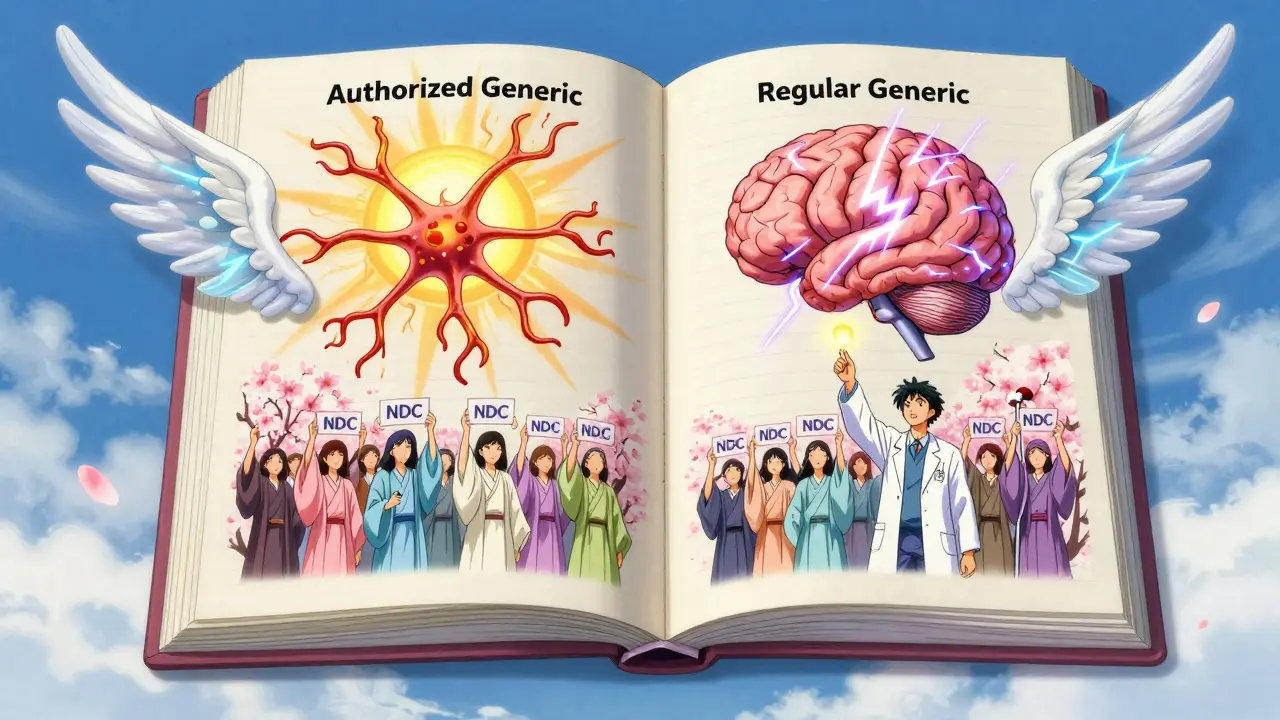
Pharmacists aren’t always trained to explain this. Most patients can’t tell the difference on the label. Here’s how to find out:- Ask for the National Drug Code (NDC) on the bottle. If it matches the brand-name drug’s NDC, it’s an authorized generic.
- Check the manufacturer. If it’s the same company that makes the brand (like Pfizer, AbbVie, or Johnson & Johnson), it’s likely authorized.
- Use GoodRx’s Medication Switch Checker or the FDA’s Orange Book to look up your drug. Authorized generics don’t show up in the Orange Book - they’re listed under the brand name.
What the Experts Say
Dr. Aaron Kesselheim at Harvard puts it simply: "For most drugs, generics are fine. But for thyroid, epilepsy, and transplant meds - don’t gamble. Go with the authorized version if you can." The American College of Clinical Pharmacy agrees: switching should be individualized. If you’ve had a bad experience, don’t assume it’s "all in your head." The FDA says generics are safe. And they are - for most people. But they also admit that inactive ingredients can affect how a drug works. And that’s where authorized generics eliminate the guesswork.What’s Changing in 2025
Starting January 2024, the FDA began requiring clearer labeling on authorized generics. Look for phrases like "Authorized Generic of [Brand Name]" on the box. Medicare Part D plans are now required to tell you if an authorized generic is available for your drug. This should make it easier to choose. More authorized generics are hitting the market - especially for complex drugs like inhalers, topical creams, and injectables. These are harder to copy accurately, so the brand companies are using authorized generics to stay competitive without losing control over the formulation.Final Decision: What Should You Do?
If you’re switching meds and want to minimize risk:- For epilepsy, thyroid, immunosuppressants, warfarin, or ADHD meds - ask for the authorized generic first. The cost difference is small compared to the risk of relapse or side effects.
- For blood pressure, cholesterol, antibiotics, or most antidepressants - go with the cheapest generic. The data shows no meaningful difference.
- Keep a journal. Note any changes in symptoms, side effects, or effectiveness after switching. Bring it to your doctor.
- Don’t be afraid to ask your pharmacist: "Is this the authorized version?" If they don’t know, ask for the NDC number.
Are authorized generics safer than regular generics?
Authorized generics are identical to the brand-name drug in every way - including inactive ingredients. Regular generics only need to be bioequivalent, which allows for differences in fillers and coatings. For most drugs, this doesn’t matter. But for medications with narrow therapeutic indices - like epilepsy or thyroid drugs - those small differences can cause real problems. So yes, authorized generics are safer for sensitive medications.
Why are authorized generics more expensive than regular generics?
Authorized generics cost more because they’re made by the original brand manufacturer. They don’t have the cost savings of a separate company making the drug from scratch. Regular generics are produced by companies that specialize in low-cost manufacturing. Authorized generics usually cost 10-30% less than the brand, but 5-15% more than regular generics.
Can my pharmacist substitute an authorized generic without telling me?
In most states, pharmacists can substitute any generic unless the doctor writes "dispense as written" or "no substitution." But they’re not required to tell you if it’s an authorized or regular generic. You need to ask. Always check the label or ask for the NDC code to be sure.
How do I know if my drug has an authorized generic?
Check GoodRx or the FDA’s website. Search for your brand-name drug. If an authorized generic exists, it will show up as a separate listing under the same manufacturer. You can also ask your pharmacist to look up the NDC code - if it matches the brand’s code, it’s authorized.
Will my insurance cover an authorized generic?
Some plans cover authorized generics at the same tier as regular generics. Others treat them like brand-name drugs and charge more. Starting in 2024, Medicare Part D plans must tell you if an authorized generic is available. Call your insurer and ask: "Is the authorized generic of [drug name] covered, and at what cost?" Don’t assume it’s cheaper - check first.
Jane Lucas
December 27, 2025 AT 03:20Just switched my levothyroxine to generic and felt like a zombie for two weeks. Went back to the authorized one and boom, back to normal. Why do they make us guess?
Paula Alencar
December 28, 2025 AT 03:40The distinction between authorized and regular generics is not merely a pharmaceutical nuance-it is a profound matter of physiological fidelity and patient autonomy. When one’s neurological equilibrium hinges upon the precise molecular architecture of a medication, the substitution of inert ingredients-however ostensibly benign-constitutes an unconsented biochemical experiment. The FDA’s 20% bioequivalence leeway, while statistically defensible in population-level studies, ignores the lived reality of individuals whose bodies do not conform to averages. Authorized generics preserve the original formulation’s integrity; to dismiss them as merely ‘brand-name in disguise’ is to trivialize the suffering of those who have experienced the catastrophic consequences of formulation drift. This is not about cost-it is about the moral imperative to honor the therapeutic contract between physician, patient, and pharmacology.
Nikki Thames
December 29, 2025 AT 11:55You think this is about drugs? It’s about control. The pharmaceutical-industrial complex wants you dependent on their pricing schemes. Authorized generics are a trap-they’re still expensive enough to keep you paying, while giving the illusion of choice. Meanwhile, the real culprits? The FDA’s cozy relationship with Big Pharma and the pharmacy benefit managers who profit from generic switches. They don’t care if you seize or crash-only if your prescription gets filled. Wake up. This isn’t medicine. It’s a market manipulation scheme dressed in white coats.
Chris Garcia
December 30, 2025 AT 18:11In Nigeria, we don’t have the luxury of choosing between authorized and regular generics-most of us take what’s available, and we pray it works. But I’ve seen friends on epilepsy meds suffer after switches, just like you describe. The science here is universal: the body doesn’t care about corporate labels, only about consistency. If your life depends on a steady rhythm, then the authorized version isn’t a luxury-it’s a lifeline. And yes, it’s frustrating that cost overrides safety in systems that claim to care. But we must demand better-not just for ourselves, but for the global south where these choices don’t even exist.
Will Neitzer
December 31, 2025 AT 03:14Paula’s point is not only accurate-it is ethically imperative. The FDA’s bioequivalence standards were designed for mass-market efficiency, not individualized medicine. For drugs with narrow therapeutic indices, the variability in inactive ingredients can alter dissolution rates, gastric absorption, and even plasma protein binding. This is not theoretical; it is clinically documented in peer-reviewed neurology and pharmacokinetic studies. The authorized generic, by definition, eliminates this variability. To prioritize cost over clinical consistency in these cases is not fiscally prudent-it is medically negligent. Patients deserve transparency, not default substitutions. Pharmacies should be required to disclose formulation origin at point of dispensing, and insurers should be mandated to cover authorized generics at tier-one pricing for indicated conditions.
Janice Holmes
January 1, 2026 AT 10:42Okay, so let me get this straight: the same exact pill, same factory, same everything, but no brand name = cheaper? But if you get the one with the weird filler that makes you feel like you’re underwater? That’s the ‘budget’ option? And the system rewards the pharmacy for pushing the cheap one? This isn’t capitalism-it’s a horror movie where the villain is a pharmacist with a checklist. I’ve been on lamotrigine for 12 years. Switched generics once. Had a 72-hour panic attack that felt like my brain was being rewired by a toddler. Never again. Authorized. Always. Even if it costs $20 more. My sanity is not a line item.
Miriam Piro
January 3, 2026 AT 02:03They’re hiding something. Why does the FDA even allow this? Why aren’t ALL generics required to match the original filler? Because the big pharma companies own the regulators. They profit from the confusion. Authorized generics? They’re just a marketing tactic to keep you paying more while pretending they’re helping. The real solution? Ban all generics except the authorized ones-and make the brand companies sell them at cost. Otherwise, this is all a money scheme wrapped in white pills and FDA stamps. I’ve seen people die from these switches. No one talks about it. But I will. 🚩
dean du plessis
January 3, 2026 AT 23:55Been on warfarin for 8 years. Switched to regular generic once. INR went wild. Took 3 weeks to stabilize. Now I ask for the authorized one every time. My pharmacist doesn’t even blink anymore. Just says ‘got it’ and hands me the bottle. Saved my life. No drama. Just facts. 🤝
Kylie Robson
January 4, 2026 AT 07:59Let’s clarify the pharmacokinetic taxonomy: authorized generics are classified as ‘same formulation, same manufacturer’ (SF-SM) products, whereas conventional generics fall under ‘bioequivalent, different formulation’ (BEDF). The critical distinction lies in the excipient profile-specifically, the crystalline structure of cellulose derivatives and the hydrophilic polymer matrix governing dissolution kinetics. For drugs with low solubility and high first-pass metabolism, such as methylphenidate ER, even 5% variation in coating thickness can alter Cmax and Tmax by >15%, triggering subtherapeutic exposure or toxic accumulation. The 2018 Neurology study on lamotrigine demonstrated a 3.2-fold increase in seizure recurrence with BEDF generics versus SF-SM. This is not anecdotal-it’s quantifiable. Your insurance doesn’t care. But your neurologist should.
Elizabeth Alvarez
January 5, 2026 AT 12:39Did you know the FDA doesn’t require manufacturers to disclose inactive ingredients in generics? That’s right. So even if you ask for the authorized version, the pharmacy might still give you the regular one and just label it as ‘generic.’ They’re lying to you. And the big companies? They know. That’s why they created authorized generics-to look good while still profiting. The system is rigged. They want you confused, scared, and compliant. Don’t trust the label. Don’t trust the pharmacist. Get the NDC. Cross-check it. If it doesn’t match the brand, you’re being played. And if you’re on thyroid or epilepsy meds? You’re playing Russian roulette with your brain.